
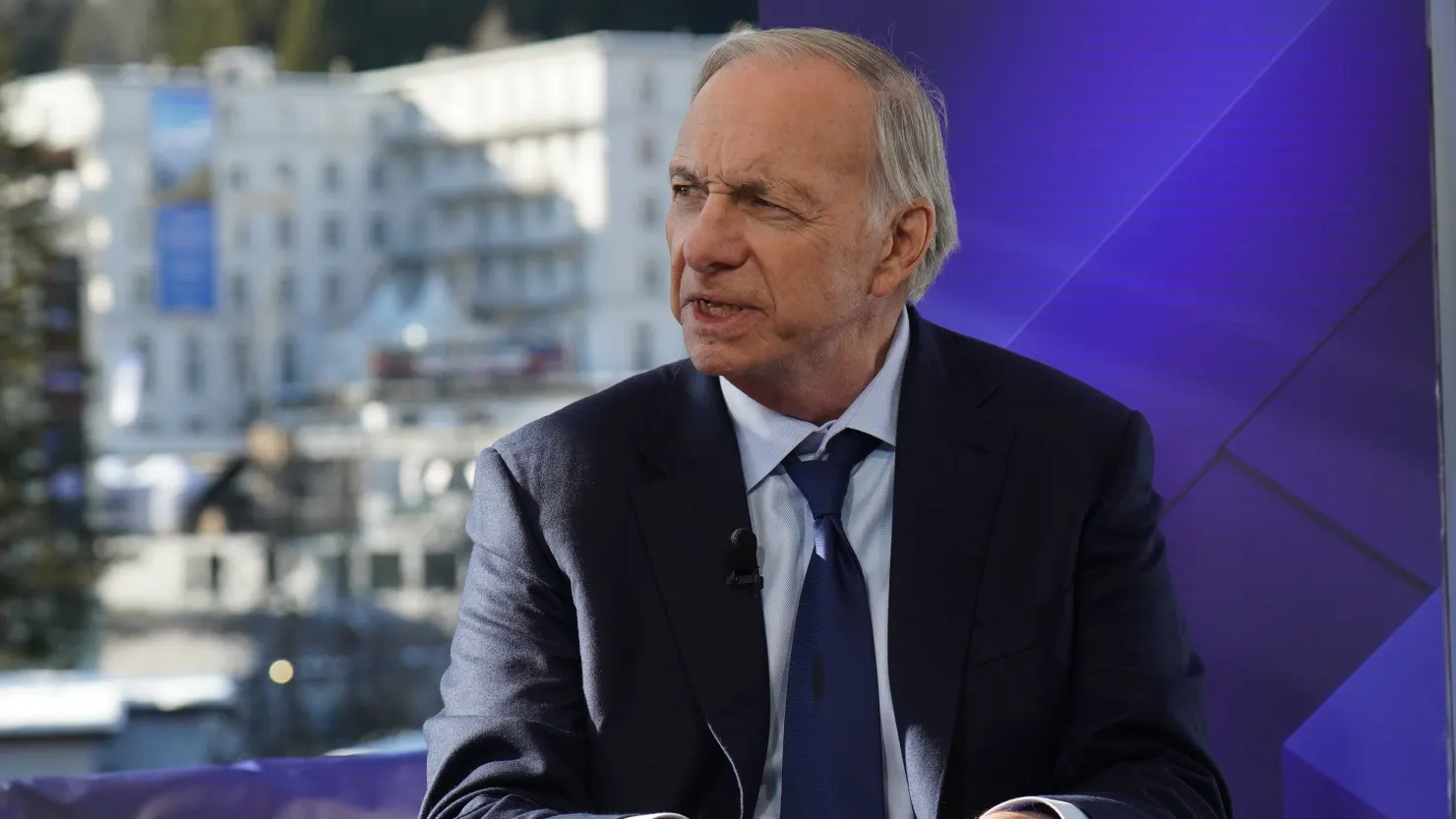

Legendary investor Ray Dalio is once again warning the world to pay close attention to what is unfolding beneath the surface of global markets. Speaking this week, Dalio said the world is “on the brink” of what he describes as a capital war, a scenario where money itself becomes a powerful geopolitical weapon.
Dalio’s comments come at a time of rising geopolitical tensions, unstable capital markets, and growing mistrust between major global powers. According to him, while the world has not yet crossed the line into a full capital war, it is dangerously close.
His warning is not just about market volatility. It is about how nations may increasingly use financial tools to gain leverage, punish rivals, or protect their own interests.
What Is a Capital War?
When Money Becomes a Weapon
A capital war occurs when countries weaponize financial systems and capital flows to achieve political or strategic goals. This can include actions such as restricting access to capital markets, freezing foreign assets, imposing capital controls, or using debt ownership as leverage.
Unlike traditional wars fought with military force, capital wars are fought through financial pressure. These conflicts often unfold quietly but can have deep and lasting impacts on economies, investors, and global trade.
Dalio emphasized that capital wars are especially dangerous because they can escalate quickly and disrupt the global financial system in ways that are hard to reverse.
How Capital Wars Differ From Trade Wars
While trade wars focus on tariffs, quotas, and supply chains, capital wars target the movement and ownership of money itself. This makes them more complex and, in many cases, more damaging.
When capital flows are restricted, businesses struggle to invest, currencies can become unstable, and global trust begins to erode. According to Dalio, this erosion of trust is already underway.
Why Dalio Believes the World Is Close to the Brink
Rising Mutual Fear Between Nations
Dalio explained that one of the main drivers pushing the world closer to a capital war is mutual fear among major powers. Countries are increasingly worried about being financially vulnerable to rivals.
This fear leads governments to take defensive measures, which in turn make other nations more anxious. The result is a cycle of mistrust that can quickly spiral into aggressive financial actions.
Dalio warned that once this cycle gains momentum, it becomes very easy to cross from precaution into outright financial conflict.
Growing Use of Financial Pressure
Over the past several years, the use of financial sanctions, asset freezes, and restrictions on market access has increased. These tools were once considered extreme measures but are now used more frequently.
Dalio pointed out that central banks and sovereign wealth funds are already preparing for scenarios involving foreign exchange controls and capital restrictions. This preparation alone is a signal that global financial relationships are under strain.
Central Banks and Sovereign Funds Are Preparing
Defensive Moves Behind the Scenes
According to Dalio, major financial institutions are quietly adjusting their strategies. Central banks and sovereign wealth funds are reassessing where they hold reserves, what currencies they trust, and which markets they rely on.
These institutions are focused on protecting themselves from potential disruptions, including sudden restrictions on currency movement or access to foreign assets.
Such preparations suggest that financial leaders are no longer assuming a fully open and cooperative global system.
Shifts in Currency and Reserve Strategies
One key area of concern is foreign exchange exposure. If countries fear that their assets could be frozen or devalued, they may reduce reliance on certain currencies or financial systems.
Dalio has long spoken about shifts in global reserve currencies and believes these changes are accelerating as trust weakens.
The Role of Geopolitics in Financial Conflict
Politics and Markets Are Now Deeply Linked
Dalio’s warning highlights how closely politics and finance have become intertwined. Decisions once made purely on economic grounds are now influenced by national security and geopolitical strategy.
As global tensions rise, markets are increasingly shaped by political risk rather than just fundamentals like growth and inflation.
This shift makes investing more complex and increases the likelihood of sudden market disruptions.
Globalization Under Pressure
Capital wars are often a symptom of declining globalization. When countries prioritize self-protection over cooperation, cross-border investment and trade suffer.
Dalio suggested that the world is moving away from the highly interconnected system that defined recent decades and toward a more fragmented financial landscape.
What a Capital War Could Mean for Investors
Increased Volatility and Uncertainty
For investors, a capital war would likely bring higher volatility across currencies, equities, and bonds. Sudden policy changes, restrictions, or sanctions could trigger sharp market moves.
Dalio’s message serves as a reminder that political risk is now a core part of investment risk.
The Importance of Diversification
In an environment where capital controls and financial barriers are possible, diversification becomes even more critical. Investors may need to think beyond traditional asset allocation and consider geopolitical exposure as well.
Dalio has consistently emphasized diversification across geographies, currencies, and asset classes as a way to manage uncertainty.
Why Dalio’s Warning Matters
A Voice With a Long-Term Perspective
Ray Dalio is known for studying long-term economic and political cycles, not just short-term market trends. His warnings are based on historical patterns where rising tensions and debt burdens often lead to financial conflict.
When Dalio speaks about systemic risks, global leaders and investors tend to listen.
A Call for Awareness, Not Panic
While Dalio’s language is stark, he is not suggesting that a capital war is inevitable. Instead, he is urging policymakers and investors to recognize the warning signs and act thoughtfully.
Understanding the risks early can help reduce the chances of escalation and soften the impact if tensions worsen.
Final Thoughts
Ray Dalio’s warning that the world is “on the brink” of a capital war reflects growing stress in the global financial system. As money becomes a tool of power and protection, the risks to markets and economies increase.
While the world has not yet crossed that line, Dalio believes it would be easy to do so if fears continue to rise unchecked. His message is clear: the era of frictionless global capital flows can no longer be taken for granted.
For governments, institutions, and investors alike, the challenge now is navigating a world where financial trust is fragile and the stakes are higher than ever.

