

Markets React Swiftly to Strategic Announcement
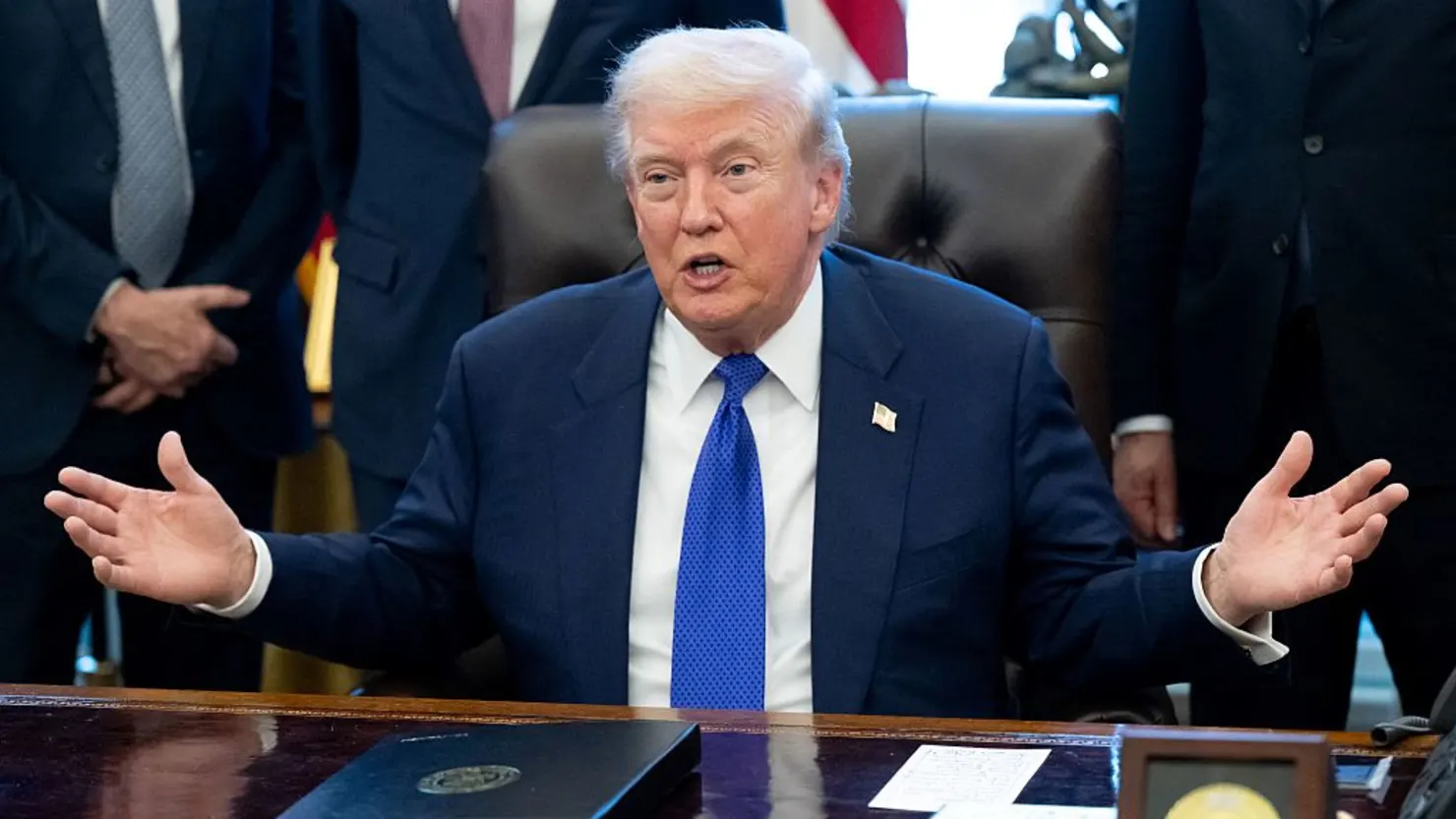
Shares of U.S.-listed rare earth and critical minerals companies surged after President Donald Trump announced the launch of a major strategic minerals stockpile aimed at strengthening America’s supply chain security.
The move, which quickly caught the attention of investors, signals a renewed push by the U.S. to reduce its dependence on foreign sources for materials that are vital to defense, clean energy, and advanced technology. The announcement triggered immediate gains across rare earth mining stocks, reflecting expectations of increased government support, long-term demand, and strategic relevance.
The stockpile initiative comes at a time when global competition over critical minerals is intensifying, particularly between the United States and China.
What Is Project Vault?
A $12 Billion Push to Secure Critical Minerals
The proposed strategic stockpile, known as Project Vault, is expected to mobilize close to $12 billion in total funding. The plan combines nearly $2 billion in private sector capital with a $10 billion loan from the U.S. Export-Import Bank.
The goal of Project Vault is to build and maintain reserves of rare earth elements and other critical minerals that are essential for modern industries. These materials are used in everything from military hardware and semiconductors to electric vehicles, renewable energy systems, and consumer electronics.
By establishing a dedicated stockpile, the U.S. aims to insulate itself from supply disruptions and geopolitical pressure while encouraging domestic production and processing.
Why Rare Earths Matter So Much
The Backbone of Modern Technology
Rare earth elements are a group of metals that play a crucial role in advanced manufacturing. Despite their name, they are relatively abundant in the Earth’s crust, but they are difficult and expensive to extract and process.
These elements are critical components in magnets, batteries, lasers, guidance systems, and high-performance electronics. Without reliable access to rare earths, industries ranging from defense to clean energy could face serious bottlenecks.
As global demand for electric vehicles, wind turbines, and advanced electronics continues to grow, so does the strategic importance of securing long-term access to these materials.
The China Factor
A Geopolitical Pressure Point
Rare earths have become a key bargaining chip in the broader geopolitical rivalry between Washington and Beijing. China currently dominates the global rare earth supply chain, controlling a large share of mining, refining, and processing capacity.
This dominance has raised concerns in the U.S. about supply security, especially during periods of heightened political tension. Any disruption in access to rare earths could have far-reaching consequences for national security and economic stability.
Project Vault is widely seen as a response to these concerns, signaling a more assertive U.S. strategy to counterbalance China’s influence in critical minerals.
How Markets Responded
Rare Earth Stocks Rally
Following the announcement, shares of U.S.-listed rare earth miners and critical minerals companies moved sharply higher. Investors interpreted the move as a strong signal that government-backed demand and financing could support the sector over the long term.
Companies involved in mining, refining, and downstream processing saw renewed interest, with trading volumes rising as market participants positioned themselves for potential policy-driven growth.
The rally highlights how closely the sector is tied to geopolitical developments and government policy decisions, rather than just traditional supply-and-demand dynamics.
Government Support as a Growth Catalyst
Reducing Risk for Investors
One of the key reasons behind the market’s positive reaction is the scale of government involvement. A $10 billion loan from the U.S. Export-Import Bank significantly lowers financing risk for large-scale projects, which are often capital-intensive and slow to generate returns.
For investors, this kind of backing reduces uncertainty and increases confidence that projects will move forward. It also makes it easier for companies to secure additional private funding.
Project Vault could effectively act as a demand anchor, giving producers the confidence to invest in capacity expansion and infrastructure.
Strengthening Domestic Supply Chains
From Mining to Processing
While mining is an important first step, processing and refining are equally critical parts of the rare earth supply chain. Historically, much of this processing has taken place outside the U.S., particularly in China.
The strategic stockpile initiative is expected to encourage investment across the entire supply chain, from extraction to advanced materials processing. This could help create a more integrated domestic ecosystem for critical minerals.
Building this capacity domestically not only improves supply security but also supports job creation and industrial development.
Implications for Clean Energy and Defense
Supporting Strategic Industries
Rare earths are essential for many clean energy technologies, including wind turbines and electric vehicle motors. As the U.S. pushes toward energy transition goals, secure access to these materials becomes increasingly important.
At the same time, rare earths are vital for defense applications, including missile guidance systems, radar, and advanced communications equipment. Ensuring a reliable supply is therefore a matter of national security as well as economic competitiveness.
Project Vault is positioned as a way to support both objectives simultaneously.
Global Ripple Effects
A Signal to Allies and Competitors
The launch of a U.S. strategic minerals stockpile sends a strong signal to both allies and competitors. For allied countries, it opens the door to deeper cooperation on supply chains and resource development.
For competitors, particularly China, it signals that the U.S. is willing to invest heavily to reduce strategic vulnerabilities. This could lead to further shifts in global trade flows and investment patterns in the critical minerals space.
Other countries may also accelerate their own efforts to secure supplies, potentially increasing competition for resources.
Challenges Ahead
Building Capacity Takes Time
While the announcement has boosted investor sentiment, building new mines, processing facilities, and stockpiles is a long-term effort. Regulatory approvals, environmental considerations, and technical challenges can slow progress.
There is also the question of cost. Rare earth projects often require significant upfront investment, and profitability can be sensitive to commodity price swings.
Government support can help mitigate these challenges, but execution will be critical in determining whether Project Vault achieves its goals.
A Long-Term Strategic Shift
More Than a Market Move
The jump in rare earth stocks reflects more than short-term market excitement. It points to a broader shift in how governments view critical resources in an increasingly fragmented global economy.
Rather than relying solely on global markets, countries are now prioritizing resilience, security, and strategic autonomy. Rare earths sit at the center of this shift, making them a focal point for policy and investment.
Project Vault represents a significant step in this direction for the United States.
Final Thoughts
The surge in rare earth stocks following President Donald Trump’s announcement of a $12 billion strategic minerals stockpile highlights the growing importance of critical minerals in global politics and markets.
By combining private capital with substantial government-backed financing, Project Vault aims to strengthen U.S. supply chains, reduce geopolitical risk, and support key industries ranging from defense to clean energy.
While challenges remain, the initiative marks a clear statement of intent. For investors, companies, and policymakers alike, rare earths are no longer a niche sector but a strategic priority that will shape markets and geopolitics for years to come.

