
Big Tech Just Dropped $50 Billion on India Overnight and the Real Reason Will Shock You

A Global Power Shift Happened Overnight
In a stunning 24-hour window that sent shockwaves through the global tech world, India secured more than $50 billion in fresh investments from some of the biggest tech giants on Earth. Amazon and Microsoft alone poured tens of billions into the country’s cloud and AI infrastructure, while Google added another $15 billion to the mix. AI powerhouses like ChatGPT, Google, and Perplexity simultaneously opened the gates to free AI tools for millions of Indians.
It wasn’t a coincidence. It wasn’t a one-off. This was a coordinated flood of capital—and it marks a moment of transformation for the world’s largest democracy.
The question reverberating across Silicon Valley is simple: Why India?
The answer is far bigger than cheap labor or a growing market. Big Tech has realized something deeper—India is becoming the new battleground for global AI dominance.
Why India Became Big Tech’s New Obsession
The Hidden Advantage No One Is Talking About
India’s appeal isn’t just its 1.4 billion population or expanding digital economy. What Big Tech sees is a rare trifecta that few countries can match:
Abundant, inexpensive land and energy resources for data centers
The world’s second-largest tech talent pool
An enormous digital user base that adopts new technologies at lightning speed
It’s not just a country. It’s an AI petri dish—perfectly engineered for scale, experimentation, and exponential growth.
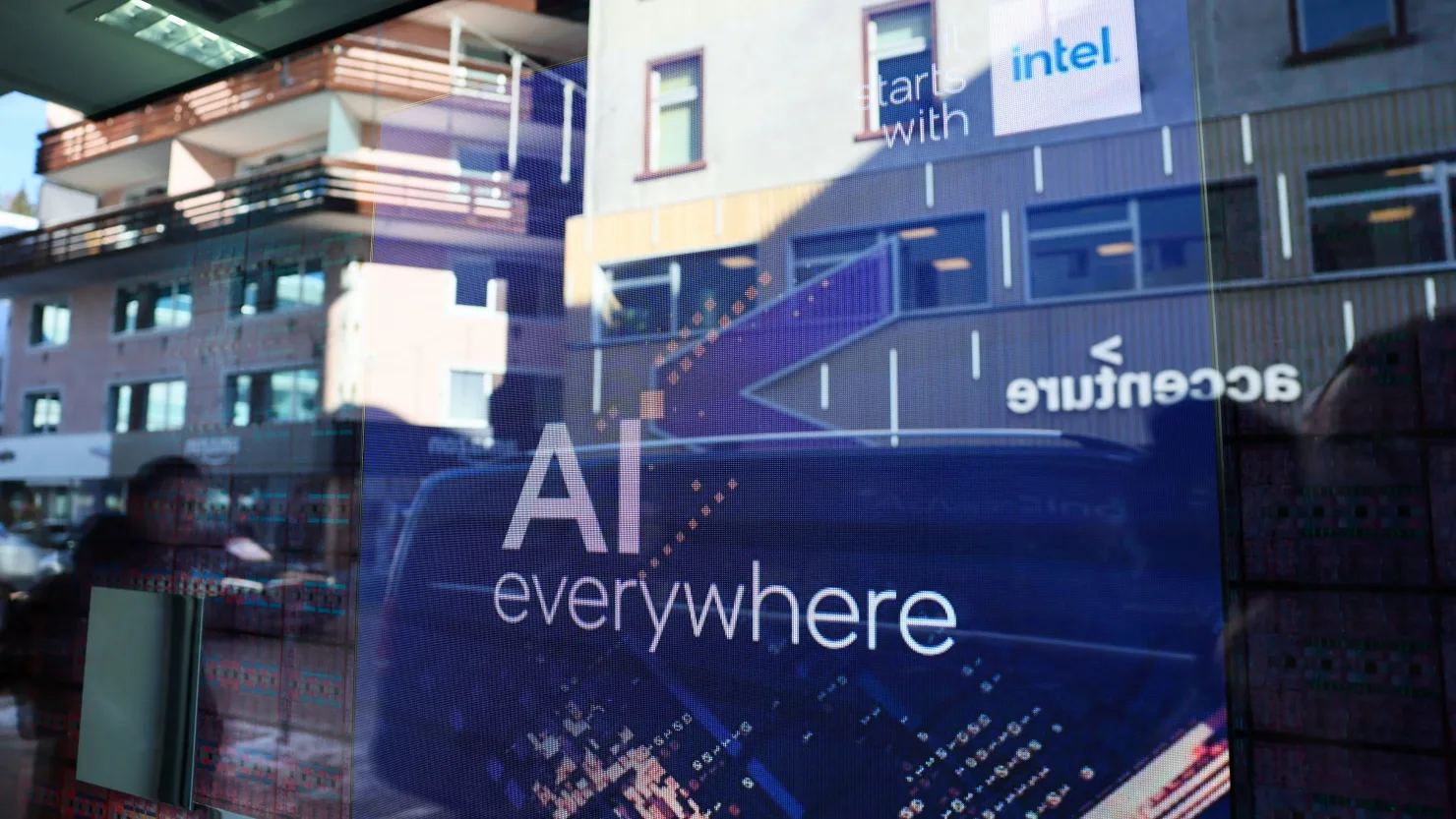
Microsoft and Amazon’s combined $50 billion commitment in less than a day wasn’t just a headline, it was the biggest vote of confidence India has received since the offshoring boom of the 2000s. Intel followed almost immediately, announcing plans to manufacture chips in India in response to the country’s skyrocketing PC demand and hyper-fast AI adoption.
This wasn’t a chain reaction. It was a stampede.
The Sweet Spot Between the U.S. and China
India sits in a unique position in the global tech order.
The U.S. is the world’s innovation hub.
China is an AI superpower with unmatched government-backed infrastructure.
India? India is the bridge—and the biggest open market left.
Unlike China, India is accessible to Western tech firms. Unlike the U.S., it offers scale, speed, and talent at a fraction of the cost. And unlike most other countries, it has both the demand and the capacity to become a long-term AI growth engine.
India’s AI Weakness Has Become Its Greatest Strength
India Doesn’t Have a GPT or a Claude—and That’s the Point
While India trails behind the U.S. and China in building foundational AI models, that gap has created one of the biggest opportunities in the world.
Rather than competing in the trillion-dollar arms race of training giant AI models, India is instead primed to own the application layer—the place where AI is actually deployed, monetized, and used in real-world scenarios.
And every major tech company knows it.
Microsoft wants India’s developers.
Amazon wants India’s cloud-native enterprises.
Google wants India’s billion-plus digital users.
AI startups want India’s data, talent, and speed of adoption.
India isn’t building the next ChatGPT. It’s building the next wave of AI-powered businesses—and Big Tech wants front-row seats.
The Global AI Game Is Changing
Countries that cannot compete in the compute race are shifting their focus to applied AI—the layer that makes AI profitable. India, with its vast IT ecosystem and enterprise expertise, is perfectly positioned for this.
As S. Krishnan, Secretary at India’s Ministry of Electronics and Information Technology, pointed out, having a model isn’t enough. Real value comes from building applications and deploying them at scale—and that requires deep talent pools, developer ecosystems, and enterprise infrastructure.
India already excels at all three.
The $50 Billion Bet: What Tech Giants Really Want
Microsoft: Betting on India’s AI Future
Microsoft’s sudden multi-billion-dollar surge into India isn’t just about cloud expansion. It’s about dominating the AI infrastructure layer before anyone else does.
With India’s enterprises racing to integrate AI into every workflow—from banking to insurance to logistics—Microsoft wants to be the backbone powering that transformation.
The more India builds on Azure, the more Microsoft wins.
Amazon: Building India’s AI and Cloud Backbone
Amazon’s matching investment signals one thing—AWS wants India’s AI boom under its umbrella.
India is one of the fastest-growing cloud markets in the world, and Amazon wants the lion’s share. With its new expansion, Amazon aims to host not just India’s AI workloads, but global AI services operating out of India.
Google: Going All-In on India’s Digital User Base
Google’s $15 billion push is a play to embed itself deeper into India’s rapidly digitizing ecosystem.
The company has long known that India’s next 300 million internet users will shape the future of global search, advertising, and mobile-first applications. Investing in AI access for millions at no cost is part of a strategy to create long-term loyalty.
Intel: The Surprise Contender
Intel’s decision to manufacture chips in India marks a historic shift in global semiconductor strategy.
As AI accelerates demand for processors and accelerators, Intel wants to secure production bases outside China—and India offers the scale and political alignment it needs.
If India succeeds here, it could become a global semiconductor hub within the decade.
Is India the Next Global AI Powerhouse?
The Biggest Companies Believe So
Even though India has not yet built a homegrown foundational model to rival GPT or Gemini, it has mastered something equally valuable: adopting and scaling AI solutions faster than almost any other country.
India’s digital public infrastructure—systems like UPI, Aadhaar, ONDC, DigiLocker, and FASTag—has already shown the world how technology can leapfrog development barriers.
AI will be no different.
Application Layer Is Where the Real Money Is
Foundational AI models cost billions to build and require massive ongoing investment. The application layer—enterprise AI, developer tools, productivity software, and sector-specific solutions—is where the real long-term profit lies.
This is where India shines.
And this is why Big Tech is pouring in billions.
The Domino Effect: What Comes Next for India
A Talent Explosion
With Big Tech opening its wallet, India’s tech workforce is about to expand dramatically.
Expect:
New AI labs
Mass hiring
Upskilling programs
Cloud training initiatives
Partnerships with universities
Millions of Indians could gain access to free or subsidized AI tools, raising the country’s skill floor overnight.
Massive Data-Center Boom
India has the land, the energy potential, and the digital user base. With billions pouring in, data centers will multiply across states, powering not just domestic AI but global workloads.
A New AI Startup Wave
When AI tools become cheap and widely available, innovation explodes. India could see its biggest startup boom since 2014—this time driven by AI.
The Bottom Line
The world is witnessing a once-in-a-generation shift in the global tech landscape. In less than a day, Big Tech committed more than $50 billion to India, signaling their belief that the country is about to play a central role in the future of AI.
India may not build the world’s biggest AI models, but it’s gearing up to become the world’s biggest AI marketplace—and the world’s most powerful AI laboratory.
This is just the beginning.
The next decade of global tech will be built in India.

