
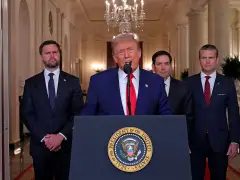

U.S. President Donald Trump said Tuesday that Iran wants to make a deal “more than” the United States, as both countries prepare for a third round of nuclear negotiations.
The talks are scheduled to take place Thursday in Geneva, a key diplomatic hub that has historically hosted high-stakes international negotiations.
Trump’s remarks come as American military forces continue building up in parts of the oil-rich Middle East, adding another layer of tension to the already complex diplomatic efforts.
Nuclear Talks Resume Amid Rising Tensions
The upcoming meeting marks the third round of discussions between Washington and Tehran aimed at resolving long-standing disputes over Iran’s nuclear program.
While both sides have signaled willingness to engage in dialogue, major differences remain unresolved. The most significant sticking point is Tehran’s refusal to commit explicitly to not developing nuclear weapons.
The U.S. has consistently demanded clear assurances that Iran will not pursue nuclear arms capability. Iran, on the other hand, maintains that its nuclear program is for peaceful purposes but has been reluctant to accept certain restrictions that Washington sees as essential.
Military Presence Adds Pressure
Trump’s comments come at a time when American forces are increasing their presence in strategic areas of the Middle East. The region’s importance to global energy markets, combined with ongoing geopolitical tensions, makes the situation particularly sensitive.
The buildup is widely seen as part of a broader strategy to strengthen the U.S. negotiating position while maintaining regional deterrence.
Although officials have not directly linked the military movements to the nuclear talks, the timing underscores the high-stakes environment in which the negotiations are unfolding.
The Core Issue: Nuclear Weapons Commitment
At the heart of the dispute lies one key issue: whether Iran is willing to formally and permanently renounce the development of nuclear weapons.
The U.S. position remains firm — any agreement must include strict limits and transparent verification mechanisms. Without a clear commitment from Tehran, progress toward a deal could stall.
For Iran, concerns revolve around sanctions relief, economic recovery, and guarantees that future U.S. administrations will uphold any agreement reached.
This gap in expectations continues to complicate efforts to secure a lasting accord.
Diplomatic Balancing Act
The Geneva talks represent a critical opportunity for both sides to narrow their differences. Diplomatic observers note that public statements, such as Trump’s claim that Iran wants a deal more than the U.S., can serve multiple purposes.
Such remarks may be aimed at:
- Strengthening domestic political positioning
- Signaling confidence ahead of negotiations
- Applying public pressure on the opposing side
However, they can also raise tensions if interpreted as confrontational.
What’s at Stake
A successful agreement could reduce regional tensions, stabilize global energy markets, and ease economic pressure on Iran. Conversely, failure to reach a deal may lead to heightened geopolitical uncertainty and further strain relations between the two nations.
The Middle East remains a crucial region for global oil supply, and any escalation could have ripple effects across financial and energy markets worldwide.
As the U.S. and Iran head into their third round of nuclear talks in Geneva, President Trump’s assertion that Iran wants a deal more than Washington adds a new dynamic to the negotiations.
With military forces building up in the region and key disagreements still unresolved, the upcoming discussions could prove pivotal. Whether both sides can bridge the gap over nuclear commitments will determine the direction of U.S.-Iran relations in the months ahead.

