
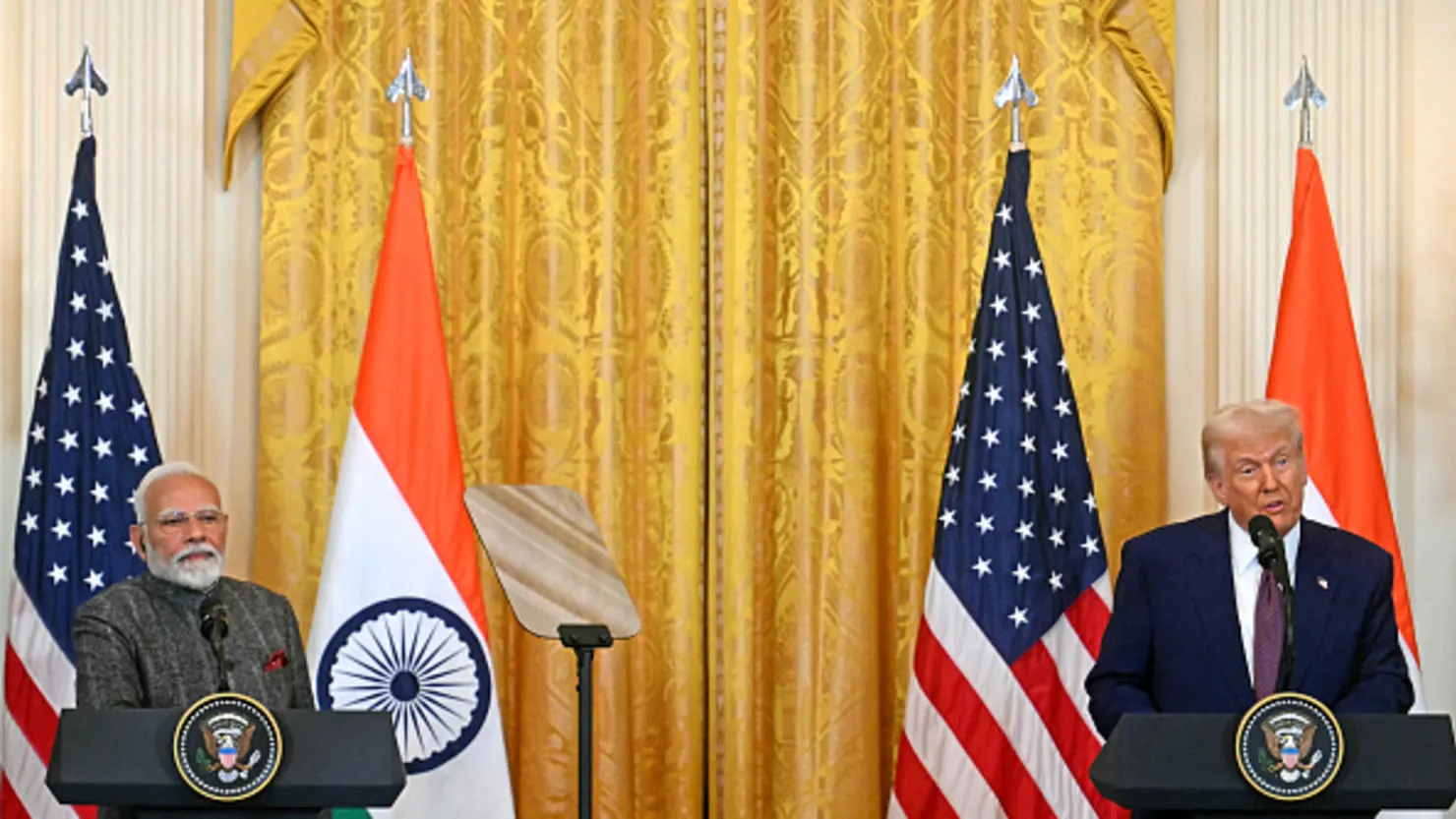

A recent ruling by the Supreme Court of the United States is expected to limit President Donald Trump’s ability to impose certain tariffs, potentially easing pressure on India over its continued purchases of Russian oil.
According to analysts, the decision could make it more difficult for the White House to use trade penalties as leverage against New Delhi, allowing India to maintain its current energy strategy.
Background: Tariffs Linked to Russian Oil Purchases
In August last year, Trump imposed an additional 25% tariff on Indian goods, citing India’s ongoing imports of Russian crude oil as the reason. The move was widely seen as an attempt to discourage New Delhi from deepening its energy ties with Moscow.
India, however, has defended its position by emphasizing energy security and cost considerations, particularly as global oil markets remain volatile.
India’s Russian Oil Imports: The Numbers
So far in February, India has imported approximately 1.16 million barrels per day (mbd) of Russian oil. This is significantly lower than its 2025 average intake of 1.71 million barrels per day.
The dip suggests some fluctuation in volumes, though Russia remains a key supplier to India. Analysts say the broader trend indicates that India continues to view Russian crude as an important part of its energy mix.
What the Supreme Court Ruling Changes
The Supreme Court ruling has reportedly constrained the president’s authority to unilaterally impose certain tariffs, limiting the scope of executive trade measures.
If tariff powers are restricted, the administration may face legal and procedural hurdles before introducing additional trade penalties tied to geopolitical issues such as oil purchases.
For India, this reduces immediate risks of further tariff escalation linked to its Russian energy imports.
Why India Continues to Buy Russian Oil
India’s energy demand has been rising steadily as its economy expands. Securing affordable crude oil supplies remains a top priority.
Russian oil has often been available at discounted rates compared to other global benchmarks, making it financially attractive for Indian refiners. By diversifying supply sources, India aims to balance geopolitical pressures with domestic economic needs.
New Delhi has consistently maintained that its energy procurement decisions are guided by national interest and market dynamics rather than political alignment.
Broader Geopolitical Implications
The issue of Russian oil purchases has been a sensitive point in global diplomacy. Western nations have sought to limit Moscow’s energy revenues, while countries like India have argued for pragmatic energy policies.
If the U.S. administration’s tariff authority is limited by judicial oversight, it may shift focus toward diplomatic engagement rather than trade penalties.
At the same time, any significant escalation in U.S.-India trade tensions could have broader economic consequences, given the deep trade and strategic ties between the two nations.
Market Impact
Energy markets closely watch developments involving major oil consumers like India. Stability in India’s import patterns can influence global crude flows and pricing dynamics.
With reduced likelihood of immediate additional U.S. tariffs, traders may see greater predictability in India’s purchasing behavior in the near term.
The U.S. Supreme Court’s tariff ruling appears to have narrowed President Trump’s ability to use trade measures as a tool to pressure India over its Russian oil imports.
While India’s February imports are lower than its 2025 average, analysts believe New Delhi is likely to continue sourcing Russian crude as part of its broader energy strategy. The evolving legal and geopolitical landscape will shape how the situation unfolds in the coming months.

