
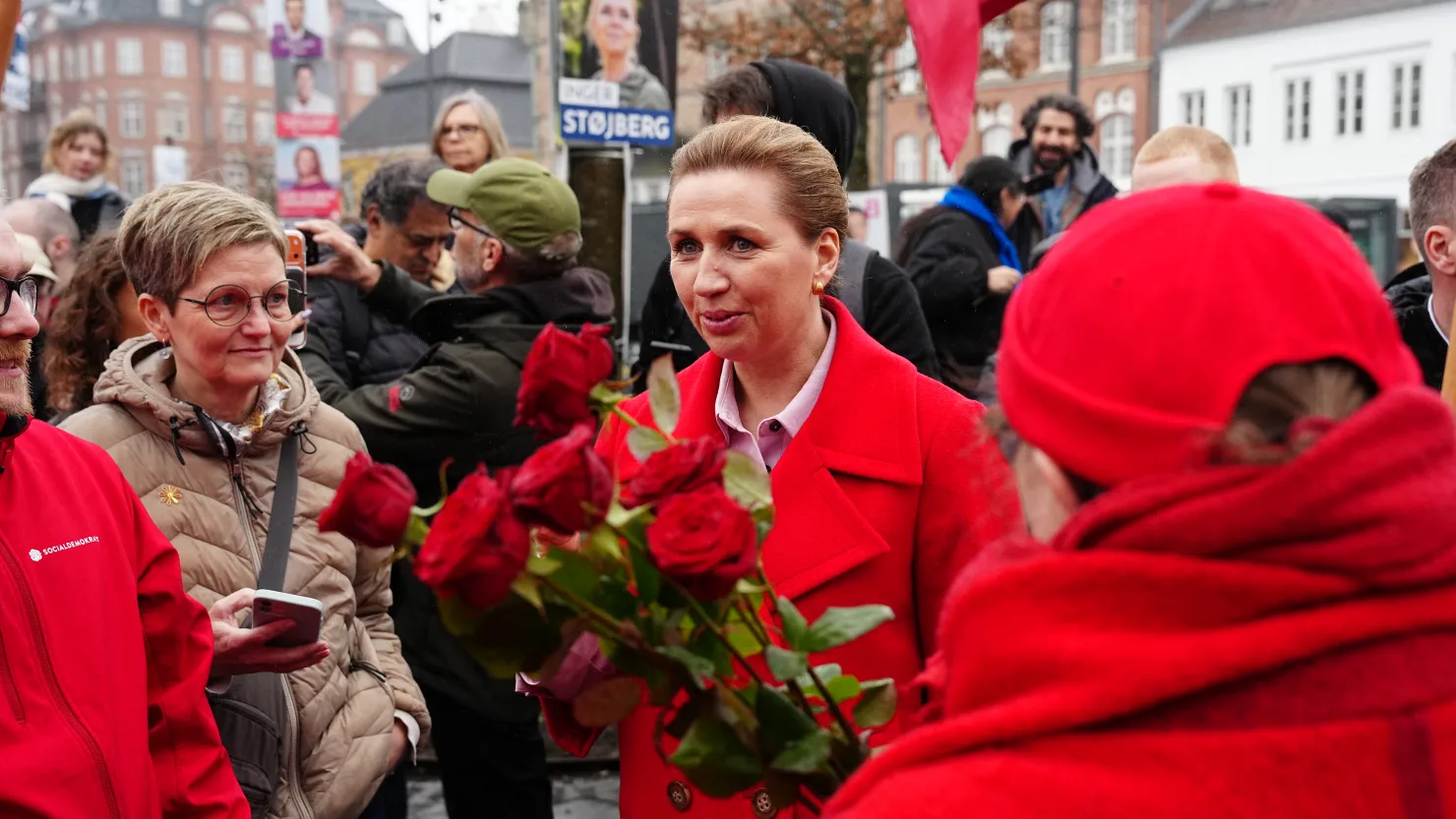

Denmark’s Prime Minister Mette Frederiksen is facing a political challenge after her party fell short of securing enough seats to form a government, despite winning the highest number of votes in the recent election.
The outcome has set the stage for intense coalition negotiations, with no clear majority emerging from the results.
What Happened in the Election?
Frederiksen’s party, the Social Democrats, remained the single largest party in Denmark’s parliament. However, the broader left-leaning alliance, known as the “red bloc,” did not secure enough seats to maintain power on its own.
Key Numbers
- Social Democrats: 38 seats (down from 50 previously)
- Red bloc total: 84 seats
- Majority mark: 90 seats
- Right-leaning “blue bloc”: 77 seats
This leaves Denmark in a situation where no bloc has a clear majority, making coalition talks essential.
The Greenland Controversy and Its Impact
A major talking point during the campaign was the tension involving Donald Trump and his past proposal to annex Greenland.
Frederiksen had strongly opposed the idea, positioning herself as a leader willing to stand firm against external pressure. She even called for early elections, hoping to ride a wave of public support following her stance.
While this move initially appeared to strengthen her image, the election results suggest that it was not enough to secure a decisive victory.
Why Did Frederiksen Fall Short?
Several factors may have contributed to the setback:
Decline in Seats
The Social Democrats lost significant ground compared to the previous election, dropping from 50 to 38 seats.
Fragmented Political Landscape
Voters appear to have spread their support across multiple parties, making it harder for any one bloc to dominate.
Domestic Issues
While international tensions grabbed headlines, local concerns such as the economy, public services, and immigration likely played a major role in voter decisions.
What Happens Next? Coalition Talks Begin
With no party or bloc holding a majority, Denmark is now headed for coalition negotiations.
Frederiksen will likely attempt to:
- Form alliances with smaller parties
- Build a broader coalition beyond the traditional red bloc
- Negotiate policy compromises to secure support
These discussions could take weeks and will determine who ultimately forms the next government.
The Role of the Opposition
The right-leaning “blue bloc,” with 77 seats, is also in a strong position to influence the outcome.
While it does not have enough seats to form a government on its own, it could:
- Attempt to build its own coalition
- Act as a powerful negotiating force
- Push for policy concessions
This balance of power makes the situation highly unpredictable.
A Test of Leadership for Frederiksen
Despite the setback, Frederiksen remains a central figure in Danish politics. Winning the most votes keeps her in a strong position, but the road ahead is more complex.
Her ability to:
- Navigate coalition negotiations
- Maintain political stability
- Address domestic concerns
will determine whether she can continue as prime minister.
The Bigger Picture
This election highlights a broader trend seen in many democracies:
- Declining dominance of major parties
- Rise of fragmented political systems
- Increasing importance of coalition governments
Denmark’s situation reflects how even strong leaders can face challenges in securing clear mandates.
Mette Frederiksen may have won the most votes, but her path to forming a government is far from certain. The election setback underscores the complexities of modern politics, where international issues, domestic concerns, and shifting voter preferences all play a role.
As coalition talks begin, Denmark enters a crucial phase that will shape its political direction in the coming years.

