
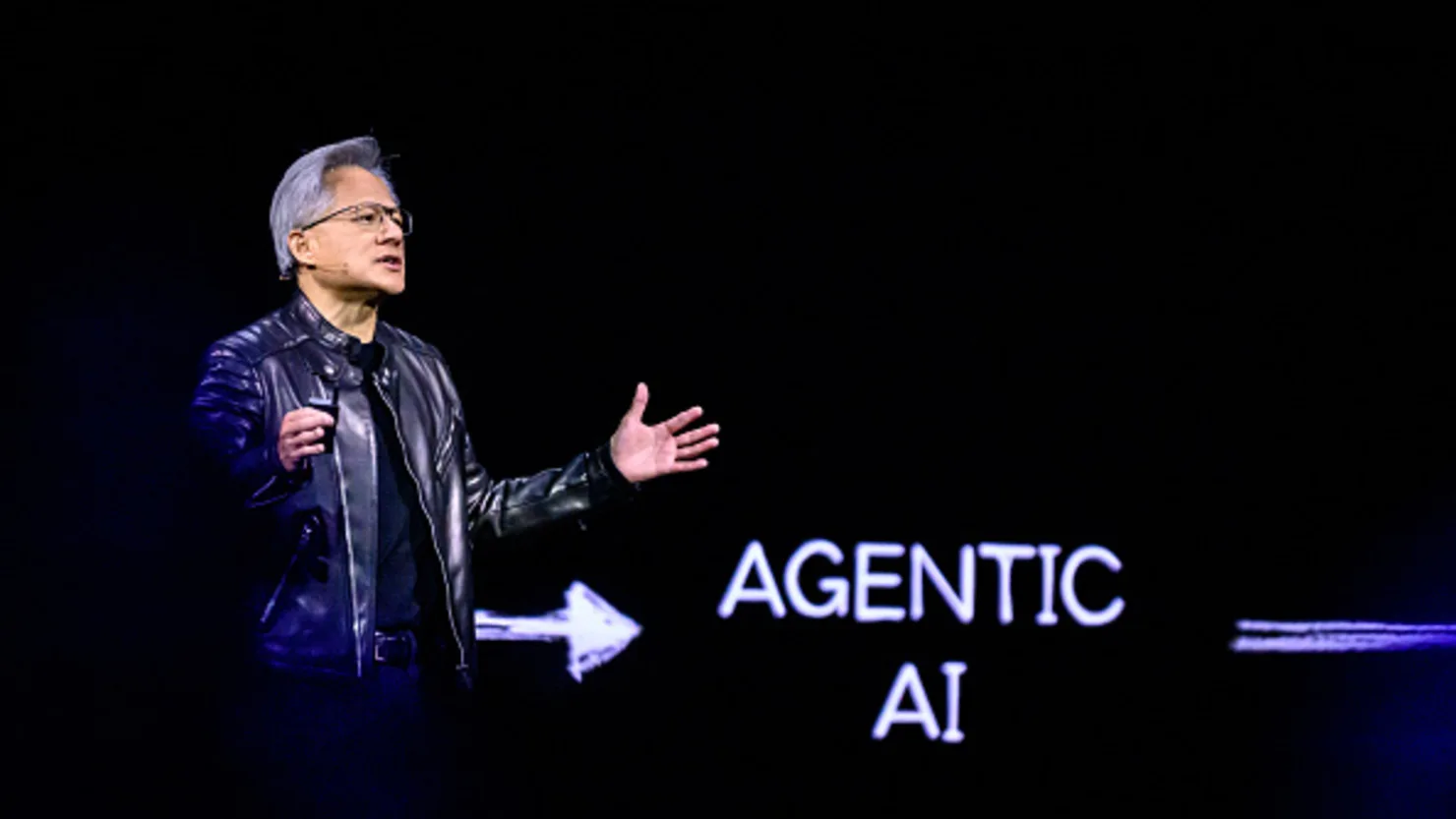

Jensen Huang, the CEO of Nvidia, has shared a bold vision for the future of work — one where employees could be rewarded not just with salaries, but also with “AI tokens.”
This idea reflects how quickly artificial intelligence is reshaping workplaces and how companies might rethink compensation in the years ahead.
What Are ‘AI Tokens’?
A New Kind of Workplace Reward
According to Jensen Huang, AI tokens could become an additional form of compensation for engineers and employees.
While details are still conceptual, the idea is that:
- Employees would receive tokens tied to AI systems or productivity
- These tokens could represent value created through AI-driven work
- They may act as incentives in an AI-powered economy
This signals a shift toward rewarding not just human effort, but also how effectively people leverage AI tools.
A Future Filled with AI Agents
More AI Than Humans?
Jensen Huang also revealed a striking possibility — that Nvidia could one day employ hundreds of thousands of AI agents.
For context, the company currently has around 42,000 human employees.
This means AI agents could eventually:
- Outnumber human workers
- Handle a large share of routine and complex tasks
- Work alongside humans as digital teammates
What Are AI Agents?
Digital Workers That Get Things Done
AI agents are advanced systems that can perform tasks autonomously. Unlike basic software, they can:
- Make decisions
- Learn from data
- Execute multi-step processes
In a corporate environment, they could handle:
- Coding assistance
- Customer support
- Data analysis
- Workflow automation
This makes them powerful tools — but also raises important questions.
Rising Concerns Around White-Collar Jobs
Fear of Job Displacement
The growing use of AI agents has sparked concerns that they could replace many white-collar roles.
Jobs that involve repetitive or structured tasks are particularly at risk, such as:
- Data entry
- Basic analysis
- Administrative work
As companies adopt AI at scale, fewer humans may be needed for certain functions.
A Shift, Not Just Replacement
However, some experts believe this won’t just eliminate jobs — it will transform them.
Employees may need to:
- Learn how to work alongside AI
- Focus on creativity and strategy
- Manage and guide AI systems
Why Nvidia Is Leading This Conversation
At the Center of the AI Boom
Nvidia is one of the most important companies in the AI revolution. Its chips power many of the world’s leading AI systems.
Because of this, insights from Jensen Huang carry significant weight in shaping how businesses think about the future.
What This Means for the Future of Work
A Hybrid Workforce
The future workplace could include:
- Human employees
- AI agents
- New forms of compensation like AI tokens
This hybrid model could redefine productivity, performance, and even how value is measured.
Rethinking Compensation
If AI contributes directly to output, companies may need new ways to reward employees who effectively use these tools.
AI tokens could be one such mechanism — linking human effort with AI-driven results.
Final Thoughts
Jensen Huang’s vision of AI tokens and a workforce dominated by AI agents highlights just how fast the world of work is changing.
While the idea may seem futuristic, it reflects a deeper reality — artificial intelligence is no longer just a tool, but a core part of how businesses operate.
The big question now is not whether AI will change jobs, but how quickly people and companies can adapt to this new reality.

