
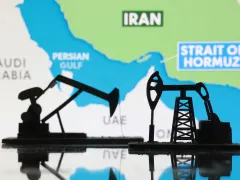

Global oil prices briefly surged above $110 per barrel before pulling back as major economies considered emergency measures to stabilize the market.
The sudden movement in oil prices comes as geopolitical tensions in the Middle East disrupt supply routes and create uncertainty in global energy markets.
Finance ministers from the Group of Seven (G7) countries were scheduled to hold a call at 8:30 a.m. EST to discuss the ongoing situation and explore the possibility of releasing emergency oil reserves to control rising prices.
The discussions come as the conflict between the United States and Iran continues without clear signs of de-escalation.
Middle East Tensions Disrupt Oil Supply
The recent spike in oil prices is closely linked to escalating tensions in the Middle East, one of the world’s most important oil-producing regions.
Several major oil exporters have faced logistical challenges that have limited their ability to ship crude oil to global markets.
Countries including Iraq, Kuwait, and the United Arab Emirates have reportedly reduced their oil output as they run out of storage capacity.
The problem stems from their inability to export oil through the Strait of Hormuz, a critical shipping route used for transporting crude oil from the Persian Gulf to international markets.
Iran has reportedly threatened oil tankers moving through the strait, creating safety concerns and disrupting shipments.
Because of these threats, exporters have struggled to move oil supplies, leading to storage facilities filling up and forcing production cuts.
Why the Strait of Hormuz Is So Important
The Strait of Hormuz is one of the most strategically important waterways in the global energy market.
A significant portion of the world’s oil supply passes through this narrow passage connecting the Persian Gulf with the Arabian Sea.
Major oil-producing nations in the region rely heavily on this route to transport crude oil to customers across Asia, Europe, and other parts of the world.
When tensions rise in the area, even the possibility of disruptions can push global oil prices higher.
Energy markets tend to react quickly to such risks because any prolonged blockage could reduce supply and create shortages.
G7 Considers Releasing Emergency Oil Reserves
In response to rising prices and supply concerns, finance ministers from G7 countries are considering releasing oil from strategic emergency reserves.
Strategic reserves are large stockpiles of crude oil maintained by governments to be used during supply disruptions or major economic shocks.
These reserves are designed to stabilize markets and ensure that countries have access to energy supplies during emergencies.
The potential release of oil from these reserves could increase supply in the short term and help bring prices down.
According to reports, the G7 ministers planned to discuss the situation during a call scheduled for 8:30 a.m. EST.
The talks are expected to focus on the impact of the ongoing conflict as well as possible coordinated actions among major economies.
The Impact of the U.S.-Iran Conflict
The broader backdrop to the oil market volatility is the ongoing conflict involving the United States and Iran.
The situation has raised fears that disruptions in the region could affect global oil supply.
Despite ongoing tensions, there have been few signs that the conflict is moving toward a quick resolution.
Markets tend to react strongly to such geopolitical developments because the Middle East remains one of the most important sources of global energy production.
Even small disruptions in this region can have a significant impact on oil prices worldwide.
Why Oil Prices React So Quickly to Supply Risks
Oil markets are highly sensitive to geopolitical developments, especially those involving major producing regions.
Several factors contribute to the rapid movement in prices.
Supply Concerns
Any potential reduction in oil supply can immediately affect global prices because demand for energy remains consistently high.
Shipping Disruptions
When shipping routes such as the Strait of Hormuz face threats, oil traders anticipate supply bottlenecks and adjust prices accordingly.
Market Speculation
Energy traders often react quickly to news and geopolitical developments, which can amplify price movements in the short term.
Strategic Stockpiles
Government decisions regarding strategic reserves can also influence prices by increasing or decreasing supply in the market.
What Rising Oil Prices Mean for the Global Economy
Sharp increases in oil prices can have far-reaching economic consequences.
Oil plays a central role in transportation, manufacturing, and energy production. When prices rise significantly, it can lead to higher costs across several sectors.
Higher oil prices often translate into increased fuel costs for consumers and businesses. This can affect everything from airline tickets to shipping expenses and electricity prices.
In many countries, rising fuel prices can also contribute to inflation, making everyday goods more expensive.
Governments and central banks closely monitor energy prices because prolonged increases can slow economic growth.
Possible Scenarios for the Oil Market
The direction of oil prices in the coming weeks will likely depend on several key factors.
Geopolitical Developments
If tensions in the Middle East escalate further, oil prices could rise again due to fears of supply disruptions.
Strategic Reserve Releases
A coordinated release of emergency oil reserves by G7 countries could temporarily increase supply and stabilize prices.
Shipping Security
Ensuring safe passage for oil tankers through key routes such as the Strait of Hormuz will be crucial for maintaining stable supply.
Production Adjustments
Major oil-producing nations may adjust production levels depending on market conditions and storage capacity.
A Market Watching the Next Move
For now, global oil markets remain on edge.
Prices have pulled back slightly after briefly crossing the $110 mark, but uncertainty continues to dominate the energy sector.
Investors, governments, and energy companies are closely monitoring developments in the Middle East and the outcome of discussions among major economies.
Any significant change in the geopolitical situation or coordinated policy actions could quickly influence oil prices and reshape the global energy market.

