

China has signaled that preparations are underway for a possible meeting between its leader and the U.S. president, but officials say several issues must be addressed before the talks can move forward.
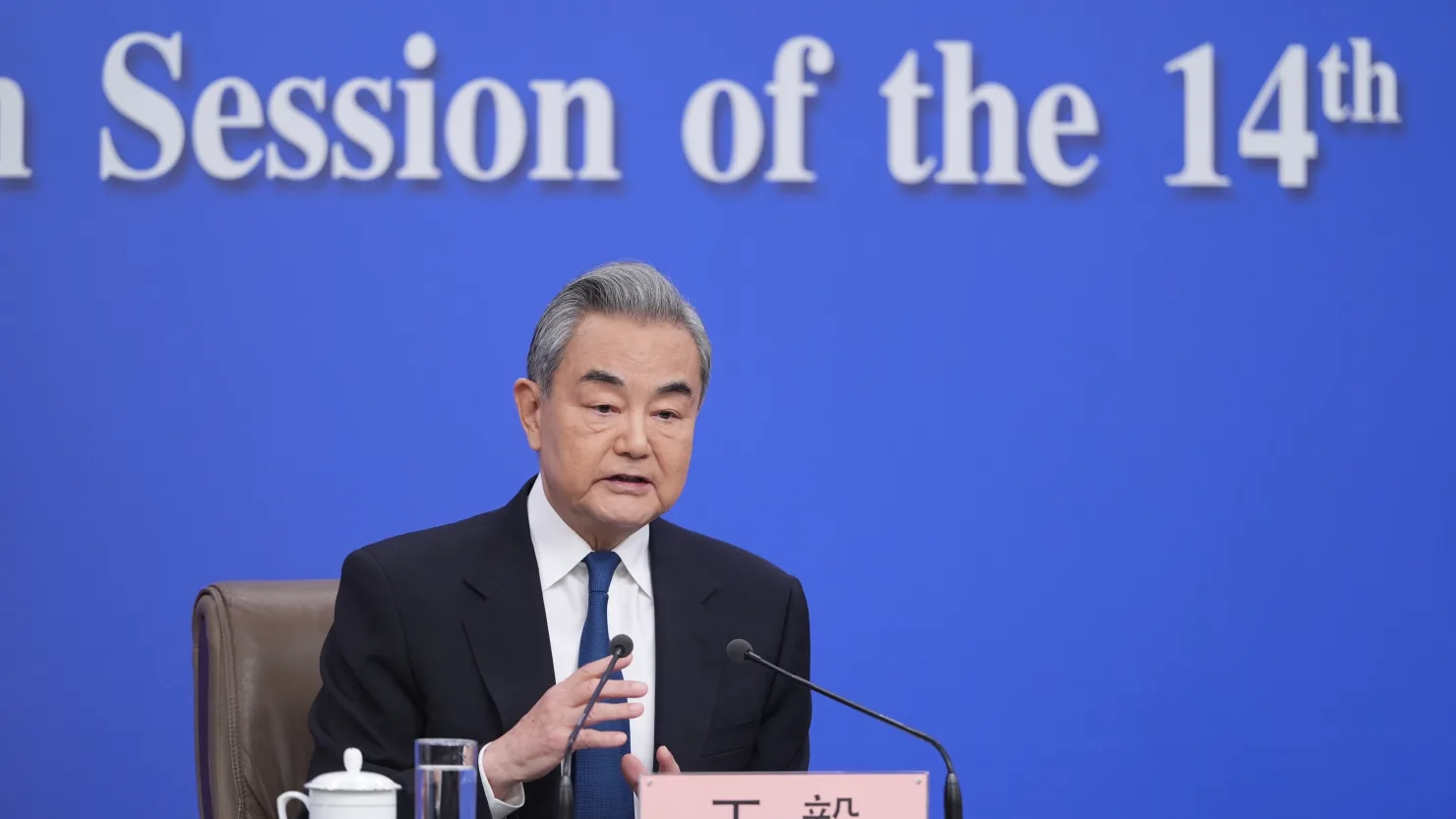
Speaking to reporters in Beijing on Sunday, China’s Foreign Minister Wang Yi emphasized the importance of cooperation between the two global powers. His remarks came at a time when tensions are rising due to the ongoing conflict involving Iran and ongoing trade disputes between the United States and China.
The comments suggest that while both sides are considering a high-level meeting, the timing and conditions for such talks remain uncertain.
Beijing Stresses Importance of U.S.–China Engagement
During his remarks, Wang Yi highlighted the importance of maintaining dialogue between the world’s two largest economies.
He said both countries need to make thorough preparations before a meeting between the leaders can take place.
According to Wang, discussions between the two sides are already being planned, but several steps must be taken to ensure a productive outcome.
“The agenda of high-level exchanges is already on the table,” Wang said while addressing the press.
He added that both sides should work to create a suitable environment for dialogue while managing potential risks and avoiding unnecessary disruptions.
The comments reflect Beijing’s view that careful diplomatic preparation is essential before holding a meeting at the highest level.
Meeting Between Trump and Xi Yet to Be Confirmed
While preparations appear to be underway, China has not officially confirmed when a meeting between the leaders of the two countries will occur.
A potential meeting between former U.S. President Donald Trump and Chinese President Xi Jinping has been widely discussed in diplomatic and political circles.
However, differences over several major geopolitical issues could complicate the process.
Among the most significant issues are the ongoing war involving Iran and trade tensions between Washington and Beijing.
Both topics have strained relations between the two countries in recent years.
Iran Conflict Adds Complexity to Global Diplomacy
One of the key challenges affecting the relationship between the United States and China is the ongoing conflict involving Iran.
The war has heightened geopolitical tensions and raised concerns about stability in the Middle East.
Global powers are closely monitoring the situation as the conflict continues, with potential consequences for energy markets, global trade, and international security.
China has traditionally supported diplomatic solutions to international conflicts and often calls for dialogue rather than military escalation.
Wang Yi’s comments reflect Beijing’s concern that escalating tensions could have broader consequences for the global economy and international stability.
Trade Disputes Continue to Shape Relations
Trade issues remain another major source of friction between the United States and China.
Over the past several years, both countries have imposed tariffs and trade restrictions on each other’s goods.
These measures have affected global supply chains and created uncertainty for businesses operating in international markets.
Negotiations between the two sides have taken place periodically, but significant disagreements remain over market access, technology policies, and trade imbalances.
A potential meeting between the leaders could provide an opportunity to address some of these issues and reduce economic tensions.
China Warns Against Conflict Between Major Powers
In his remarks, Wang Yi also warned about the risks of confrontation between the United States and China.
He stressed that a breakdown in communication could lead to misunderstandings or miscalculations between the two countries.
“Turning our backs on each other would only lead to mutual misperception and miscalculation,” Wang said.
He added that direct conflict or confrontation between the two powers would have serious consequences for the entire world.
“Sliding into conflict or confrontation would only drag the whole world down,” he said.
These comments highlight Beijing’s effort to emphasize diplomacy and cooperation despite ongoing disagreements.
Why U.S.–China Relations Matter Globally
The relationship between the United States and China is one of the most important partnerships in global politics.
Together, the two countries represent a large share of the global economy and play major roles in international trade, technology development, and geopolitical stability.
When tensions rise between Washington and Beijing, the effects are often felt worldwide.
Financial markets, supply chains, and diplomatic alliances can all be influenced by developments in the relationship between the two powers.
This is why potential meetings between their leaders often attract global attention.
Such meetings can help manage disagreements and reduce the risk of escalation.
Diplomatic Challenges Ahead
Despite calls for cooperation, several obstacles remain before a high-level meeting can take place.
Diplomatic preparations for meetings between world leaders typically involve extensive negotiations over agendas, policy priorities, and expected outcomes.
Both sides will likely want to ensure that the meeting produces meaningful results rather than becoming symbolic or confrontational.
Issues such as trade tariffs, geopolitical conflicts, and economic competition are complex and often require long-term negotiations.
As a result, officials on both sides are likely working behind the scenes to prepare for potential discussions.
A Moment of Uncertainty in Global Politics
Wang Yi’s comments come at a time when global geopolitics are experiencing significant uncertainty.
The ongoing conflict involving Iran, shifting alliances, and economic competition between major powers are shaping the international landscape.
In this environment, dialogue between the United States and China could play a key role in maintaining global stability.
While a meeting between the two leaders has not yet been confirmed, China’s statements suggest that diplomatic channels remain open.
For now, the focus appears to be on preparing the ground for potential talks while managing the risks that could disrupt the process.

