
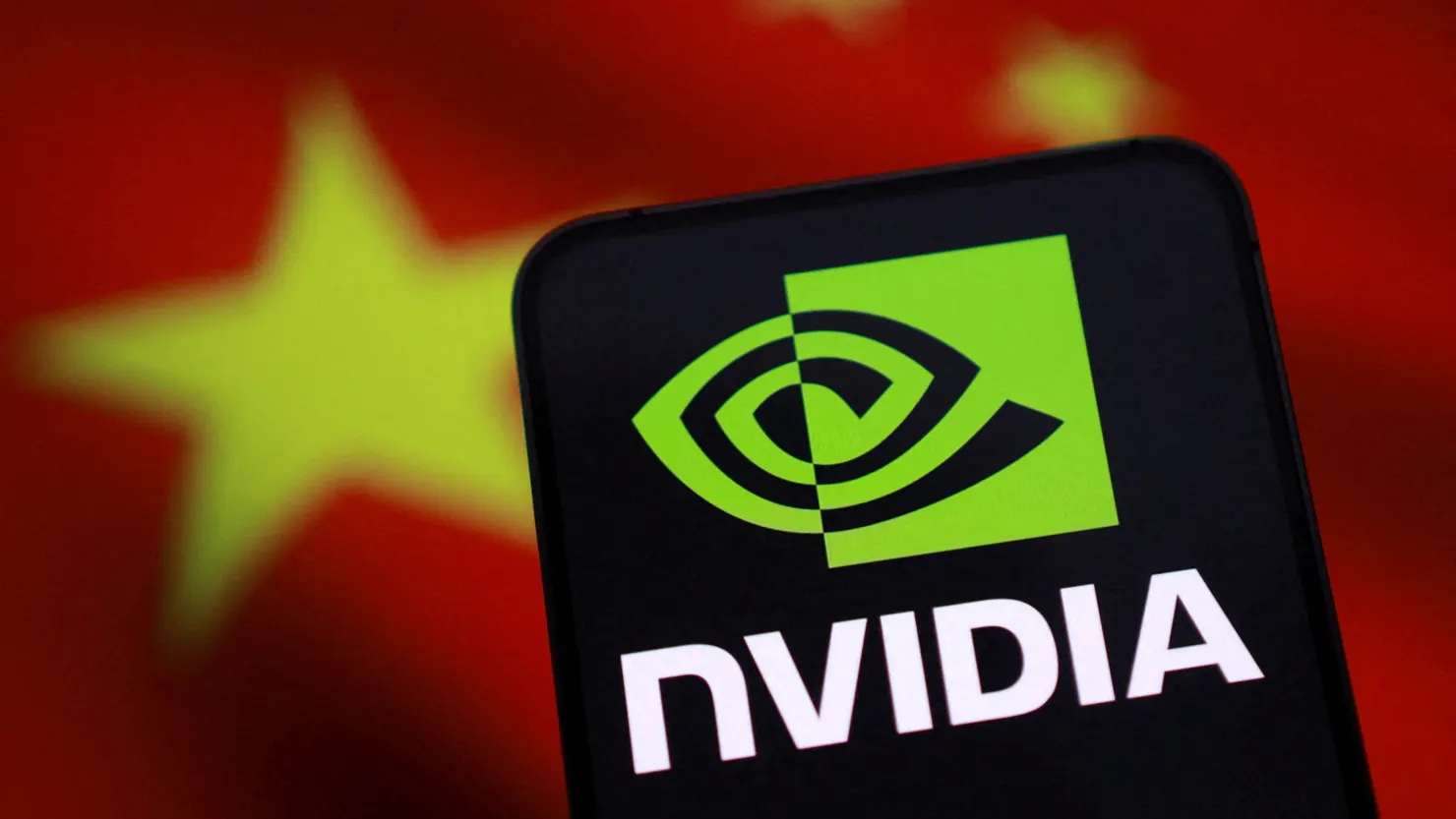
Nvidia Still Hasn’t Sold Its U.S.-Approved AI Chips in China — And Local Rivals Are Closing In

U.S. chipmaker Nvidia is facing a difficult reality in China: even after receiving approval to sell certain AI chips, it hasn’t generated any revenue from those sales.
At the same time, Chinese AI companies are moving quickly — raising capital, going public, and building lower-cost alternatives that could permanently reshape the competitive landscape.
The situation highlights how the global tech race between Washington and Beijing is affecting one of the world’s most valuable semiconductor companies.
Approved to Sell, But No Revenue Yet
Speaking on an earnings call, Nvidia’s Chief Financial Officer Colette Kress said that while the U.S. government approved limited shipments of H200 AI chips to customers in China, the company has not yet booked any revenue from those products.
She also noted uncertainty around future imports, saying the company does not know whether additional shipments will ultimately be allowed into China.
In other words, regulatory approval has not translated into actual business.
For Nvidia, that’s a serious issue. China was once one of its largest markets, accounting for a significant portion of data center revenue before export controls tightened.
The U.S.–China Tech Tensions
The broader context is the ongoing technology rivalry between the United States and China.
Washington has imposed restrictions on advanced semiconductor exports to China, citing national security concerns. The rules aim to limit China’s access to cutting-edge AI chips that could be used in military or surveillance applications.
Beijing, in response, has accelerated efforts to build domestic semiconductor capabilities and reduce reliance on U.S. suppliers.
For Nvidia, this puts the company in a delicate position:
- It must comply with U.S. export rules
- It risks losing a massive market
- It faces growing competition from local Chinese players
Even when specific products receive approval, uncertainty around enforcement and future policy changes creates hesitation among buyers.
Rising Chinese AI Rivals
While Nvidia navigates regulatory hurdles, Chinese AI and semiconductor companies have been gaining momentum.
Several firms have raised fresh capital through IPOs and private funding rounds. Many are focused on producing AI accelerators and data center chips at lower price points than Nvidia’s premium offerings.
These companies may not yet match Nvidia’s performance at the high end. But for many Chinese customers — especially startups and cost-sensitive enterprises — affordability and domestic availability matter just as much as raw power.
If Chinese firms can deliver “good enough” AI chips without geopolitical risk, they could steadily capture market share.
Why This Market Matters So Much
China has been one of the world’s largest buyers of semiconductors. Before export controls intensified, it represented a major revenue stream for global chipmakers.
For Nvidia in particular:
- China was a key growth engine for data center GPUs
- AI demand from Chinese tech firms fueled strong sales
- Large cloud providers and research institutions were major customers
Losing meaningful access to this market could have long-term strategic consequences.
Even if Nvidia continues to dominate in North America and Europe, a permanently weakened position in China could open the door for a parallel AI ecosystem built on domestic chips.
The Risk of a Split AI Ecosystem
If export restrictions persist and local competitors strengthen, the global AI hardware market could become increasingly fragmented.
One ecosystem might revolve around Nvidia’s cutting-edge GPUs in the U.S. and allied countries. Another could emerge in China, powered by domestic chipmakers and software stacks optimized for local hardware.
Such a split would:
- Reduce Nvidia’s influence in the world’s second-largest economy
- Encourage Chinese firms to double down on self-reliance
- Potentially slow cross-border technology collaboration
For Nvidia, the concern is not just short-term revenue — it’s long-term positioning.
Investor and Market Implications
Nvidia remains one of the most valuable semiconductor companies globally, driven largely by explosive AI demand.
However, uncertainty in China introduces several risks:
- Revenue Volatility
Delays or blocks in shipments can create unpredictable revenue swings. - Competitive Entrenchment
The longer Nvidia is absent or restricted, the more time Chinese competitors have to mature. - Pricing Pressure
Lower-cost domestic alternatives could limit Nvidia’s pricing power in the region.
Even limited approvals for chips like the H200 may not be enough if customers fear sudden policy reversals.
Nvidia’s Strategic Dilemma
Nvidia must balance three competing realities:
- Complying strictly with U.S. export regulations
- Maintaining relationships with Chinese customers
- Protecting its technological leadership
Designing modified chips specifically for China has been one strategy. But even those versions face regulatory review and uncertain approval timelines.
Meanwhile, Chinese companies are not waiting. They are building their own solutions — and in some cases, attracting strong investor backing.
What Happens Next?
Much depends on future policy decisions in Washington and Beijing.
If export restrictions ease further and shipments resume smoothly, Nvidia could recover at least part of its China revenue.
If tensions intensify, however, the company may see a permanent structural shift in the Chinese AI market — one where local players dominate and foreign suppliers play a limited role.
For now, the key takeaway is clear: even when approvals exist on paper, geopolitics can still stall real business.
And in a fast-moving AI race, every quarter of delay gives competitors more time to catch up.

