
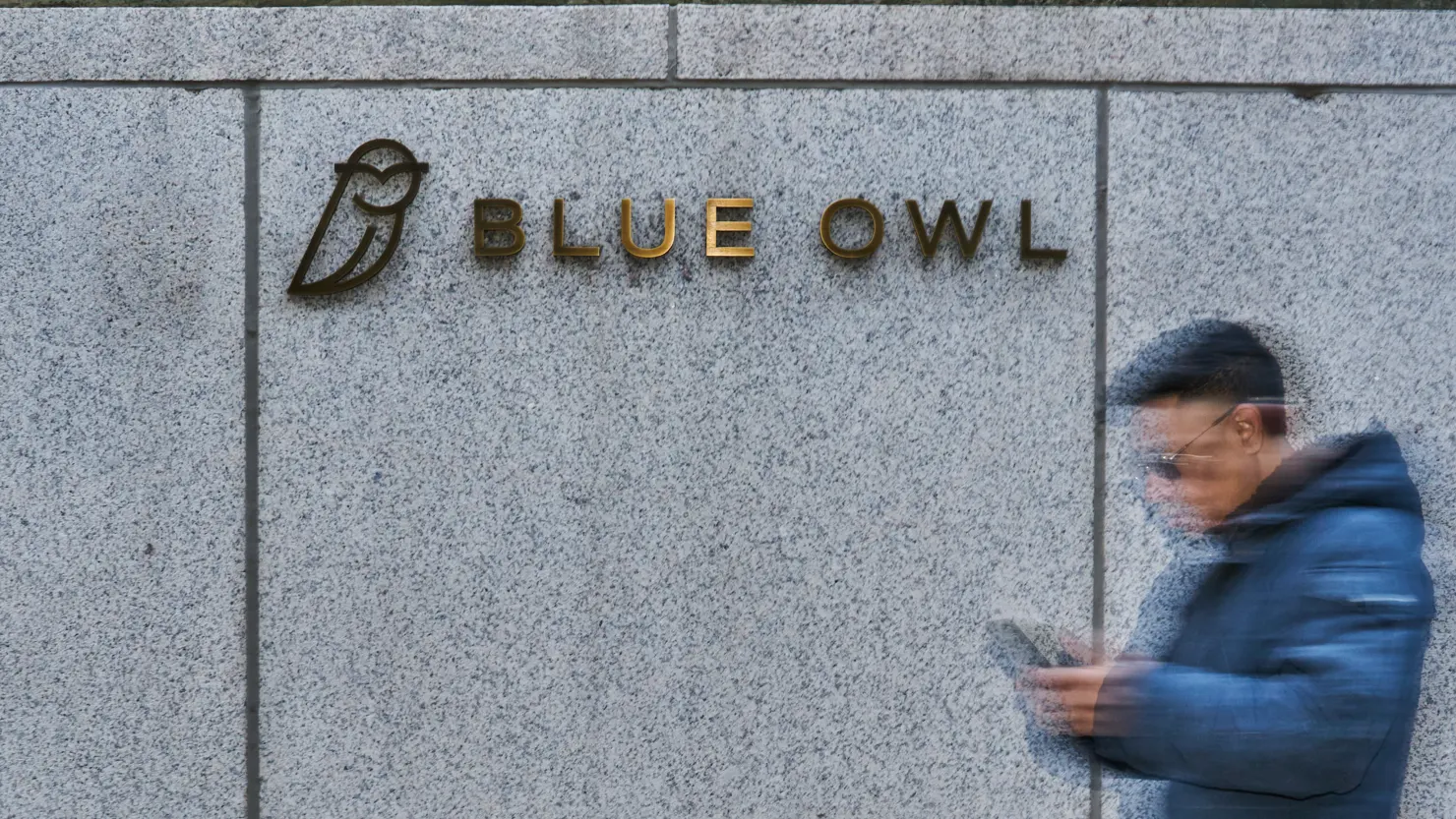

The private credit boom is facing renewed scrutiny after Blue Owl Capital permanently restricted withdrawals from one of its retail-focused debt funds, raising concerns about liquidity stress in one of Wall Street’s fastest-growing asset classes.
Market watchers are calling the move a potential “canary in the coal mine,” warning that it could signal deeper strain within the private credit ecosystem.
What Happened?
Blue Owl Capital announced that it would permanently restrict quarterly redemption options for investors in one of its semi-liquid private debt vehicles, Blue Owl Capital Corporation II.
The decision came after the firm sold $1.4 billion worth of loan assets held across three of its private debt funds.
The largest portion of that sale was tied to Blue Owl Capital Corporation II, a fund marketed primarily to U.S. retail investors seeking exposure to private credit markets.
Following the announcement, shares of Blue Owl Capital fell nearly 6% on Thursday, reflecting investor unease.
Why This Matters
Private credit has grown rapidly over the past decade, attracting both institutional and retail capital. The asset class offers investors higher yields compared to traditional bonds, especially in a higher interest rate environment.
However, unlike publicly traded bonds, private credit investments are less liquid. That means they cannot be easily bought or sold on open markets.
Semi-liquid funds, like Blue Owl Capital Corporation II, typically allow limited redemption windows—often quarterly. When a fund restricts or suspends redemptions, it can signal that liquidity pressures are building beneath the surface.
The “Canary in the Coal Mine” Warning
The phrase “canary in the coal mine” suggests an early warning sign of a larger problem.
Some market participants worry that Blue Owl’s decision could indicate:
- Increased investor redemption requests
- Difficulty valuing or selling underlying loans
- Early stress in borrower performance
- Broader liquidity mismatches in private markets
If more funds begin imposing similar restrictions, it could challenge confidence in the private credit model, particularly among retail investors.
What Is Private Credit and Why Has It Boomed?
Private credit refers to loans made directly by non-bank lenders to companies, often middle-market businesses. These loans are typically not traded on public exchanges.
The sector has expanded rapidly due to:
- Stricter banking regulations limiting traditional lending
- Investor appetite for higher yields
- Growth of alternative asset managers
- Rising interest rates boosting loan returns
Asset managers like Blue Owl have built large platforms to capitalize on this demand, offering access to private debt strategies previously available mainly to institutions.
Retail Investors Enter the Space
One notable trend in recent years has been the expansion of private credit products to retail investors. Semi-liquid funds were designed to bridge the gap between fully illiquid private funds and daily-traded mutual funds.
But this structure carries inherent tension.
While investors may expect periodic liquidity, the underlying assets—private loans—are long-term and not easily sold. In periods of stress, managers may need to limit withdrawals to protect remaining investors.
Blue Owl’s move highlights this structural challenge.
Is This a Sign of a Bubble?
Some critics have long argued that the rapid growth of private credit could be forming a bubble.
Concerns include:
- Aggressive lending standards
- High borrower leverage
- Limited transparency
- Liquidity mismatches
However, supporters argue that private credit portfolios are generally floating-rate, senior-secured and structured conservatively compared to high-yield bonds.
Whether Blue Owl’s decision reflects isolated fund dynamics or broader systemic stress remains to be seen.
Market Reaction and Broader Implications
The nearly 6% drop in Blue Owl’s share price indicates that public markets are paying close attention.
If confidence in semi-liquid private credit vehicles weakens, it could:
- Slow fundraising
- Increase redemption pressure
- Tighten lending conditions for borrowers
- Reduce valuations across alternative asset managers
At the same time, private credit has not yet shown widespread default spikes comparable to past financial crises.
A Stress Test for Private Markets
The current environment—characterized by higher interest rates and economic uncertainty—represents a real-world stress test for private credit.
As borrowing costs rise, weaker companies may struggle to service debt. That could impact fund performance and investor sentiment.
Blue Owl’s decision to permanently restrict redemptions at Blue Owl Capital Corporation II may be viewed as a proactive measure to manage liquidity. But it also underscores the trade-offs inherent in offering retail investors access to traditionally illiquid strategies.
What Comes Next?
The key question now is whether other private credit managers will face similar pressures.
If redemption limits remain isolated, the episode may fade as a footnote. But if additional funds impose restrictions, concerns about a broader liquidity crunch could intensify.
For now, Blue Owl’s move has reignited debate about the sustainability of the private credit boom—and whether the sector’s rapid expansion may be approaching a more turbulent phase.

