
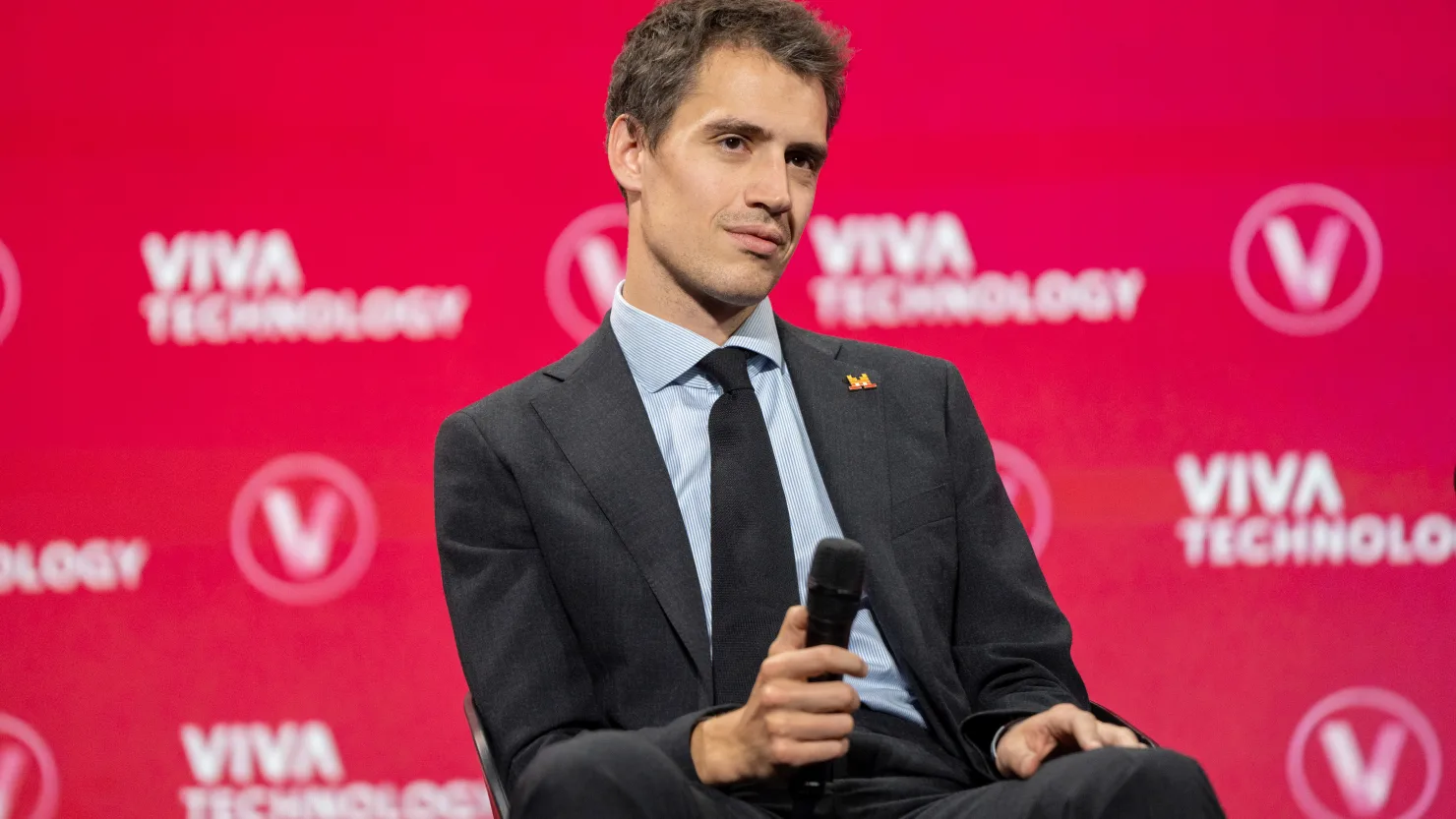

More than half of the software currently used by enterprises could eventually be replaced by artificial intelligence, according to Arthur Mensch, CEO of Mistral AI.
Speaking to CNBC, Mensch said that AI systems are increasingly capable of handling tasks traditionally managed by enterprise software tools — a statement that could further intensify concerns among investors already wary about the future of software companies.
His remarks come at a time when software stocks globally have been under pressure, as markets reassess the long-term impact of generative AI on established SaaS business models.
Why Investors Are Nervous About SaaS
The rapid rise of generative AI tools has sparked debate about whether traditional software applications may become redundant.
Software as a Service (SaaS) companies typically provide subscription-based tools for:
- Customer relationship management
- Human resources
- Accounting
- Project management
- Data analytics
However, AI platforms are now capable of performing many of these functions dynamically — generating reports, automating workflows, analyzing data, and even interacting with customers.
Investors fear that instead of paying for multiple specialized tools, enterprises may rely on AI systems that can perform cross-functional tasks more efficiently.
The sell-off reflects this anxiety.
Software Stocks Take a Hit
The broader software sector has already felt the impact. The iShares Expanded Tech-Software Sector ETF, which includes major names such as Microsoft and Salesforce among its top holdings, is down more than 20% this year.
In India, leading IT services firms like Tata Consultancy Services and Infosys have also seen declines, reflecting global uncertainty around enterprise tech spending and AI disruption.
Part of the recent market volatility was triggered by the launch of Anthropic’s “Cowork” product, which showcased how AI agents can handle tasks traditionally managed by enterprise software platforms.
What Mistral AI Is Betting On
Mistral AI, a European AI startup competing in the foundation model space, is building large language models and enterprise AI solutions aimed at businesses seeking automation and productivity gains.
Mensch’s comments suggest that AI may not just complement existing software — it could fundamentally replace a large portion of it.
Instead of relying on rigid, feature-based applications, companies might use adaptable AI agents that:
- Understand natural language instructions
- Integrate across systems
- Automate multi-step processes
- Continuously learn and optimize
If that shift materializes, traditional SaaS companies may need to radically evolve their offerings.
India Expansion Plans
In addition to discussing the future of enterprise software, Mensch revealed that Mistral AI plans to open its first office in India this year.
India represents a key growth market for AI talent and enterprise adoption. With a strong base of developers, IT services firms, and fast-growing startups, the country is becoming a strategic hub for global AI companies.
Opening an office in India could allow Mistral to:
- Build local partnerships
- Hire engineering talent
- Engage with enterprise clients
- Compete more directly in the Asia-Pacific market
This move signals the company’s ambition to expand beyond Europe and establish a global footprint.
Is AI Really a Threat — or an Upgrade?
While headlines about AI replacing 50% of enterprise software sound dramatic, the reality may be more nuanced.
Historically, new technologies tend to reshape industries rather than eliminate them entirely. SaaS companies could:
- Integrate AI deeply into their products
- Shift toward AI-native platforms
- Offer hybrid human-AI solutions
- Focus on specialized use cases
Major players like Microsoft and Salesforce have already embedded generative AI into their offerings, positioning themselves as AI-enabled software providers rather than purely traditional SaaS firms.
The real question is not whether AI will impact enterprise software — but how quickly and how deeply.
A Defining Moment for Enterprise Tech
Arthur Mensch’s remarks reflect a broader shift in how executives and investors are thinking about AI’s role in business operations.
If AI systems can handle a majority of enterprise workflows, the structure of enterprise technology spending could change dramatically over the next decade.
For investors, this means re-evaluating which companies are best positioned to adapt.
For enterprises, it means preparing for a future where AI may sit at the center of operations, not just as a feature, but as the core system itself.
As AI capabilities accelerate, the battle between traditional SaaS models and AI-native platforms is likely to define the next era of enterprise technology.

