
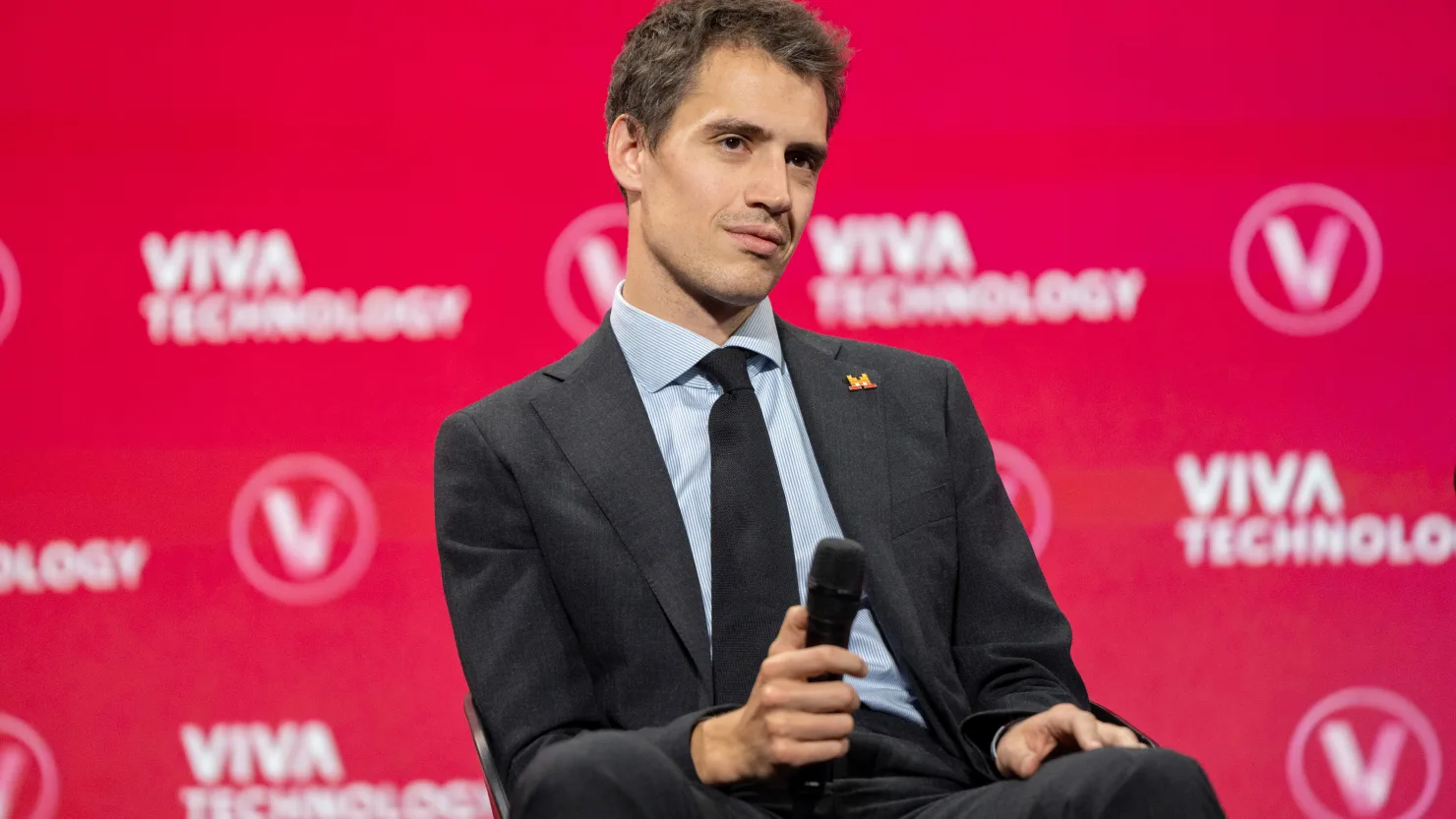

Arthur Mensch, CEO of Mistral AI, has made a bold prediction: more than half of the software currently used by enterprises could eventually be replaced by artificial intelligence.
His comments come at a time when global software stocks are under pressure, as investors worry that AI tools may disrupt traditional software-as-a-service (SaaS) business models.
In an interview with CNBC, Mensch also revealed that Mistral AI plans to open its first office in India this year, marking a key step in the company’s global expansion strategy.
AI Could Replace Large Parts of Enterprise Software
A Fundamental Shift in How Companies Use Software
For decades, enterprises have relied on specialized software tools to handle functions such as customer relationship management, human resources, accounting, analytics, and workflow automation.
According to Mensch, AI could fundamentally change that model.
Instead of using multiple standalone SaaS tools, companies may increasingly rely on AI systems that can understand context, automate tasks, and generate outputs dynamically. In such a scenario, many traditional software layers could become redundant.
If AI agents can execute workflows end-to-end — from analyzing data to generating reports and even making decisions — the need for rigid, form-based enterprise applications could decline significantly.
Why SaaS Stocks Are Feeling the Heat
The idea that AI could replace large portions of enterprise software has already affected financial markets.
SaaS companies traditionally generate revenue through subscription-based models. These businesses are valued for predictable recurring income and high margins.
However, investors are now asking tough questions:
- What happens if AI platforms consolidate multiple SaaS functions into one system?
- Will enterprises reduce spending on separate tools?
- Could AI-native startups disrupt legacy software providers?
These concerns have led to volatility in software stocks as markets try to price in the long-term impact of generative AI.
The Rise of AI-Native Platforms
Companies like Mistral AI are part of a new wave of AI-native firms building large language models and enterprise-focused AI solutions.
Rather than layering AI features on top of existing products, these startups are building systems designed from the ground up to:
- Understand natural language instructions
- Integrate across multiple data sources
- Automate complex workflows
- Act as intelligent digital assistants within organizations
If such systems mature quickly, they could reduce reliance on multiple single-purpose applications.
Mistral AI’s India Expansion Plans
Beyond bold predictions about software’s future, Mensch also shared expansion plans.
Mistral AI intends to open its first office in India this year. The move signals the company’s intention to tap into one of the fastest-growing technology markets in the world.
Why India?
India has become a strategic priority for global tech firms due to:
- A vast developer ecosystem
- Rapid enterprise digitization
- Strong AI talent pool
- Growing demand for AI-driven productivity tools
Major global technology companies are already investing heavily in the Indian market. By establishing a local presence, Mistral AI aims to compete more effectively and build partnerships with enterprises in the region.
A Competitive Global AI Race
The global AI landscape is becoming increasingly competitive, with startups and tech giants racing to develop advanced models and enterprise solutions.
Opening an India office could help Mistral AI:
- Attract engineering and research talent
- Build closer relationships with enterprise clients
- Localize solutions for regional markets
- Strengthen its global footprint
As AI adoption accelerates worldwide, companies that establish early presence in high-growth markets may gain a strategic advantage.
Is 50% Replacement Realistic?
While the prediction that over 50% of enterprise software could be replaced by AI is striking, the transition is unlikely to happen overnight.
Enterprise systems are deeply embedded in corporate processes. Migration, compliance, security, and integration challenges can slow down change.
However, even partial replacement could reshape the software industry. Instead of dozens of specialized tools, companies might operate with fewer, more powerful AI-driven platforms capable of handling diverse tasks.
The long-term impact may not be a complete disappearance of SaaS, but rather a transformation — where AI becomes the primary interface and traditional software operates in the background.
The Road Ahead
Arthur Mensch’s comments highlight a growing belief within the AI industry: that artificial intelligence is not just an add-on feature, but a foundational shift in how software is built and used.
With plans to expand into India and a clear vision for AI-led disruption, Mistral AI is positioning itself at the center of this transformation.
Whether AI ultimately replaces 50% of enterprise software or reshapes it in more subtle ways, one thing is clear — the software industry is entering a period of significant change.

