
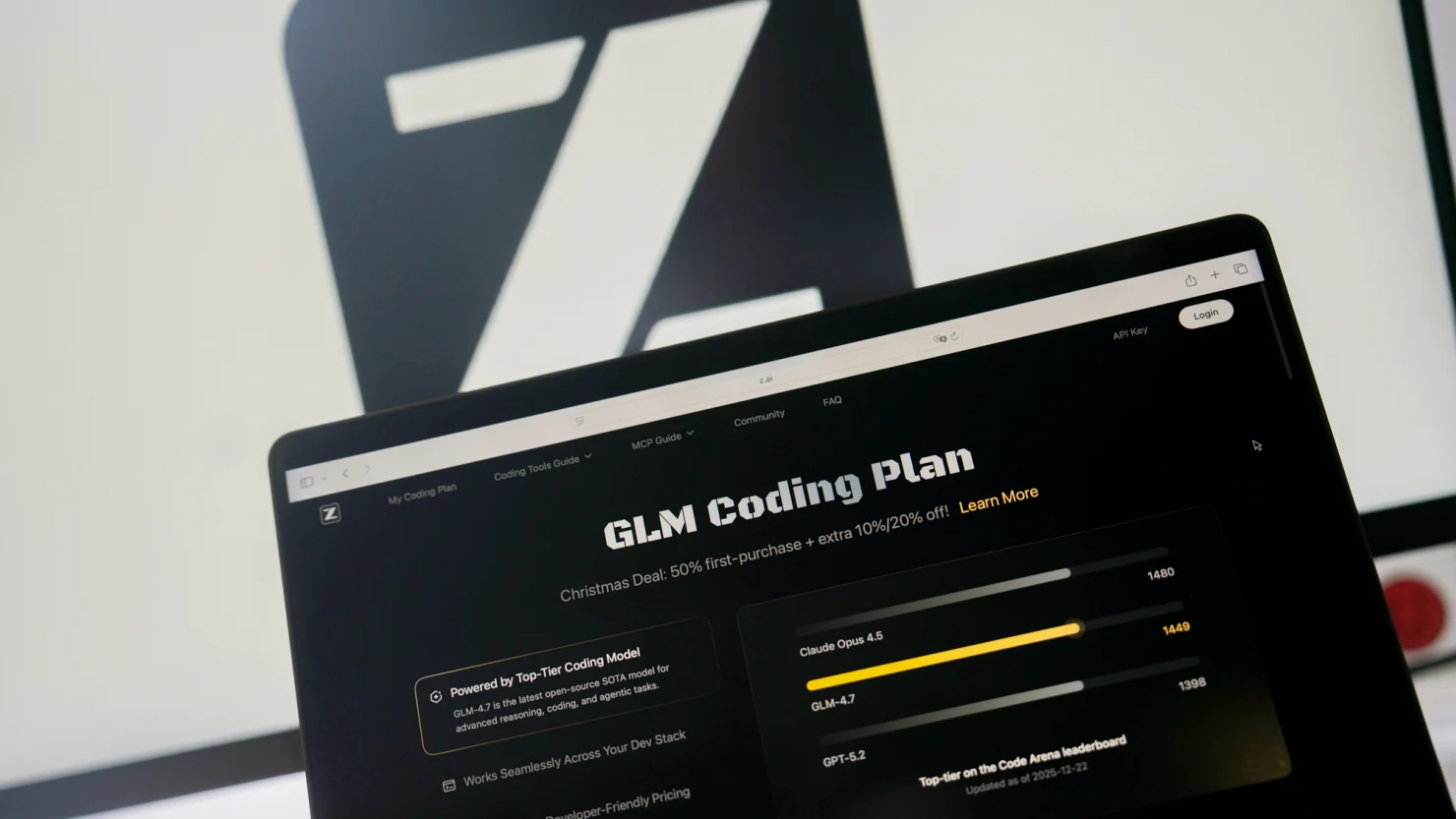

Chinese artificial intelligence stocks are back in the spotlight after a strong rally driven by new model launches and renewed support from policymakers. Leading the charge is Zhipu AI, listed in Hong Kong as Knowledge Atlas Technology, which saw its shares soar 30% in a single trading session.
The surge came after the company unveiled GLM-5, its latest open-source large language model. Investors reacted quickly, pushing the stock sharply higher and lifting sentiment across the broader AI sector.
Meanwhile, fellow AI firm MiniMax recorded an 11% jump in its Hong Kong-listed shares. The Shanghai STAR AI Industry Index also climbed 1.7%, reflecting growing confidence in China’s expanding artificial intelligence ecosystem.
This rally signals that investor enthusiasm for AI remains strong, especially when companies deliver new products that promise meaningful technological advances.
Why Zhipu’s GLM-5 Is Drawing So Much Attention
A Focus on Coding and Long-Running Tasks
Zhipu’s newly launched GLM-5 is designed as an open-source large language model with enhanced coding capabilities and improved performance on long-running agent tasks. In simple terms, the model aims to handle more complex programming jobs and extended multi-step instructions more effectively than previous versions.
Coding-focused AI models are increasingly valuable as businesses seek tools that can automate software development, debugging, and system integration. Long-running agent tasks refer to AI systems that can manage extended workflows without constant human input. These features are highly attractive for companies building enterprise-level AI solutions.
By positioning GLM-5 as both open-source and performance-driven, Zhipu is targeting developers, enterprises, and research institutions that want flexibility combined with strong technical benchmarks.
Performance Claims Against Global Competitors
Zhipu stated that GLM-5 approaches Anthropic’s Claude Opus 4.5 in coding benchmarks and surpasses Google’s Gemini 3 Pro on certain tests. While these claims have not been independently verified, they have clearly captured investor attention.
Comparisons with leading Western AI models signal that Chinese companies are eager to show they can compete at the highest global level. Even the suggestion that a domestic model can match or outperform international rivals is enough to boost confidence in China’s AI sector.
In fast-moving markets like artificial intelligence, perception and momentum often play a critical role in stock performance. Zhipu’s bold comparisons may have amplified the market’s enthusiastic response.
Broader AI Market Rally in China
MiniMax Joins the Upswing
Zhipu was not the only winner of the day. MiniMax, another Chinese AI company listed in Hong Kong, saw its shares climb 11%. The move suggests that investors are not just betting on one company, but on a broader AI growth story.
When multiple companies in the same sector rise together, it often indicates renewed confidence in the industry as a whole. Investors may believe that stronger products, improving regulations, and growing adoption will benefit the entire ecosystem.
Shanghai STAR AI Industry Index Moves Higher
The Shanghai STAR AI Industry Index, which tracks AI-focused companies, gained 1.7%. Although more modest than Zhipu’s dramatic jump, the index’s rise confirms a wider rally beyond individual stock movements.
The STAR Market is known for housing many of China’s high-tech and innovation-driven companies. A rise in the AI index suggests institutional investors are rotating capital back into artificial intelligence plays.
Policy Support Adds Fuel to the Fire
Beyond corporate announcements, government messaging also played a role in lifting sentiment. Top policymakers recently renewed calls for broader adoption of artificial intelligence across industries.
This kind of support matters. In China, policy direction often shapes investment trends. When leaders emphasize AI as a strategic priority, it signals long-term backing, including funding, infrastructure, and regulatory support.
The combination of new product launches and political encouragement created a perfect storm for investor optimism. Companies that align with national priorities often benefit from increased visibility and capital inflows.
The Bigger Picture: China’s AI Race
Competing on a Global Stage
China’s AI sector has been expanding rapidly, with companies racing to build advanced large language models that can compete internationally. While U.S.-based firms like OpenAI, Anthropic, and Google dominate headlines, Chinese firms are steadily narrowing the gap.
By launching open-source models, companies like Zhipu are also encouraging broader experimentation and adoption. Open-source ecosystems often attract developers who can refine, adapt, and expand the technology, potentially accelerating innovation.
If GLM-5 performs as advertised, it could strengthen China’s position in the global AI landscape. However, performance claims will ultimately need independent validation.
Investor Appetite for AI Remains Strong
Despite volatility in global tech markets, AI remains one of the most compelling investment themes. Breakthrough announcements, benchmark results, and policy backing can quickly reignite market enthusiasm.
The 30% jump in Zhipu’s shares highlights how sensitive AI stocks are to news. In emerging industries, perception of technological leadership often translates directly into stock price momentum.
Investors are clearly watching for signals about which companies will become long-term leaders in the AI race. For now, Zhipu has captured the spotlight.
Risks and Reality Check
While the rally is impressive, it is important to approach such moves with caution. AI development is capital-intensive, highly competitive, and rapidly evolving. Claims about model performance may shift as independent testing emerges.
Additionally, stock prices that surge quickly can also retreat just as fast if expectations are not met. The long-term success of Zhipu and its peers will depend not only on benchmark comparisons but also on real-world adoption, revenue growth, and sustainable innovation.
Markets often reward bold announcements in the short term. The real challenge lies in delivering consistent performance over time.
What Comes Next for Chinese AI Stocks?
The recent rally could mark the beginning of a broader upward trend, especially if more companies unveil competitive models and government support continues.
Investors will likely watch for:
- Independent benchmark validations of GLM-5
- Commercial partnerships and enterprise adoption
- Further policy initiatives promoting AI integration
- Earnings reports showing monetization progress
If Chinese AI firms can translate technical breakthroughs into practical business applications, the current momentum could extend further.
For now, Zhipu’s 30% surge stands as a powerful reminder that the AI race is far from over, and global competition is intensifying. With new releases hitting the market and policymakers pushing for widespread adoption, China’s AI sector appears determined to claim its place on the world stage.

