
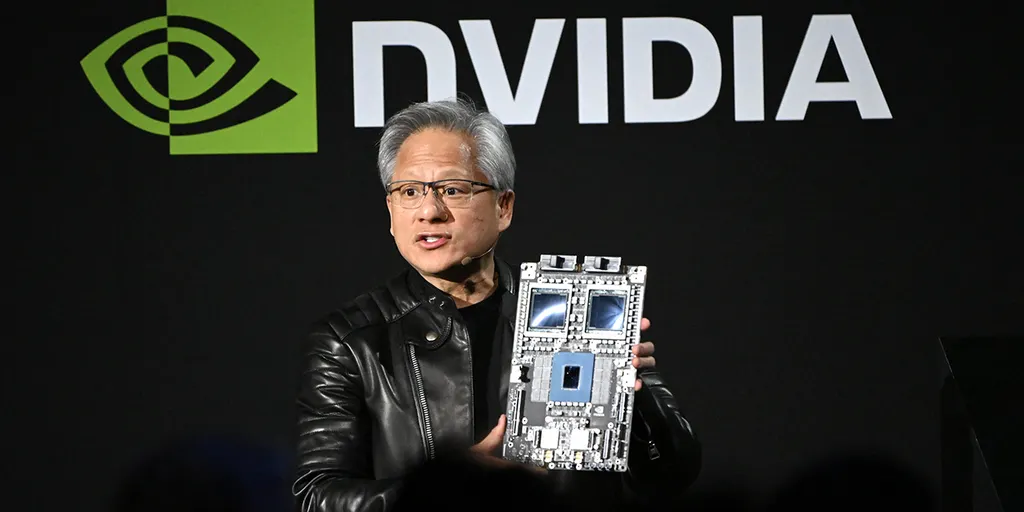

Nvidia shares surged nearly 8% after CEO Jensen Huang delivered a strong vote of confidence in the tech industry’s rapidly expanding artificial intelligence spending. Speaking on CNBC’s Halftime Report, Huang described the massive capital investments flowing into AI infrastructure as justified, appropriate, and most importantly, sustainable.
His comments arrive at a critical moment. Over the past two weeks, Nvidia’s biggest customers—Meta, Amazon, Google, and Microsoft—have all reported earnings and revealed plans to sharply increase their AI-related capital expenditures. Combined, these companies could spend as much as $660 billion this year, much of it going directly toward Nvidia’s high-performance chips.
For investors who have grown nervous about whether Big Tech is overspending on AI, Huang’s message was clear: this buildout is far from reckless. In his view, it’s only getting started.
Why Nvidia Investors Are Feeling Confident Again
A Strong Market Reaction
The market response to Huang’s comments was immediate. Nvidia shares closed the day up nearly 8%, reflecting renewed confidence that the company’s growth story remains intact despite broader concerns about rising costs and shrinking free cash flow across the tech sector.
Nvidia sits at the center of the AI ecosystem. When hyperscalers spend more on data centers, servers, and AI infrastructure, Nvidia benefits directly. That makes Huang’s defense of the spending wave especially important for shareholders.
The Message Wall Street Wanted to Hear
At a time when investors are questioning whether AI investments will ever pay off, Huang offered reassurance. According to him, as long as companies continue to earn money from AI products and services, they will keep reinvesting aggressively.
In his words, companies that see profits from AI will keep doubling down—again and again.
The $660 Billion AI Buildout Explained
What Is Driving This Level of Spending?
The scale of planned investment is staggering. Meta, Amazon, Google, and Microsoft are all racing to expand their AI capabilities. This means:
- Building massive new data centers
- Buying advanced AI chips
- Upgrading networking and power infrastructure
- Scaling cloud services to handle AI workloads
These projects are extremely expensive, but they are now seen as essential to staying competitive.
Nvidia’s Role in the AI Arms Race
Much of this spending flows directly to Nvidia. The company’s chips are widely regarded as the gold standard for training and running large AI models. As a result, Nvidia has become one of the biggest beneficiaries of the AI boom.
When hyperscalers raise their capital expenditure budgets, Nvidia’s revenue outlook improves almost immediately.
Jensen Huang’s Core Argument: Cash Flows Will Rise
AI Spending Fuels Future Cash Generation
Huang pushed back against concerns that the industry is overspending. He argued that AI investments are not a drain on cash but a driver of future cash flows.
According to him, once AI systems are deployed at scale, they begin generating revenue through cloud services, enterprise software, advertising, automation, and productivity tools. As those revenues grow, so do cash flows.
That rising cash flow, Huang believes, will fund even more AI investment, creating a self-reinforcing cycle.
Why He Thinks the Spending Is Sustainable
The key word Huang emphasized was sustainability. He suggested that the current AI buildout is not speculative but demand-driven. Customers are paying for AI services, and companies are already seeing returns.
As long as AI continues to generate real economic value, the spending can continue without putting companies under financial stress.
Big Tech’s Earnings Back Up the AI Narrative
What Hyperscalers Are Telling Investors
During recent earnings calls, Meta, Amazon, Google, and Microsoft all signaled that AI spending will increase significantly over the coming year. While each company framed the story differently, the message was consistent: AI is a top priority, regardless of short-term margin pressure.
Executives described AI as foundational to their future growth, touching everything from cloud computing to advertising to productivity software.
Short-Term Pain, Long-Term Strategy
These companies openly acknowledged that heavy AI investment may weigh on margins and free cash flow in the near term. However, they positioned this as a strategic choice rather than a financial problem.
Huang’s comments align perfectly with that narrative, reinforcing the idea that today’s spending is laying the groundwork for tomorrow’s profits.
Addressing Investor Concerns About Overinvestment
The Fear of an AI Bubble
Some investors worry that the industry is repeating past mistakes, pouring money into technology before returns are proven. The sheer size of the $660 billion figure has raised fears of overcapacity and wasted capital.
Huang’s response to that concern is simple: companies are spending because customers are paying. In his view, this is not hype-driven investment but market-driven expansion.
Why Nvidia Stands Apart
Even if AI spending slows at some point, Nvidia may be better positioned than most. Its dominance in AI chips gives it pricing power and strong demand visibility. That helps explain why investors responded so positively to Huang’s remarks.
Why Nvidia’s Stock Reaction Matters
A Signal to the Broader Market
Nvidia’s stock move is more than just a reaction to one interview. It reflects broader confidence that the AI trade is still alive and that the infrastructure buildout has real economic backing.
As a bellwether for AI spending, Nvidia’s performance often influences sentiment across the entire tech sector.
Reinforcing the AI Investment Thesis
By defending the scale and sustainability of AI capex, Huang reinforced the idea that this is a multi-year transformation, not a short-lived trend. For long-term investors, that message carries weight.
What Comes Next for Nvidia and Big Tech
AI Spending Likely to Continue Rising
If Huang is right, capital expenditures may continue to grow beyond this year. As AI models become more advanced and use cases expand, demand for computing power will only increase.
That means more data centers, more chips, and more infrastructure spending.
Execution Will Be Key
The next phase will be about execution. Companies must prove that AI investments translate into revenue growth, efficiency gains, and higher cash flows. Investors will be watching closely for evidence that the spending delivers real returns.
For Nvidia, continued demand from hyperscalers will be critical to sustaining its momentum.
The Bottom Line
Jensen Huang’s message was clear and confident: the AI spending boom is not a problem—it’s a feature of a growing market. By tying capital expenditures directly to rising cash flows and customer demand, he made a compelling case that the $660 billion AI buildout is both rational and sustainable.
Wall Street liked what it heard. Nvidia’s stock surge suggests that investors are willing to believe that AI’s massive price tag comes with equally massive long-term rewards.
Whether that optimism holds will depend on results. But for now, Nvidia remains at the heart of the AI revolution—and investors are still buying into the story.

