
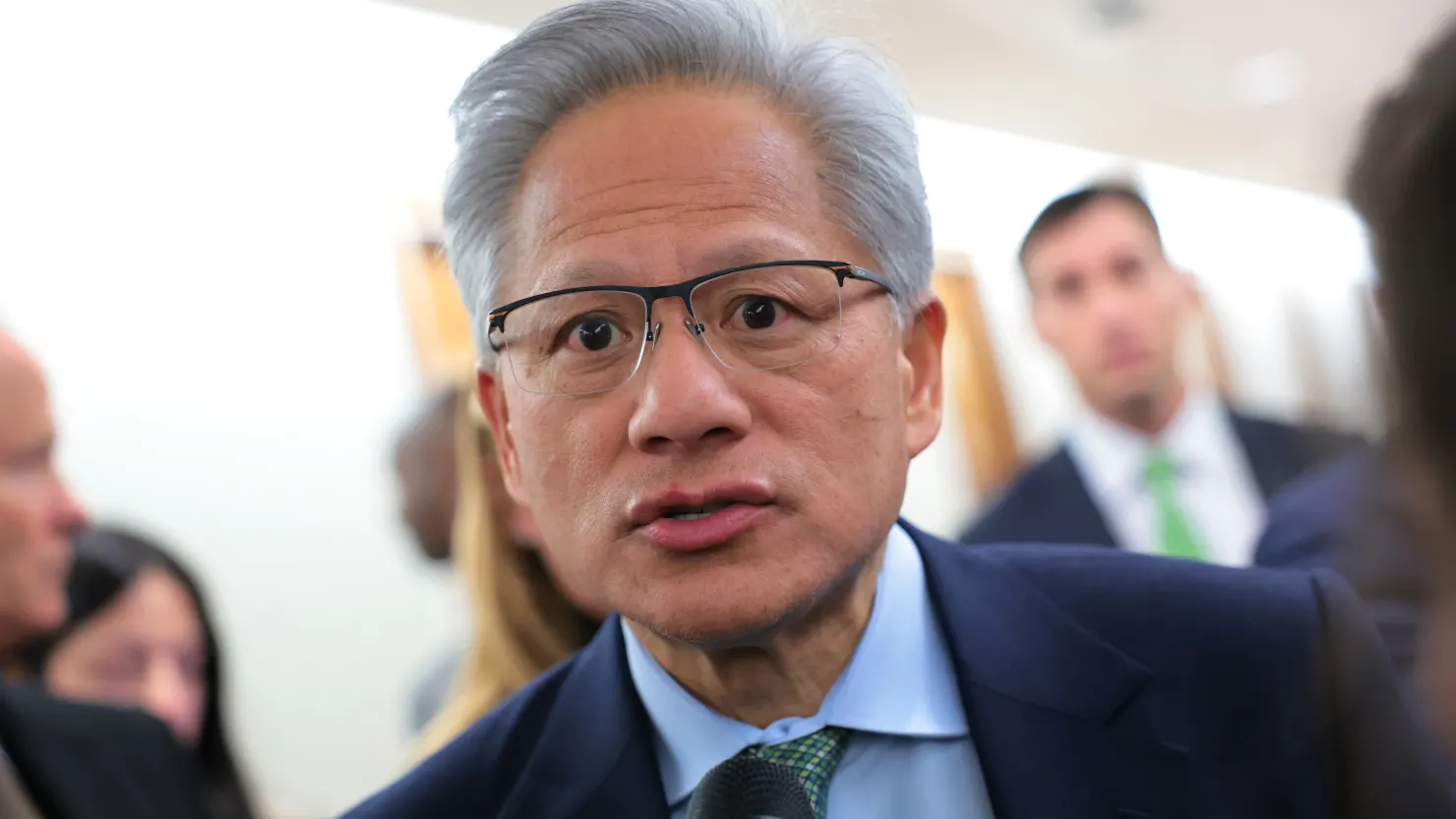

Nvidia shares moved lower on Monday after reports suggested that its highly anticipated investment in OpenAI may be facing delays or uncertainty. The news raised fresh questions about one of the most ambitious partnerships in the artificial intelligence space and sparked concern among investors.
The chipmaking giant’s stock fell nearly 2% in premarket trading after a report indicated that the deal between Nvidia and OpenAI, announced just months ago, has stalled. While no official cancellation has been announced, comments from Nvidia’s CEO and sources familiar with the matter suggest the situation is far from settled.
Here’s what’s happening, why it matters, and what it could mean for Nvidia and the broader AI industry.
Why Nvidia Stock Dropped
Nvidia shares were down about 1.8% in premarket trading as of early Monday morning. The drop followed reports that Nvidia’s plan to invest up to $100 billion in OpenAI may not move forward as originally expected.
Market Reaction at a Glance
- Nvidia stock fell roughly 2% in premarket trading
- Investor confidence was shaken by uncertainty around the OpenAI deal
- The report surfaced late last week, catching markets off guard
For a company as closely tied to the AI boom as Nvidia, any sign of trouble in a major AI partnership tends to ripple quickly through the stock price.
The $100 Billion OpenAI Deal Explained
Back in September, Nvidia announced plans to deepen its relationship with OpenAI, one of the world’s most influential artificial intelligence startups.
What Nvidia Originally Announced
The agreement included two major components:
- An investment of up to $100 billion in OpenAI
- A plan to build at least 10 gigawatts of AI computing power to support OpenAI’s operations
At the time, the deal was seen as a bold move that could strengthen Nvidia’s dominance in AI infrastructure while giving OpenAI unprecedented access to cutting-edge computing resources.
The announcement reinforced Nvidia’s role as the backbone of the AI revolution and signaled confidence in OpenAI’s long-term growth.
Why the Deal Is Now in Question
Despite the excitement surrounding the announcement, recent developments suggest the partnership may not be moving forward smoothly.
Internal Doubts and Strategic Concerns
According to reports citing people familiar with the matter, company insiders have raised concerns about the structure and viability of the deal. The uncertainty became more visible after Nvidia CEO Jensen Huang publicly criticized OpenAI’s business strategy.
While Huang did not explicitly say the investment was canceled, his comments raised eyebrows across the tech industry. He reportedly questioned how OpenAI plans to monetize its technology and whether its approach aligns with Nvidia’s long-term interests.
These remarks have fueled speculation that Nvidia may scale back or delay its financial commitment.
Jensen Huang’s Comments Spark Investor Anxiety
Jensen Huang is widely respected for his vision and leadership, and his words carry significant weight with investors.
Why His Criticism Matters
When a CEO publicly questions the strategy of a key partner, it sends a clear signal that internal discussions may not be going smoothly. Huang’s remarks suggested skepticism about:
- OpenAI’s long-term business model
- The scale of capital required to support its growth
- Whether the partnership delivers enough value for Nvidia
For investors, this raised the possibility that Nvidia may rethink how much it wants to commit financially, or whether it wants to move forward at all.
Why This Deal Was So Important to Nvidia
The potential OpenAI investment wasn’t just about money. It represented a strategic move in the increasingly competitive AI landscape.
Strengthening Nvidia’s AI Ecosystem
Nvidia already dominates the AI chip market, with its GPUs powering everything from data centers to advanced AI models. A deeper partnership with OpenAI could have:
- Locked in long-term demand for Nvidia’s hardware
- Strengthened Nvidia’s influence over next-generation AI development
- Positioned Nvidia as both a supplier and strategic partner
A stalled deal doesn’t erase Nvidia’s leadership, but it does remove a potential growth catalyst that investors were counting on.
What This Means for OpenAI
For OpenAI, uncertainty around Nvidia’s investment could complicate future expansion plans.
The Cost of Scaling AI
Building and running advanced AI models requires enormous computing power, and that power is expensive. OpenAI’s growth strategy relies heavily on access to large-scale infrastructure.
If Nvidia pulls back or delays its commitment, OpenAI may need to:
- Seek alternative funding sources
- Adjust its expansion timeline
- Rely more heavily on existing partnerships
None of these outcomes are catastrophic, but they could slow momentum in an industry where speed matters.
Nvidia’s Bigger Picture Remains Strong
Despite the market’s reaction, Nvidia’s broader business fundamentals remain solid.
AI Demand Is Still Booming
Nvidia continues to benefit from massive demand for its chips across industries, including:
- Cloud computing
- Autonomous vehicles
- Enterprise AI solutions
- Consumer and gaming markets
Even without the OpenAI investment, Nvidia remains one of the most influential companies in artificial intelligence.
Why Investors Are Watching Closely
This situation highlights a key reality of the AI boom: massive investments come with massive risks.
High Stakes in AI Partnerships
Deals involving tens of billions of dollars are rare, even in the tech world. When they wobble, markets react quickly.
Investors will be watching for:
- Clarification from Nvidia on the status of the deal
- Any formal updates from OpenAI
- Signs that Nvidia is redirecting capital elsewhere
Until more details emerge, uncertainty is likely to keep pressure on Nvidia’s stock in the short term.
What Happens Next
At this point, neither Nvidia nor OpenAI has officially confirmed that the deal is canceled. The investment was announced as “up to” $100 billion, giving Nvidia flexibility in how much capital it ultimately commits.
Possible Outcomes
- The deal moves forward at a smaller scale
- The investment is delayed but not abandoned
- Nvidia shifts its focus to other AI partnerships
Any of these scenarios could calm markets, depending on how clearly they are communicated.
Final Thoughts
Nvidia’s stock dip reflects uncertainty, not collapse. The company remains a cornerstone of the AI economy, and its long-term outlook hasn’t fundamentally changed.
Still, the situation serves as a reminder that even the biggest names in tech must carefully balance ambition with execution. As investors wait for clarity, the Nvidia-OpenAI saga is shaping up to be one of the most closely watched AI stories of the year.

