
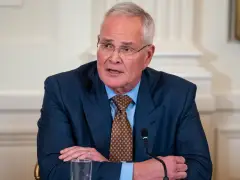

ExxonMobil CEO Darren Woods has made it clear that the oil giant has no plans to invest in Venezuela unless the country undergoes a major political shift.
Speaking in recent comments, Woods said Venezuela needs to move toward a representative and democratic form of government before any large-scale oil investment would make sense. Without that transition, he described the country as “uninvestable” from a business perspective.
The blunt assessment has sparked political tension and highlighted the risks global energy companies see in Venezuela’s oil sector.
Why Exxon Views Venezuela as Too Risky
Venezuela has some of the world’s largest oil reserves, but years of political instability, economic collapse, and weak legal protections have pushed many foreign investors away.
Unstable Political Environment
According to Woods, long-term investments like oil projects require stable governance and predictable policies. He said companies need confidence that contracts will be honored and that governments will not abruptly change the rules.
Without political reforms, he suggested, investors face too much uncertainty to commit billions of dollars over decades.
History of Asset Seizures
Exxon has a long memory when it comes to Venezuela. The company has previously seen its assets taken over by the state, which has made it especially cautious about returning without strong legal and political safeguards.
For Exxon, those past experiences still weigh heavily on today’s investment decisions.
Comments Made to President Trump
Woods shared his assessment directly with President Donald Trump earlier this month, telling him that Venezuela’s current situation makes it unsuitable for major private investment.
The president has been encouraging U.S. companies to consider investing in Venezuela’s oil industry as part of broader efforts to revive production and stabilize the country’s economy.
However, Exxon’s stance did not align with that push.
Trump Responds Sharply
President Trump reacted strongly to Woods’ remarks.
According to comments made afterward, Trump expressed frustration with Exxon’s position and warned that the company could be excluded from any future investment opportunities in Venezuela if it continued to take such a hard line.
The exchange reflects a rare public disagreement between a major U.S. corporation and the White House over foreign investment strategy.
What Exxon Says It Needs Before Investing
Woods emphasized that Exxon is not opposed to Venezuela’s oil potential. In fact, he said the company has the technical expertise needed to develop the country’s heavy crude resources.
However, he outlined several conditions that would need to be met first:
Key Conditions for Investment
- A transition to a democratic and representative government
- Clear and enforceable legal protections for investors
- Stable economic policies and contract certainty
- Reduced political interference in the energy sector
Without these changes, Woods said, the risks outweigh the potential rewards.
Broader Implications for Venezuela’s Oil Industry
Exxon’s position highlights a broader challenge facing Venezuela.
Massive Resources, Limited Investment
Despite vast oil reserves, Venezuela’s production has fallen sharply over the years due to underinvestment, aging infrastructure, and loss of technical expertise.
Reviving the industry would require tens of billions of dollars in foreign capital, something that remains difficult to attract under current conditions.
Investor Confidence Remains Weak
While some companies are cautiously exploring opportunities, many global energy firms share Exxon’s concerns. Political uncertainty and regulatory unpredictability continue to discourage large-scale commitments.
A Clash Between Business Risk and Politics
The situation underscores a key tension between political goals and corporate decision-making.
Governments may push companies to invest for strategic or economic reasons, but corporations like Exxon base decisions on risk, return, and long-term stability.
For now, Exxon appears unwilling to compromise on its criteria.
What Happens Next
Exxon has not ruled out Venezuela permanently, but its message is clear: meaningful political and legal reform must come first.
Until then, the company is likely to focus its capital on regions where governance, contracts, and investment conditions are more predictable.
The standoff also signals to other investors that Venezuela’s path back into global energy markets will depend as much on political reform as on oil prices or reserves.

