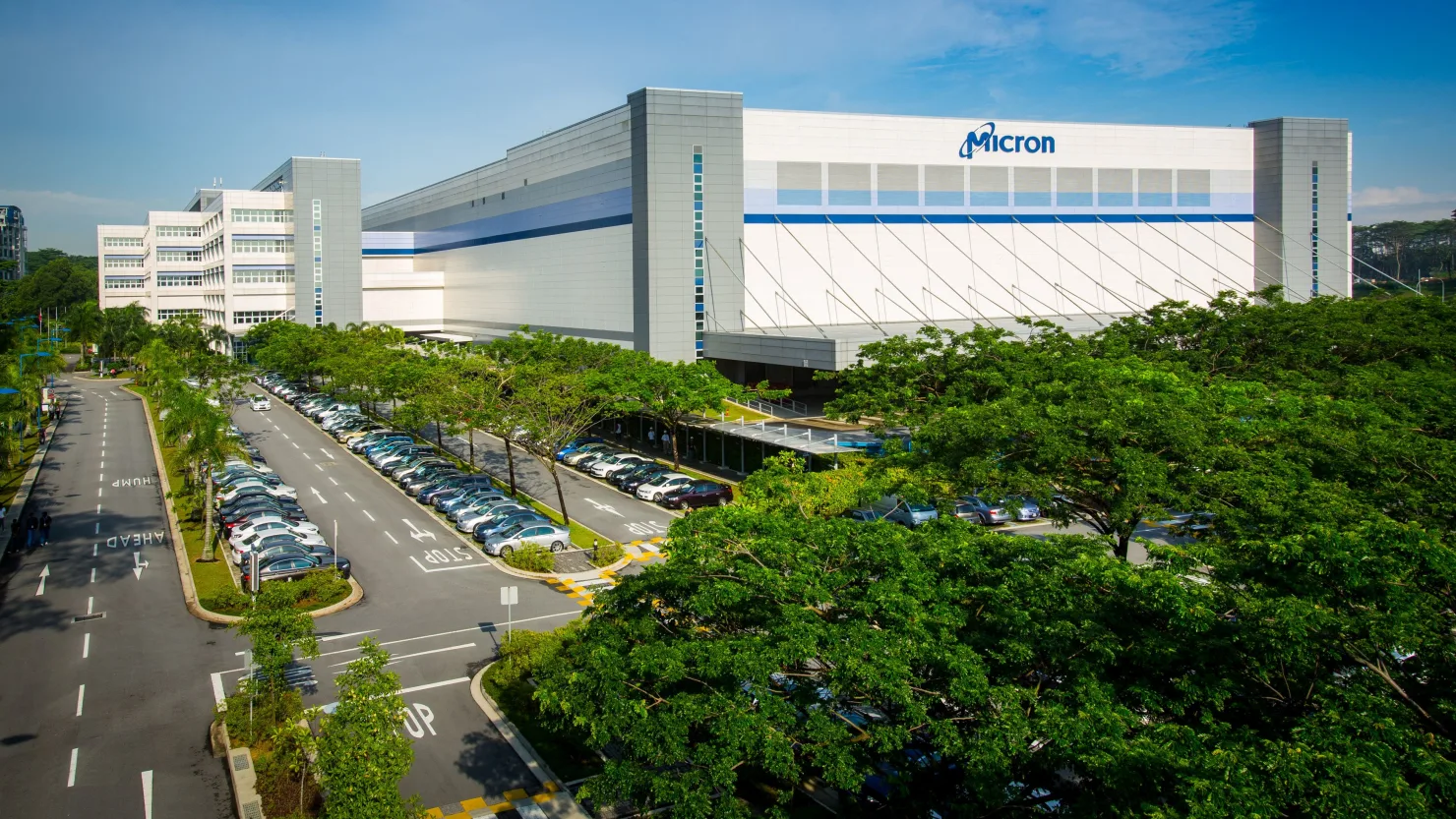
Micron Bets Big on Singapore With $24 Billion Chip Investment as AI Demand Surges

Micron Technology, one of the world’s leading memory chipmakers, has announced a $24 billion investment to expand its wafer manufacturing operations in Singapore. The move comes amid a global memory chip shortage fueled by the rapid growth of artificial intelligence and increasing demand for high-performance computing.
The expansion will add 700,000 square feet of advanced cleanroom space — highly controlled manufacturing areas designed to prevent contamination — to an existing NAND manufacturing complex. The new facility is expected to begin producing NAND memory, a type of chip widely used in smartphones, personal computers, servers, and AI systems, in the second half of 2028.
This investment highlights how critical memory chips have become to modern technology, particularly as AI adoption accelerates across industries.
Why Memory Chips Are in Short Supply
The global memory chip market is under unprecedented pressure. AI applications, cloud computing, and data-heavy digital services require massive amounts of memory. Unlike standard storage, high-performance NAND memory is essential for handling complex workloads efficiently.
As AI models grow larger and more data-intensive, companies are consuming more memory than ever. Analysts predict that demand for memory chips will continue to outpace supply for several years, driving the need for significant investments like Micron’s Singapore expansion.
For consumers and enterprises alike, this shortage affects everything from the availability of cloud services to the production of next-generation smartphones and laptops.
Why Singapore Is the Ideal Location
Singapore has long been a hub for semiconductor manufacturing. The city-state offers world-class infrastructure, a skilled workforce, and a stable political and economic environment — all essential for building advanced chip facilities.
By expanding in Singapore, Micron can leverage its existing operations while increasing capacity to meet global demand. The location also provides proximity to key markets in Asia and integration with a sophisticated supply chain, reducing logistical challenges for high-tech production.
What the Expansion Will Produce
The new facility will focus on NAND memory production. NAND is a type of non-volatile storage that retains data even when powered off, making it critical for devices like laptops, smartphones, SSDs, and enterprise servers.
In addition to supporting traditional computing, NAND memory is vital for AI workloads. High-capacity, high-speed memory allows AI systems to process massive datasets efficiently, which is increasingly important for cloud providers, research labs, and tech companies worldwide.
This facility positions Micron to address both consumer and enterprise demand while ensuring supply for AI-driven applications that are rapidly reshaping the tech landscape.
Production Timeline and Strategic Importance
Building a wafer fabrication facility is a complex, multi-year project. Micron’s Singapore expansion is expected to start production in the second half of 2028. While this may seem far away, semiconductor manufacturing requires extensive planning, construction, and equipment installation.
The long-term strategy shows Micron is not just responding to today’s shortage but preparing for sustained growth. As AI becomes more widespread, memory demand is expected to rise steadily, making early investments like this one crucial for maintaining market leadership.
Impact on the Global Memory Market
Micron’s $24 billion investment could help stabilize the global memory market by increasing supply and reducing bottlenecks. Currently, memory shortages are causing higher prices for SSDs, cloud storage, and enterprise systems.
By expanding production, Micron can better meet the needs of major technology companies and help prevent supply-related slowdowns in AI adoption, cloud infrastructure, and consumer electronics. The expansion also signals increased competition, encouraging other chipmakers to innovate and invest in new capacity.
Creating Jobs and Driving Innovation
The new Singapore facility will create thousands of jobs in semiconductor manufacturing, cleanroom operations, engineering, and advanced technology. These roles will focus on the most cutting-edge aspects of chip production, including AI-assisted manufacturing, automation, and precision engineering.
This expansion not only supports global technology growth but also strengthens Singapore’s position as a key player in the semiconductor industry, enhancing its talent pool and infrastructure for high-tech production.
The Role of AI in Driving Demand
Artificial intelligence is the primary factor behind rising memory demand. Training AI models requires large datasets and high-speed memory for storing and processing data efficiently. As AI adoption grows across industries like healthcare, finance, transportation, and cloud computing, memory needs will continue to increase dramatically.
Micron’s expansion ensures it can provide the high-performance memory required for AI, helping prevent bottlenecks that could slow innovation or delay deployment of new AI systems.
Looking Ahead
Micron’s Singapore expansion is a strategic move that addresses both current memory shortages and long-term market trends. By investing $24 billion, the company is positioning itself as a central player in the global memory supply chain while supporting the rapid growth of AI technologies.
As production ramps up in 2028, Micron’s facility could play a key role in shaping the future of computing, powering everything from next-generation smartphones to large-scale AI models and enterprise data centers.