
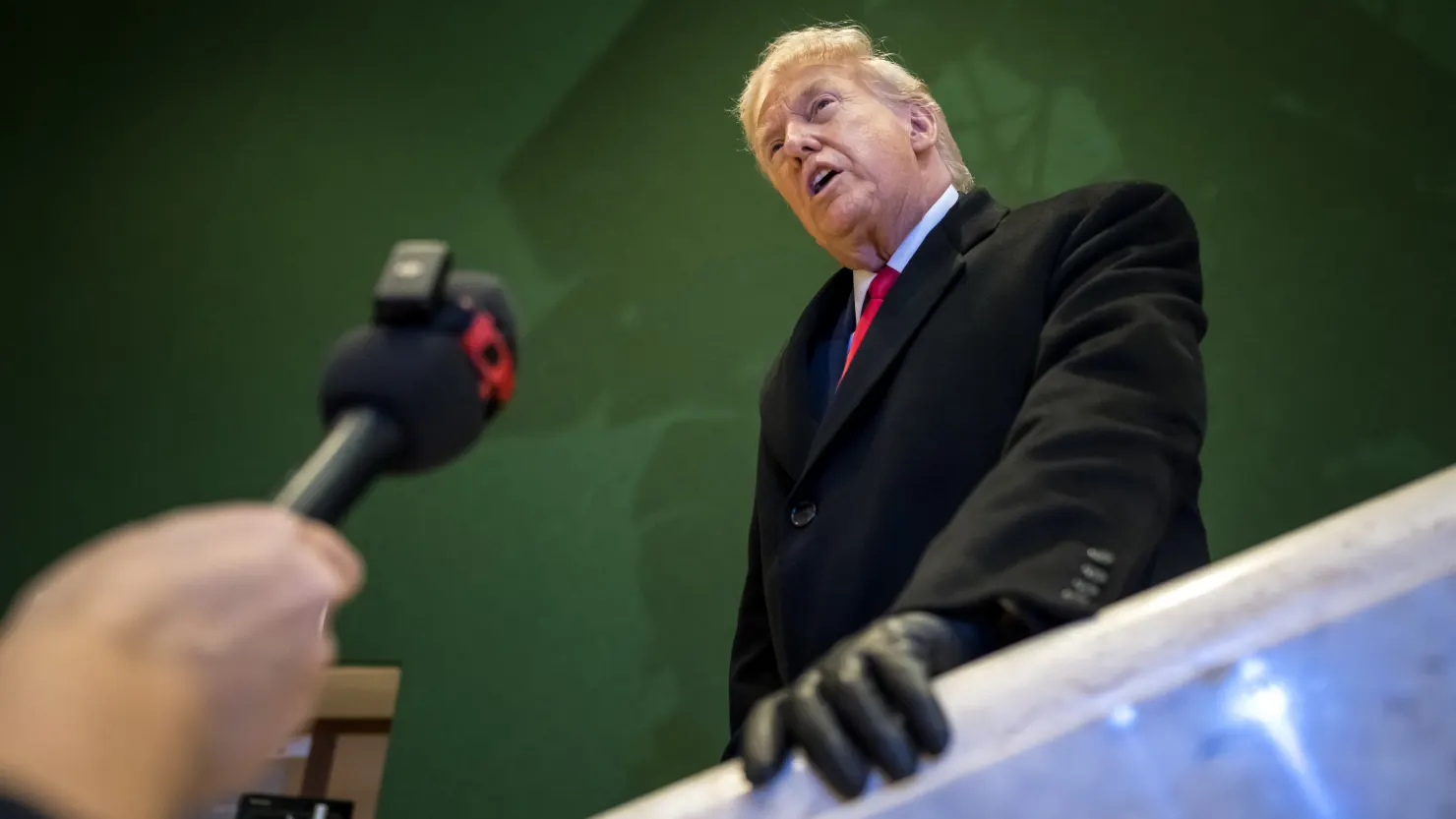

Former U.S. President Donald Trump dominated headlines after a surprising and wide-ranging set of comments at the World Economic Forum in Davos. In a single day, Trump floated the idea of a Greenland deal, hinted at backing away from tariffs on Europe, and triggered sharp reactions across global markets.
While some of his remarks lacked detail, they were enough to move stocks, unsettle policymakers, and revive old debates about U.S. trade strategy. Investors, lawmakers, and analysts were left sorting through what was real, what was strategic, and what might never materialize.
A “Concept” of a Greenland Deal Raises Eyebrows
Trump Claims a Framework Is in Place
One of the most unexpected moments came when Trump said the U.S. had a deal “framework” involving Greenland. He offered few details and described it more as a concept than a finalized plan, immediately raising questions about what such a deal would even involve.
Greenland, an autonomous territory of Denmark, has long been viewed as strategically important due to its location and natural resources. Trump previously expressed interest in acquiring Greenland during his presidency, an idea that was widely dismissed at the time.
Now, his claim of a framework has revived the conversation, even if concrete details remain absent.
More Signal Than Substance?
Many observers believe the Greenland remarks were less about immediate action and more about signaling U.S. interest in Arctic influence and global positioning. Still, even vague comments from a figure like Trump can carry weight, especially when delivered on a global stage like Davos.
Trump Signals a Retreat on European Tariffs
A Surprise Shift in Trade Tone
Perhaps more impactful than the Greenland comments was Trump’s suggestion that the U.S. could call off tariffs on European goods. After years of trade tensions between the U.S. and the European Union, this remark caught markets off guard.
Trump framed the move as part of a broader effort to reset economic relationships, though he did not provide a timeline or specific conditions.
For businesses and investors, the possibility of easing trade barriers was enough to spark optimism.
European Lawmakers Hit Pause
Despite Trump’s softer tone, European lawmakers responded cautiously. Talks around a U.S.-EU trade deal were temporarily suspended, reflecting uncertainty over whether Trump’s comments would translate into actual policy changes.
European officials have learned to treat verbal signals carefully, especially when they come without formal agreements or legislative backing.
Markets React Quickly to Trump’s Comments
U.S. Stocks Rebound on Tariff Relief Hopes
Wall Street responded positively to Trump’s apparent tariff retreat. U.S. stocks rebounded as investors priced in the possibility of reduced trade friction with Europe.
Industrials, exporters, and multinational companies saw gains, reflecting optimism that smoother trade relations could support earnings and economic growth.
This reaction highlighted how sensitive markets remain to trade policy signals, even when they come in the form of loosely defined statements.
Confidence Built on Words
While the rally showed investor enthusiasm, some analysts warned that markets may be getting ahead of reality. Without concrete policy actions, optimism based on rhetoric alone can quickly fade.
European Trade Relations Remain Uncertain
A History of Tension
U.S.-EU trade relations have been strained in recent years by disputes over tariffs, subsidies, and regulatory standards. Trump’s presidency marked one of the most volatile periods in transatlantic trade history.
Although his latest remarks suggest a softer stance, European leaders remain cautious, preferring clear commitments over broad statements.
Waiting for Actions, Not Announcements
For now, Europe appears to be taking a wait-and-see approach. Any meaningful progress will likely require detailed negotiations, formal agreements, and political consensus on both sides of the Atlantic.
South Korea’s Economy Shows Signs of Weakness
Growth Misses Expectations
Away from Davos, economic data from South Korea added another layer of concern to global markets. The country’s fourth-quarter economic growth came in below expectations, raising questions about the strength of Asia’s export-driven economies.
South Korea is often seen as a bellwether for global trade and technology demand. Weak growth can signal broader challenges ahead.
Pressure From Global Uncertainty
Rising interest rates, slower global demand, and ongoing geopolitical uncertainty have weighed on South Korea’s economy. The disappointing data reinforced fears that global growth may remain uneven in the months ahead.
A Major AI Stock Flashes a Warning Signal
What Is a “Death Cross”?
Among the market headlines was a technical warning from one major artificial intelligence stock, which showed signs of a so-called death cross. This occurs when a stock’s short-term moving average falls below its long-term moving average, often viewed as a bearish signal.
While not a guarantee of further losses, a death cross can indicate weakening momentum.
AI Hype Meets Market Reality
The AI sector has been one of the strongest performers in recent years, driven by massive investment and optimism about future growth. A technical warning in a major AI stock suggests that enthusiasm may be cooling, at least in the short term.
Investors are increasingly focused on earnings, sustainability, and realistic growth expectations rather than pure hype.
Davos Highlights the Power of Political Messaging
One Day, Many Reactions
Trump’s Davos appearance showed how a single day of remarks can ripple through markets, politics, and global conversations. From Greenland to tariffs to stock rallies, the reactions were swift and far-reaching.
Even without detailed plans, his words influenced investor sentiment and policy discussions.
Markets Still Listen Closely
Whether admired or criticized, Trump remains a figure whose statements can move markets. His Davos comments served as a reminder that political messaging continues to play a powerful role in shaping economic expectations.
What This Means for the Global Economy
The events of the day underline how fragile confidence can be in today’s interconnected world. Trade policy hints can lift stocks, vague geopolitical ideas can spark debate, and a single data point can shift economic outlooks.
As investors and governments move forward, clarity and follow-through will matter more than bold declarations.
For now, Trump’s remarkable day at Davos has left the world watching closely, waiting to see which ideas turn into action and which fade into history.

