
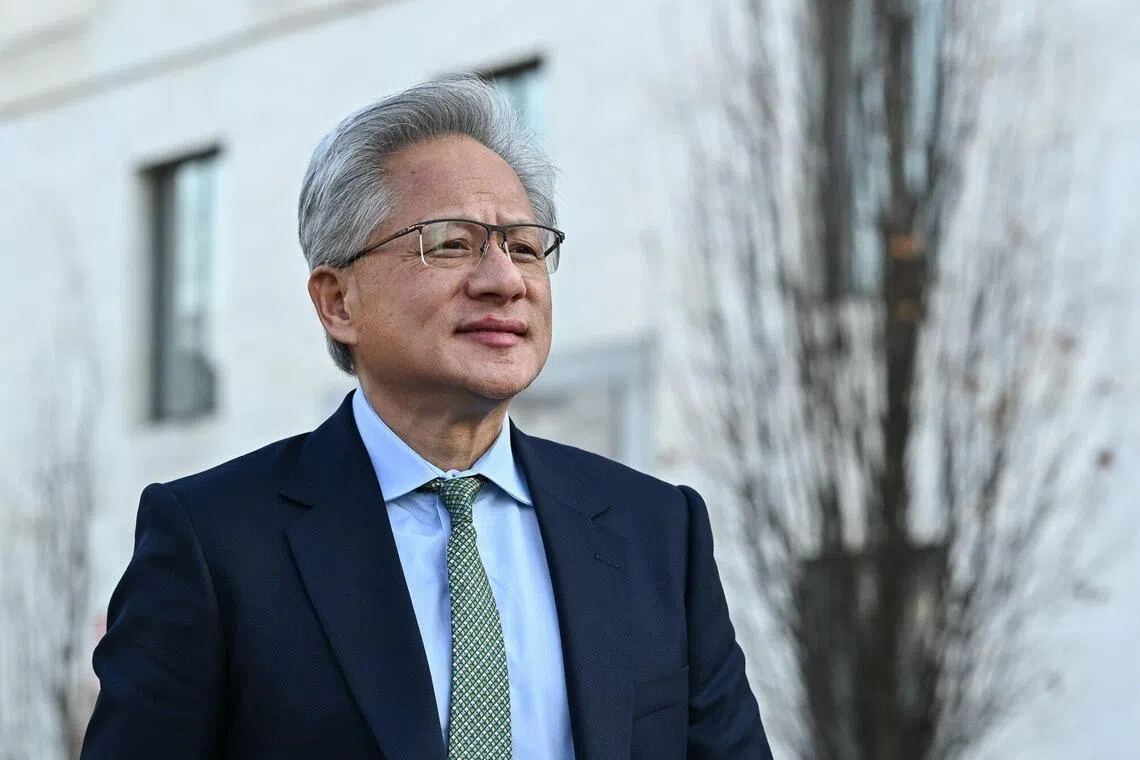
Jensen Huang Drops Bombshell After Meeting Trump: “State-by-State AI Rules Will Kill the Industry” – Nvidia Warns of Game-Changing Chip Restrictions

Nvidia’s CEO Just Met Trump — And What He Said After Could Shake the Tech World
Nvidia CEO Jensen Huang isn’t known for holding back, but his latest comments after meeting President Donald Trump sent shockwaves through Washington and Silicon Valley. On Wednesday, Huang revealed that he and Trump discussed one of the most explosive issues in tech today: U.S. restrictions on exporting advanced AI chips.
At the same time, Huang delivered a blistering warning about America’s patchwork of state-level AI laws — claiming the fragmented approach could freeze the industry in its tracks.
This wasn’t just another political conversation. It was a warning shot fired at regulators, lawmakers, and global competitors.
Inside the Meeting: Trump and Huang Talk Export Controls
Huang confirmed he spoke with Trump “in general about export controls,” a topic that has become one of the most contentious battles in global tech policy. With the U.S. tightening its grip on who gets access to cutting-edge AI chips, companies like Nvidia are caught between innovation, national security, and global demand.
Huang emphasized Nvidia’s position clearly:
“We support export controls,” he told reporters.
But he also added something far more pointed — that U.S. companies should have first priority for the world’s most advanced AI chips.
The implication? America must outpace China, not just restrict it.
The High-Stakes Bill That Could Reshape the AI Arms Race
Lawmakers are debating whether to include the Guaranteeing Access and Innovation for National Artificial Intelligence Act — the GAIN AI Act — in this year’s National Defense Authorization Act, the massive must-pass defense bill.
If approved, the law would:
- Force Nvidia, AMD, and others to give U.S. companies first access to advanced AI chips
- Delay or limit shipments to China and other foreign markets
- Potentially hit billions in international chip sales
This would be one of the most aggressive AI export policies the U.S. has ever implemented.
For Nvidia, the world’s most valuable chipmaker, the consequences are huge. For China, it could be a massive blow to its AI ambitions.
And for American AI companies? It could be an enormous advantage.
Huang Sounds the Alarm on AI Regulation: “It Would Drag This Industry to a Halt”
Even as Congress debates chip restrictions, another issue lit a fire under Huang — the chaotic patchwork of AI regulations popping up across U.S. states.
Huang warned that if states continue to create their own rules, the result will be catastrophic for innovation:
“It would drag this industry into a halt.”
His point: AI needs a national framework, not 50 different rulebooks that force companies to build, test, and operate differently in each state.
Huang’s comments echo growing frustration from tech leaders who say fragmented oversight could choke progress and drive innovation overseas.
Why This Moment Matters: The AI War Is Heating Up
What’s happening now is more than policy debates — it’s a control fight over the future of global AI power.
- The U.S. wants to maintain dominance in military and commercial AI.
- China is racing to build competitive AI systems — and needs advanced chips to do it.
- Nvidia is caught in the middle, trying to innovate while navigating intense political pressure.
- Companies across America are begging for clarity as states propose radically different AI rules.
Huang’s visit to Capitol Hill wasn’t just corporate lobbying. It was a signal that the AI industry is hitting a breaking point — and the next decisions Congress makes could define the next decade of global technology.
What Happens Next?
If the GAIN AI Act gets folded into the defense bill, the U.S. will effectively reshape global AI supply chains overnight. Nvidia and AMD will prioritize American buyers, China’s access to top-tier AI chips will tighten even further, and the geopolitical battle over computing power will intensify.
Meanwhile, pressure is mounting for a unified U.S. AI regulation strategy before innovation gets tangled in a maze of conflicting laws.
Huang’s message was clear:
America must act — and it must act fast — if it wants to stay ahead.
The AI arms race is here, and the future of global tech leadership may depend on what happens in Washington in the coming weeks.

