
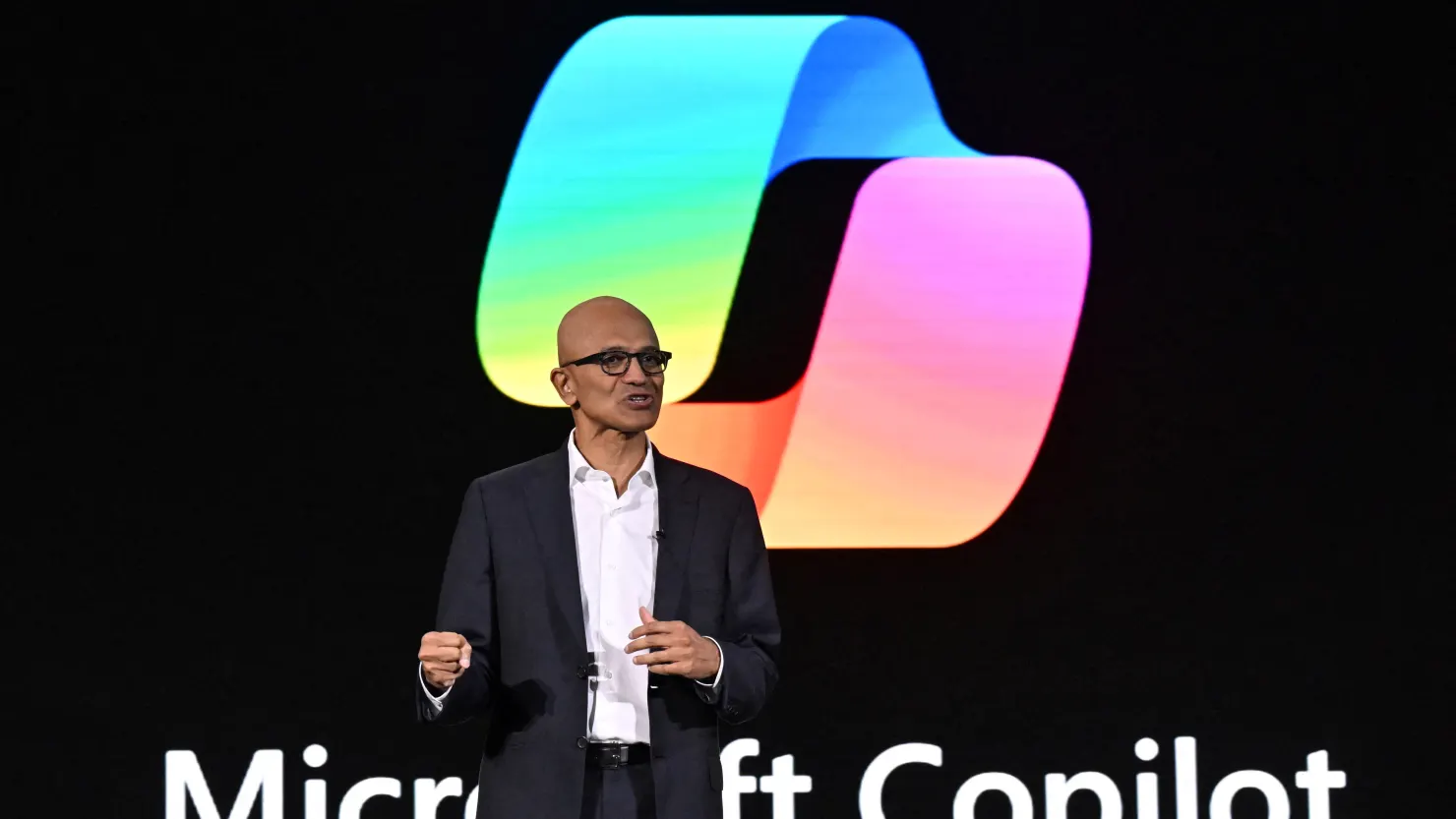
Microsoft’s AI Dream Hits a Wall: Why Big Companies Are Refusing to Buy Copilot — Even as Nadella Claims 150 Million Users

A Reality Check Microsoft Didn’t Expect
Microsoft has spent years positioning itself as the dominant force in enterprise tech. But turning that dominance into widespread adoption of its AI chatbot, Copilot, is proving far harder than the company expected.
And this week at the annual Ignite conference in San Francisco, IT leaders made one thing very clear: Microsoft’s AI revolution is hitting some serious resistance.
While CEO Satya Nadella proudly touts 150 million Copilot users, the on-the-ground conversations reveal a very different story—one filled with hesitation, frustration, and in some cases, outright rejection.
Copilot Was Supposed to Be Microsoft’s Next Big Win
A Price That Raises Eyebrows
Two years ago, Microsoft rolled out the commercial version of 365 Copilot at $30 per person per month, an add-on to its already pricey productivity suite. With AI hype at an all-time high, Microsoft expected the demand to soar.
Instead, many customers are staring at the price tag and saying, “No thanks.”
Consultant Adam Mansfield of UpperEdge didn’t mince words:
“Their sales reps actually now have to learn to sell.”
That alone hints at a deeper problem—Microsoft is no longer dealing with an automatic yes from enterprise clients.
Nadella Says Copilot Is Thriving. Buyers Say… Not Quite.
On Microsoft’s recent earnings call, Satya Nadella announced with confidence that over 150 million people are using Copilot for productivity, coding, cybersecurity tasks, and more.
That sounds like mass adoption—until you hear what actual IT buyers are saying at Ignite.
Many of them aren’t rushing in.
Some of them don’t understand the value.
Others can’t justify the cost.
And a surprising number don’t want it at all.
The Harsh Truth from Inside the Conference
“I Want 300 to Go to Zero.”
That’s the blunt feedback Mansfield says he’s hearing from clients—customers who are actually getting rid of their Copilot licenses, not expanding them.
“I know a lot of customers who are like, ‘Yeah, I want 300 to go to zero,’” Mansfield told reporters, referring to companies tossing their Copilot subscriptions.
His clients are saying:
“I don’t even want it.”
This is the kind of feedback that keeps enterprise sales teams awake at night.
Why Companies Are Refusing Microsoft Copilot
1. The Value Isn’t Always Clear
Many IT leaders say Copilot’s real-world benefits don’t yet justify the cost. They want hard productivity data, not vague promises. Without measurable ROI, budgets stay closed.
2. Adoption Requires Training — and Lots of It
Unlike Word or Excel, Copilot isn’t plug-and-play. Employees need training to use it effectively, and many organizations simply don’t have the time or resources.
3. Concerns About Accuracy
Enterprises can’t afford mistakes. Some buyers have concerns about AI-generated errors, hallucinations, and inconsistent output—issues that could ripple across thousands of employees’ workflows.
4. Security and Privacy Questions
For heavily regulated industries, any AI tool that touches internal documents or sensitive data sparks scrutiny. Copilot’s deep integration with Microsoft 365 is powerful—and intimidating.
5. Budgets Are Tight
AI might be the future, but budgets today are brutally practical. With Copilot costing $30 per user per month, companies hesitate to roll it out broadly.
Microsoft’s Biggest Challenge: Winning Hearts, Minds, and Wallets
Microsoft is learning a hard truth: enterprise dominance doesn’t automatically transfer to AI dominance.
Copilot isn’t Word.
It isn’t Teams.
It isn’t something companies have relied on for years.
It’s new. It’s unfamiliar. And it’s expensive.
To succeed, Microsoft will have to do something rare for a tech giant: convince, not just offer.
That means:
Clearer value demonstrations
More flexible pricing
Better training resources
Stronger security assurances
Proven productivity metrics
Without these, Copilot risks becoming a niche tool instead of the mass-market AI companion Microsoft imagined.
The Bottom Line: Microsoft’s AI Momentum May Not Be What It Looks Like
Nadella’s claim of 150 million Copilot users may sound impressive, but it doesn’t erase the tension bubbling underneath.
Real IT buyers—the people making the purchasing decisions—are hesitant. Some are in wait-and-see mode. Others are backing away. And many are openly questioning whether Copilot is worth the money at all.
Microsoft still has a chance to turn Copilot into a global enterprise standard. But the Ignite conversations prove one thing:
AI hype doesn’t guarantee AI adoption.
And unless Microsoft confronts these challenges head-on, Copilot might not soar—it might stall.

