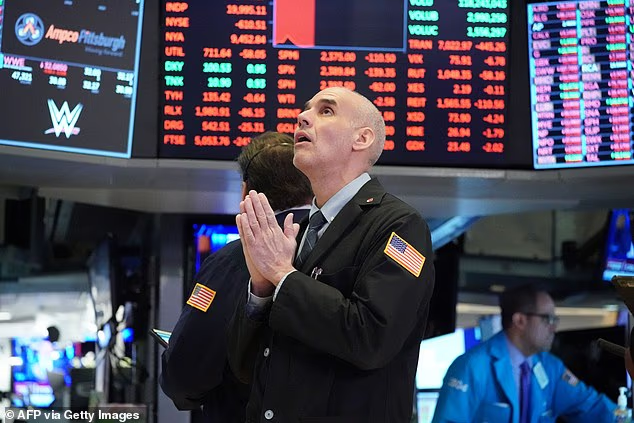
Wall Street Just Suffered a Stunning Reversal: Tech Stocks Crashed and the Fear Index Exploded

Wall Street’s Sudden Meltdown Leaves Investors Stunned
Wall Street was riding high Thursday morning. Stocks were climbing, confidence was returning, and early momentum suggested the market might finally be shaking off weeks of uncertainty.
Then, without warning, everything flipped.
A powerful early rally turned into a violent selloff by the closing bell, dragging major indexes deep into the red and unleashing a wave of fear across financial markets. Technology stocks led the plunge, erasing much of the optimism sparked by Nvidia’s strong earnings the night before.
By the end of the day, the Nasdaq and S&P 500 both registered their lowest closes in months. Meanwhile, the market’s primary fear gauge — the Cboe Volatility Index — exploded to its highest level since April.
Wall Street hasn’t seen a reversal this sharp in weeks. And the reasons behind it are more troubling than investors expected.
A Day That Went From Rally to Ruin
The Morning Looked Ready to Break Bullish
The day started with high expectations. Nvidia’s strong performance had injected fresh energy into the market, especially into tech stocks. Traders pushed the Nasdaq higher, betting that the AI giant’s momentum would spill into the entire sector.
But the celebration didn’t last long.
The Jobs Data Shock That Pulled the Plug
A fresh batch of U.S. labor market data landed mid-session, throwing cold water on the optimism. The numbers didn’t paint a clear picture. They didn’t show a strong economy. They didn’t show a weak one either.
Instead, they signaled something worse: uncertainty.
With inflation still on the Federal Reserve’s radar and the labor market showing mixed signals, traders started to question what the next Fed moves might be. Confusion quickly turned into hesitation, and hesitation turned into fear.
The early tech rally crumbled. By late afternoon, the market had fully reversed direction.
Nasdaq and S&P 500 Close at Their Lowest Levels in Months
This wasn’t just a dip. It was a defining shift in market momentum.
Nasdaq Hits Lowest Close Since September 11
The tech-heavy Nasdaq took the hardest hit. After weeks of pressure from rising bond yields and concerns over stretched valuations, Thursday’s reversal slammed it to its lowest closing level since September 11.
Big tech stocks saw heavy selling throughout the day. Nvidia’s early boost faded. Momentum evaporated. Investors who had been hopeful just hours earlier were suddenly rushing for exits.
S&P 500 Suffers the Same Fate
The S&P 500 followed the same pattern, ending the day at its lowest close since September 10. That might not sound dramatic, but the index had been fighting hard to reclaim stability. Thursday’s drop wiped out multiple days of slow recovery.
Traders who thought the market had found its footing were reminded just how fragile sentiment remains.
Wall Street’s Fear Index Suddenly Spikes
The VIX Hits Its Highest Level Since April
If there was any indicator showing how quickly the tone shifted, it was the Cboe Volatility Index — widely known as the VIX.
The so-called fear index surged to its highest close since April 24.
When the VIX jumps this aggressively in a single session, it almost always reflects deep anxiety among traders. It signals that investors expect bigger market swings ahead, more uncertainty, and more turbulence.
The spike wasn’t random. It was a direct reaction to the confusion surrounding the labor market and the collapse of tech momentum.
Investors Are Bracing for More Trouble
A rising VIX often suggests that investors are building hedges, reducing exposure, or preparing for more downside volatility. Combined with the sharp selloff in tech stocks, the message is clear:
Wall Street is increasingly nervous, and Thursday’s reversal may not be a one-day event.
The Twin Drivers Behind the Selloff: Confusion and Exhaustion
1. Confusing Labor Market Signals
The new jobs data didn’t clarify the economic picture — it blurred it. The Federal Reserve has been watching labor conditions closely to determine whether inflation pressures will ease. When the data doesn’t settle the question, it causes fear instead of confidence.
Investors don’t fear good news or bad news as much as unclear news.
Thursday’s report added more fog to an already difficult landscape.
2. Tech Stocks Are Showing Signs of Fatigue
Even before the reversal, tech stocks were stretched. Many had run hard on hype around AI, cloud computing, and future growth. Nvidia had given them a morning boost, but the momentum was fragile.
Once traders sensed risk, the selling accelerated quickly.
Tech stocks don’t fall gently when sentiment breaks. They drop hard — and that’s exactly what happened.
What This Means for the Market Going Forward
Investors Must Prepare for More Volatility
Thursday’s reversal serves as a warning. Markets are struggling with a combination of inflation worries, rising yields, geopolitical tensions, and now confusing labor data. Any new uncertainty can trigger fast, aggressive swings.
Volatility spikes often precede bigger moves. The VIX suggests traders expect more turbulence ahead.
Tech Will Remain the Battleground
As long as AI hype, earnings expectations, and rate fears collide, tech stocks will remain the most vulnerable — and the most influential. When tech cracks, the market cracks. When tech rallies, the market breathes again.
Thursday showed just how sensitive the sector still is.
The Fed’s Next Move Will Be Critical
Investors are now watching Federal Reserve commentary and upcoming reports with even more intensity. Markets crave direction. Without it, they react emotionally, not logically.
Thursday was a perfect example.
A Market on Edge, Searching for Stability
Wall Street hoped Nvidia’s strong earnings would turn the tide. Instead, the market was hit with a brutal reminder that optimism doesn’t last long in an uncertain economy.
The combination of a confusing jobs report, fragile tech stocks, and rising volatility was enough to turn a promising rally into a painful decline.
The coming days will determine whether Thursday was a temporary shake-up — or the start of a deeper slide.
For now, one thing is clear: investors are nervous, volatility is rising, and the market’s next move could be just as dramatic as the last.