
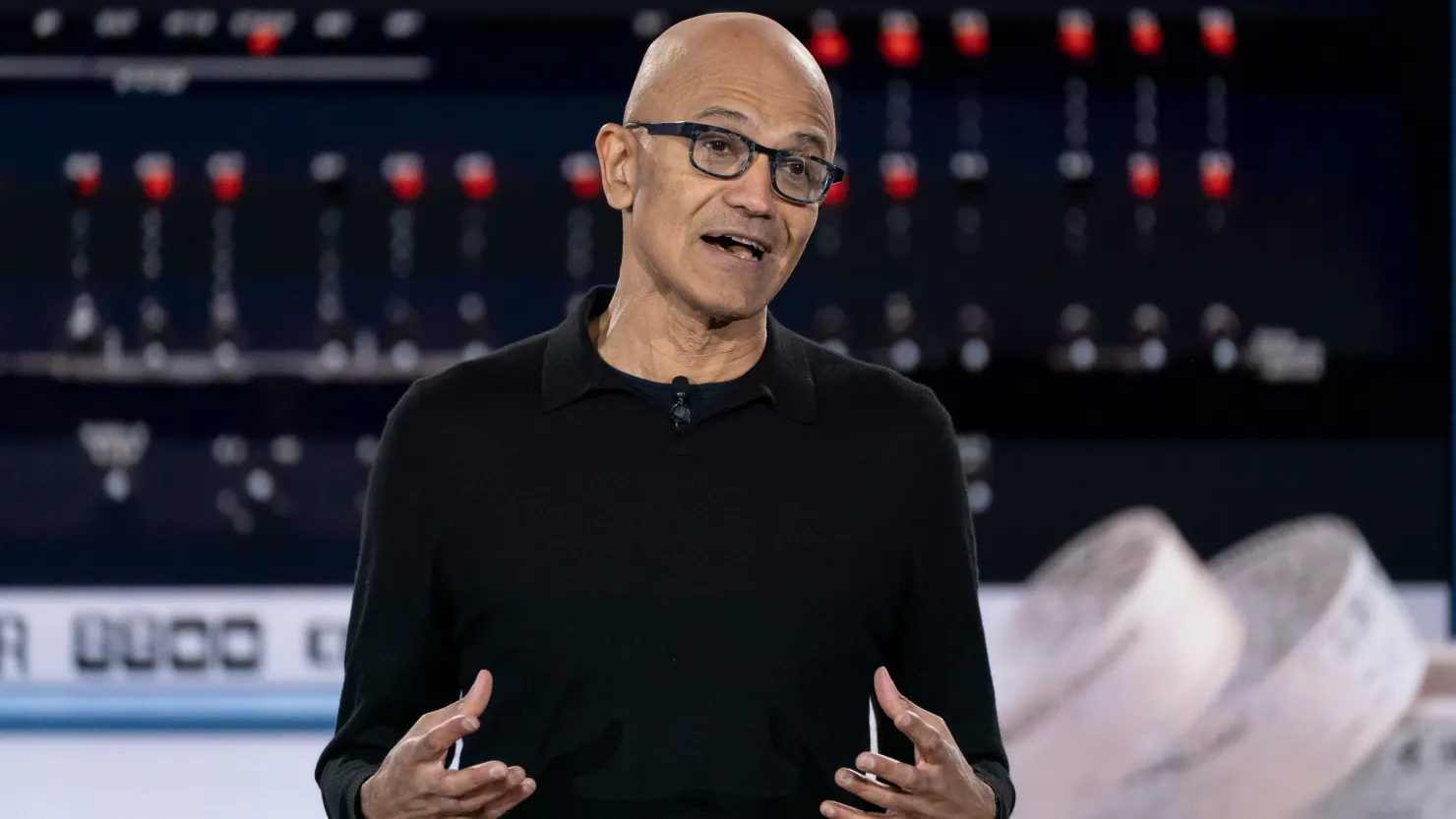

Microsoft is gearing up to hire more employees — but there’s a twist: artificial intelligence will be doing a huge chunk of the heavy lifting. CEO Satya Nadella revealed on a recent podcast that the company’s future workforce will work “with a lot more leverage” thanks to AI.
Microsoft’s Workforce Today
After a stagnant 2025 fiscal year, Microsoft’s headcount stood at 228,000. The company cut at least 6,000 employees through layoffs earlier in the year and let go of another 9,000 in July. Despite this, Nadella insists that hiring is on the horizon — just in a smarter, AI-driven way.
AI is Changing How Work Gets Done
According to Nadella, the next year will be about employees “unlearning” and “relearning” how they perform tasks by leveraging AI tools. This includes AI-powered features in Microsoft 365 and the GitHub Copilot coding assistant, which draw on models from OpenAI and Anthropic.
“The unlearning and learning process will take the next year or so, then the headcount growth will come with max leverage,” Nadella said. In other words, Microsoft will be able to expand its workforce without increasing costs proportionally — AI will boost productivity exponentially.
AI in Action: Teams Do More With Less
Nadella shared an example of a Microsoft executive overseeing fiber network operations. Instead of hiring an entire team to maintain rising data center demand, the executive built AI agents to handle maintenance tasks. The result? A small team achieving far more than ever before.
This mirrors historical shifts in workplace efficiency, Nadella said. Just like faxes were replaced by email and spreadsheets decades ago, AI is now reshaping every aspect of planning, research, and collaboration.
Microsoft vs. Amazon: The AI Arms Race
While Microsoft leans into AI to grow efficiently, Amazon has been taking a different approach — cutting 14,000 corporate jobs. Beth Galetti, Amazon’s senior VP of people experience and technology, called AI “the most transformative technology we’ve seen since the Internet.” Both tech giants are racing to dominate cloud infrastructure for AI, but Microsoft’s strategy is focused on augmenting human work rather than replacing it.
The Big Picture
Microsoft’s financials back the AI-driven strategy. The company recently reported 12% year-over-year revenue growth and its widest operating margin since 2002. Azure revenue jumped 40%, showing that the company’s cloud and AI investments are paying off.
For employees, this means learning new skills and working alongside AI — but for Microsoft, it means faster innovation, lower costs, and a more flexible workforce. The era of AI-powered hiring is here, and Microsoft wants to lead the charge.

