
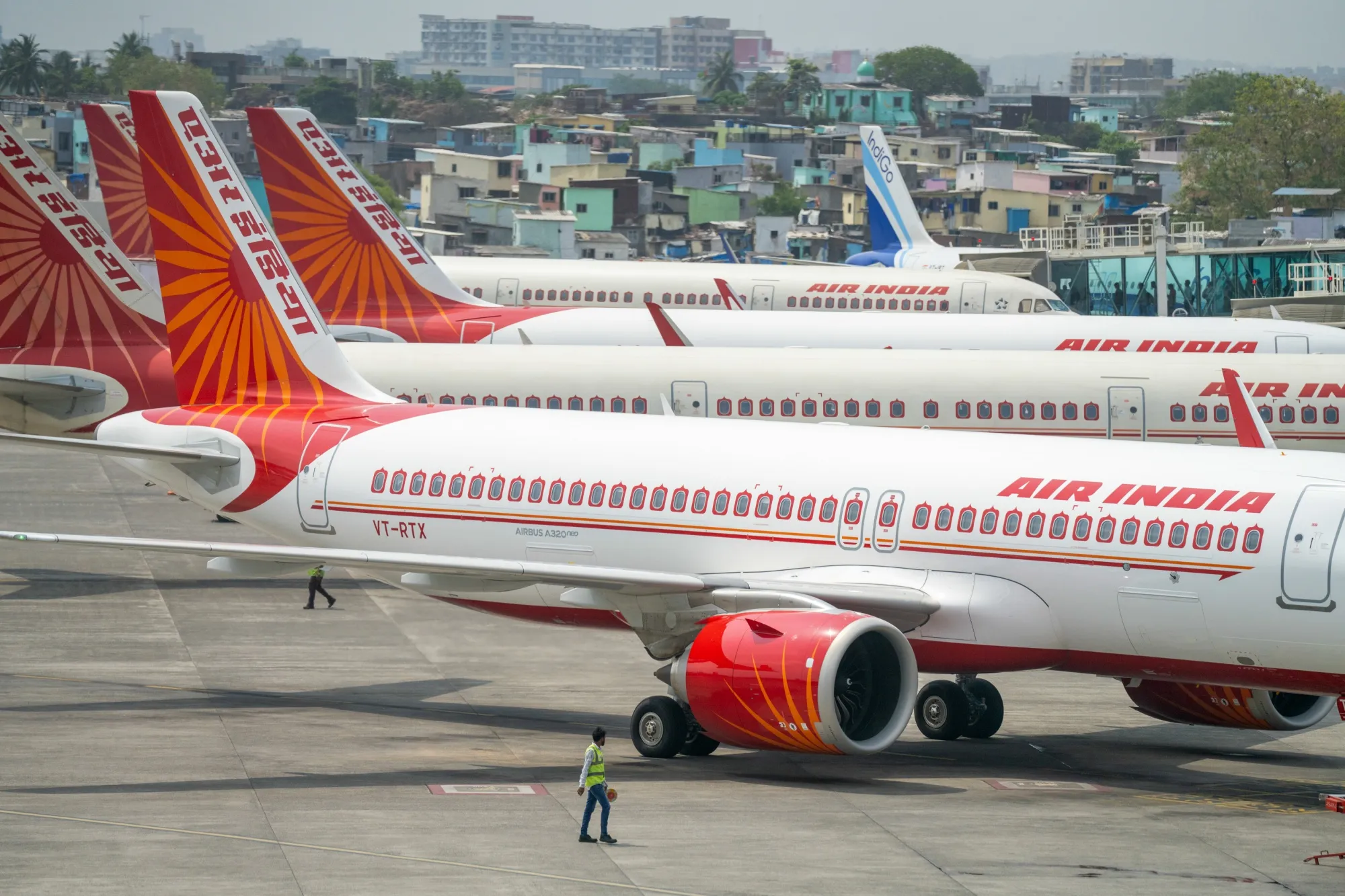
Air India Seeks $1.1 Billion Bailout After Deadly Crash, Faces Financial Crisis

Tata and Singapore Airlines Targeted for Lifeline
Air India Ltd., India’s national carrier, is facing a serious financial and operational crisis, prompting the airline to seek at least 100 billion rupees ($1.1 billion) in support from its owners, Tata Sons Pvt. and Singapore Airlines Ltd.. The request comes amid a series of setbacks, including a deadly plane crash and operational restrictions imposed due to airspace curbs, which have hindered the airline’s ability to return to profitability.
The proposed funds are intended for a comprehensive overhaul of Air India’s systems and services, along with the development of in-house engineering and maintenance departments, signaling a strategic move to strengthen the carrier’s long-term operational stability.
Financial Struggles Amid Operational Setbacks
Air India has long struggled to achieve financial stability. Despite years of restructuring and strategic investments, the airline remains far from operational breakeven, with significant losses mounting each quarter.
The situation worsened after the recent tragic crash, which not only shook public confidence but also brought scrutiny on the airline’s safety and operational protocols. Additionally, curbs on airspace use and regulatory restrictions have hampered the airline’s ability to maximize flight schedules and revenue, further exacerbating financial pressures.
Industry analysts note that the airline’s path to breaking even by the end of March next year is now uncertain, as Air India navigates financial instability, operational challenges, and public scrutiny simultaneously.
Why Tata and Singapore Airlines Are Critical Stakeholders
Tata Sons, which acquired full control of Air India in 2022, is the airline’s primary owner, making it a key player in any financial intervention. The Tata Group views Air India as a strategic asset, integral to its broader aviation ambitions in India and internationally.
Singapore Airlines, a minority shareholder, is also expected to participate in the funding, particularly in areas of technology upgrades and operational improvements. The partnership between Tata and Singapore Airlines represents a strategic alignment of global and domestic expertise, essential to modernizing Air India and restoring its competitiveness.
The bailout request underscores the magnitude of investment required to not only stabilize Air India but also to transform it into a financially viable and operationally efficient airline.
Proposed Areas of Investment
The $1.1 billion funding is intended to cover several critical areas, ensuring the airline is equipped to compete in both domestic and international markets. Key areas of focus include:
- Systems and Services Overhaul – Upgrading operational systems, improving booking platforms, and enhancing the overall passenger experience to meet global standards.
- Engineering and Maintenance Development – Establishing in-house capabilities to maintain and service aircraft efficiently, reducing reliance on third-party providers.
- Safety and Compliance Enhancements – Strengthening protocols to ensure airline safety, regulatory compliance, and passenger confidence.
- Operational Efficiency Initiatives – Streamlining processes, optimizing fleet utilization, and reducing costs to improve profitability.
By addressing these areas, Air India aims to regain passenger trust, increase operational reliability, and eventually move toward sustainable profitability.
The Road to Recovery
Rebuilding Air India is not just about financial input; it requires strategic execution across operations, safety, and customer experience. Experts highlight that the airline must focus on:
- Restoring public confidence after recent safety incidents
- Implementing cost-effective operational strategies
- Enhancing service quality to compete with private domestic and international carriers
- Strengthening alliances and partnerships for global market expansion
Tata and Singapore Airlines’ support will be critical in ensuring that the airline navigates these challenges effectively, providing both financial backing and strategic guidance.
Implications for the Indian Aviation Industry
Air India’s financial struggles highlight broader challenges in the Indian aviation sector. The industry faces rising fuel costs, regulatory hurdles, and fierce competition from private carriers like IndiGo, SpiceJet, and GoAir.
The bailout, if approved, could serve as a turning point for Air India, enabling it to modernize operations and compete more effectively on both domestic and international routes. Conversely, failure to secure adequate funding could lead to further losses, reduced market share, and diminished consumer trust.
Industry analysts are closely watching how Tata and Singapore Airlines respond, as their decisions will determine the trajectory of India’s national carrier in the coming years.
Air India’s request for $1.1 billion in funding from Tata Sons and Singapore Airlines is a critical step in its journey toward recovery. The airline faces a complex mix of financial, operational, and reputational challenges following a deadly crash and ongoing operational setbacks.
The proposed bailout is intended not just to stabilize the airline but to transform it into a modern, efficient, and competitive carrier capable of meeting global standards. With strategic investments in systems, engineering, and safety, Air India hopes to regain passenger confidence and move closer to sustainable profitability.
For Tata and Singapore Airlines, the decision to provide financial support is about more than money—it’s about preserving a strategic asset and restoring India’s national carrier as a symbol of reliability and growth in the aviation sector.
The coming months will be decisive for Air India, as stakeholders work to ensure the airline survives its current crisis and emerges stronger, safer, and more competitive than ever.

