
Elon Musk Launches Grokipedia: AI-Powered Wikipedia Rival Goes Live After Rocky Start

Musk’s New AI Encyclopedia Promises “Less Bias” and Smarter Knowledge
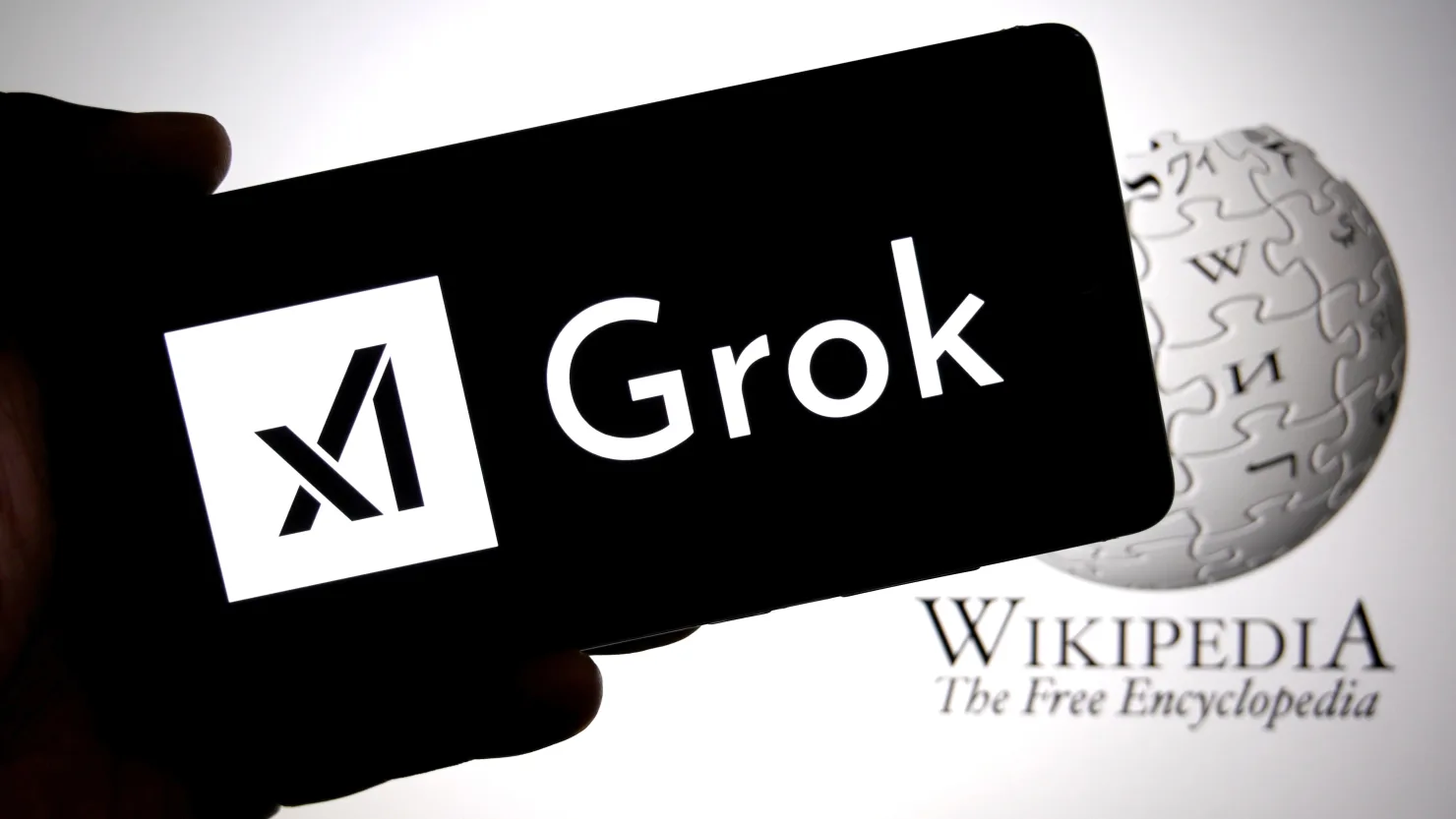
Elon Musk has launched an early version of Grokipedia, an AI-powered encyclopedia designed to compete with Wikipedia. The platform, powered by xAI’s large language model Grok, went live on Monday but faced an early setback when the website briefly crashed before returning online hours later.
Musk has described Grokipedia as a “smarter, less biased” alternative to Wikipedia, positioning it as part of his broader vision to challenge established information platforms and promote what he calls a freer and more balanced approach to knowledge sharing.
What Is Grokipedia?
Grokipedia is a new online encyclopedia developed by xAI, Musk’s artificial intelligence company. It is designed to integrate directly with Grok, the AI chatbot that’s already available to X (formerly Twitter) Premium+ subscribers. The platform aims to provide factual, AI-curated entries that evolve dynamically over time, unlike Wikipedia’s crowdsourced and manually edited format.
According to Musk, Grokipedia will draw from a wide range of data sources — including real-time online discussions — and employ AI moderation to ensure accuracy and objectivity. The billionaire claims this will make the platform “more truthful and less agenda-driven” than existing encyclopedias.
Musk said on X that this initial rollout is only “Grokipedia version 0.1,” and that “version 1.0 will be 10X better.” Despite its early-stage development, he asserted that Grokipedia already “outperforms Wikipedia in accuracy and relevance.”
A Chaotic Launch
The debut of Grokipedia did not go entirely smoothly. Within minutes of Musk announcing its release on X, the site reportedly became inaccessible due to heavy traffic, displaying error messages for several hours before coming back online.
The brief outage sparked a wave of commentary online, with Musk supporters praising the concept while critics mocked the technical hiccups. Once restored, users noted that the platform appeared to feature a limited number of entries — mostly related to technology, science, and culture — many of which seemed to mirror Grok’s AI responses on X.
Musk acknowledged the rough start, saying the system was still in its infancy and that users could expect “rapid improvements” in functionality and content.
Musk’s Long-Running Criticism of Wikipedia
The launch of Grokipedia follows Musk’s ongoing criticism of Wikipedia, which he has repeatedly accused of political and ideological bias. Over the past year, he has taken issue with the site’s editorial standards, labeling it “woke” and claiming it relies too heavily on what he calls “mainstream propaganda outlets” such as The New York Times and NPR.
In a series of posts, Musk argued that Wikipedia’s volunteer-based editing model allows ideological leanings to shape the presentation of facts. He has also suggested that financial incentives and partnerships may influence how certain topics are covered.
Musk’s disdain for Wikipedia is not new. In 2023, he publicly offered to donate $1 billion to the Wikimedia Foundation — but only if the platform changed its name to “Dickipedia,” a move widely seen as trolling.
The Idea Sparked by a Conversation
Musk revealed last month that Grokipedia’s development was inspired by a suggestion from venture capitalist and tech entrepreneur David Sacks, who currently serves as the AI and crypto czar in U.S. President Donald Trump’s administration.
Sacks reportedly proposed that Musk leverage xAI’s growing AI capabilities to build a rival to Wikipedia that could better align with Musk’s views on free speech and “truth-seeking.” The suggestion came during a discussion on how to make AI more independent from what Musk calls “institutional censorship.”
Grokipedia, according to Musk, is an attempt to “reboot how knowledge is shared online” — shifting away from centralized human moderation toward algorithmic fact synthesis powered by artificial intelligence.
Political Controversy Surrounding Musk
The launch also arrives amid increasing political scrutiny of Musk’s actions and affiliations. The Tesla and SpaceX CEO recently made headlines for endorsing Germany’s far-right Alternative für Deutschland (AfD) party, drawing criticism from political figures and advocacy groups across Europe.
His outspoken political views have at times fueled controversy around his companies and platforms, including X and xAI. Critics argue that Grokipedia could reflect Musk’s own biases under the guise of neutrality.
Still, Musk maintains that his goal is to make information systems more transparent and open to debate, rather than filtered through what he calls “legacy media gatekeepers.”
How Grokipedia Works
Early users describe Grokipedia as a clean, AI-driven interface where users can search topics and receive dynamically generated summaries. Each entry appears to include citations generated by xAI’s data models, pulling information from publicly available sources and real-time online discussions.
Unlike Wikipedia, which relies on community editing, Grokipedia entries are continuously updated by xAI’s models based on live data streams and feedback loops. The platform also integrates with X, allowing posts, discussions, and news from the social network to influence how certain topics are represented.
Supporters see this as an exciting evolution of the traditional encyclopedia model — one that can stay current with breaking news and rapidly changing information. However, skeptics warn that such real-time updates could also amplify misinformation or bias if not properly managed.
Early Reactions from Users
Reactions to Grokipedia’s launch have been mixed. Some users praised the concept as a “long-overdue challenge” to Wikipedia’s dominance, while others questioned whether an AI-powered system run by one of the world’s most outspoken billionaires could truly remain impartial.
Tech analysts also pointed out that Grokipedia’s reliance on Grok — the same language model behind X’s chatbot — could raise questions about the independence of its data and whether it might echo the same conversational quirks seen in Musk’s AI posts.
Despite the skepticism, the platform’s debut generated significant attention across social media and the tech community. Within hours of its launch, “Grokipedia” became a trending topic on X in multiple countries.
What’s Next for Grokipedia
Musk confirmed that future versions of Grokipedia will expand in scope, include user feedback systems, and feature more advanced search capabilities. He also hinted at potential integration with xAI’s upcoming multimodal tools, allowing users to access not just text but also visual and video-based information.
The company plans to open developer access to Grokipedia’s API later this year, enabling third-party platforms to build plugins or extensions that leverage its AI knowledge engine.
While it remains to be seen whether Grokipedia can rival Wikipedia’s massive user base and content volume, Musk’s entry into the online knowledge space signals another major step in his effort to reshape how people access and interpret information in the digital age.

