
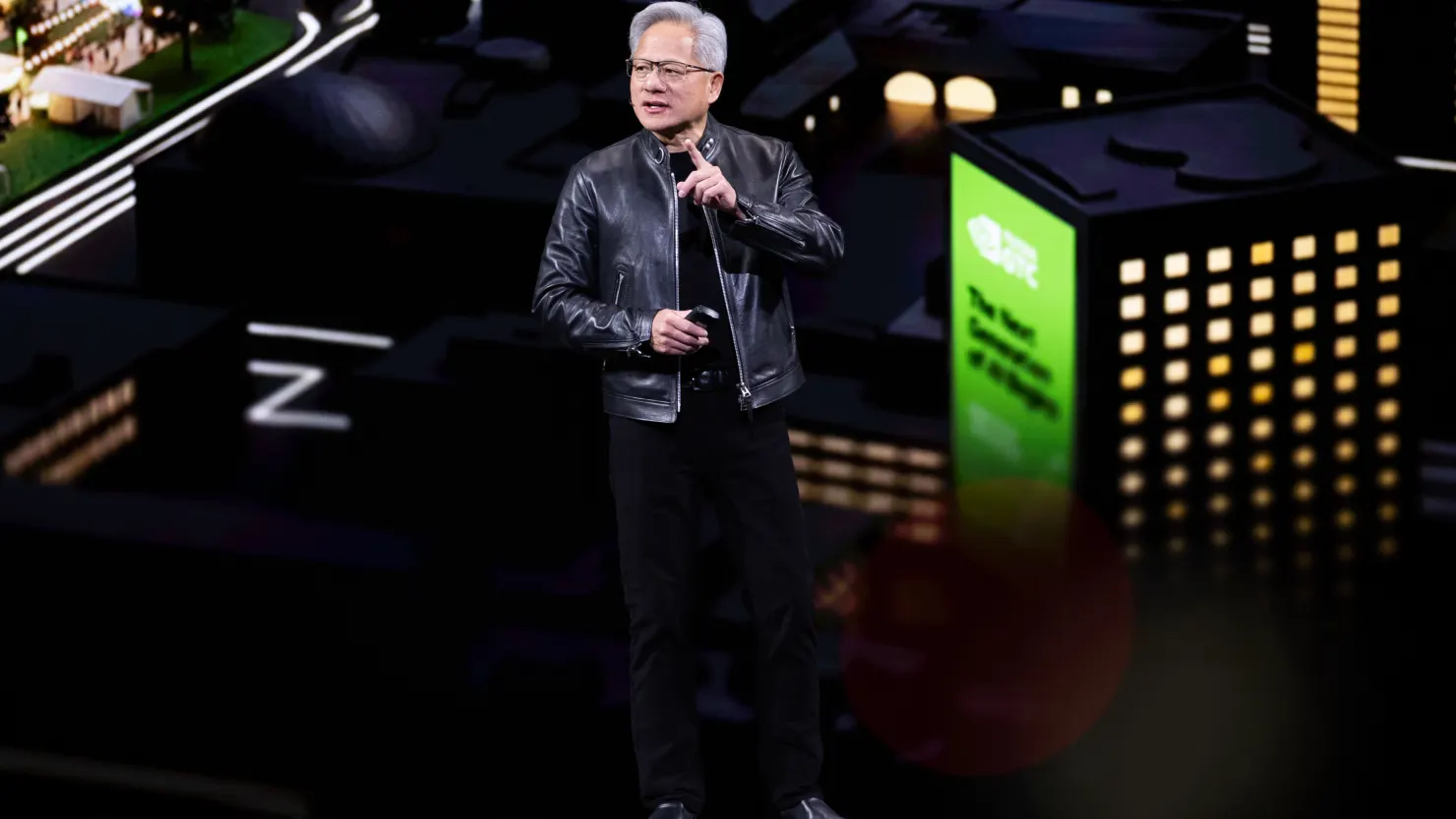

At the 2026 Nvidia GTC developer conference, CEO Jensen Huang projected that the company could see $1 trillion in orders for its Blackwell and Vera Rubin systems through 2027.
This forecast significantly surpasses the company’s earlier 2025 projection, which estimated a $500 billion revenue opportunity from the two platforms.
Blackwell and Vera Rubin: Driving Next-Gen Computing
The Blackwell and Vera Rubin systems are central to Nvidia’s push into high-performance AI and data center computing.
Huang emphasized that the rise of agentic AI—AI systems capable of autonomous decision-making—is creating fundamentally new computing demands, requiring both advanced hardware and sophisticated software infrastructure.
Growth Outlook for 2026 and Beyond
Nvidia expects 2026 growth to exceed previous projections, fueled by strong demand for AI-enabled systems across enterprise, cloud, and scientific computing sectors.
Key factors driving the opportunity include:
- AI Workloads: Increasingly complex AI models require more powerful and efficient hardware, such as Blackwell GPUs.
- Data Center Expansion: Cloud providers and enterprises are investing heavily in infrastructure capable of supporting next-generation AI applications.
- Autonomous Systems: Vera Rubin systems are designed to accelerate workloads for autonomous AI, robotics, and agentic AI applications.
Agentic AI: A Game Changer
A central theme of GTC 2026 was how agentic AI is reshaping the computing landscape. These AI systems can perform tasks autonomously, requiring massive computational power and optimized hardware.
Huang highlighted that Nvidia is uniquely positioned to meet this demand, offering integrated solutions that combine GPUs, AI software stacks, and developer tools to accelerate innovation.
Implications for the Tech Industry
Nvidia’s projections signal a broader trend: AI is driving unprecedented demand for specialized hardware and pushing technology companies to rethink infrastructure investment.
- Enterprises may need to adopt advanced GPU solutions to remain competitive in AI-driven markets.
- Cloud providers could see increased revenue from hosting and AI services built on Nvidia platforms.
- The trillion-dollar projection underscores the scale of AI’s economic impact over the next two years.
Moving Forward
As AI adoption accelerates, Nvidia expects both Blackwell and Vera Rubin to play a pivotal role in enabling autonomous systems, research computing, and next-generation AI applications.
The company is focusing on scaling production and expanding partnerships to meet the projected demand, reinforcing its position as a leader in the AI hardware ecosystem.

