
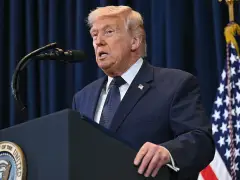

U.S. President Donald Trump has suggested that the ongoing conflict with Iran could come to an end soon, signaling possible relief for global markets that have been shaken by rising oil prices and geopolitical tensions. Speaking at a press conference held at his golf club near Miami, Trump said the war against Iran is expected to conclude “very soon,” though he clarified that it may not happen within the current week.
The remarks come at a time when global energy markets and financial markets have been closely watching developments in the Middle East, particularly due to concerns about disruptions to global oil supply.
Trump Signals War Could End Soon
During the press conference, Trump expressed confidence that the conflict was nearing its conclusion.
According to the U.S. president, discussions and ongoing diplomatic efforts could lead to the war ending in the near future.
However, he cautioned that the resolution may not happen immediately.
The war, involving the United States and Israel against Iran, reportedly began on February 28 and has since created major uncertainty in global markets.
Conversation With Vladimir Putin
Trump also revealed that he had spoken earlier in the day with Russian President Vladimir Putin regarding the situation.
Russia has historically maintained diplomatic ties with Iran, and discussions between global leaders are often seen as an important step toward de-escalation during international conflicts.
While details of the conversation were not fully disclosed, the call highlights the growing diplomatic engagement around the conflict.
Oil Prices Surged Above $100
The conflict in the Middle East has had a significant impact on global oil markets.
Oil prices surged above $100 per barrel as fears grew that the region’s critical energy infrastructure and supply routes could be disrupted.
One of the main concerns for global markets has been the possibility that the Strait of Hormuz could remain effectively closed.
Importance of the Strait of Hormuz
The Strait of Hormuz is one of the most strategically important shipping routes in the world.
A large share of global crude oil exports passes through this narrow waterway connecting the Persian Gulf with international markets.
If shipping through this route is disrupted, it can severely affect global oil supply and drive energy prices higher.
Because of these risks, traders reacted quickly when tensions escalated, pushing crude prices past the $100 mark earlier in the week.
Trump Predicts Oil Prices Will Fall
Despite the recent surge in oil prices, Trump predicted that prices will eventually decline as the conflict approaches its end.
According to him, easing tensions in the region could restore stability to global energy markets.
Lower oil prices would be welcomed by governments, businesses, and consumers around the world.
High oil prices typically increase transportation costs, raise manufacturing expenses, and contribute to inflation in many economies.
If prices fall again, it could help reduce some of the economic pressure currently felt in global markets.
Global Markets Watching Closely
Financial markets around the world have been extremely sensitive to developments in the Middle East conflict.
Energy prices often act as a key indicator of geopolitical risk, and sudden price spikes can trigger volatility across stock markets, currencies, and commodities.
Investors are closely monitoring statements from world leaders, diplomatic negotiations, and military developments for signs of whether tensions will escalate or ease.
Trump’s comments suggesting the war could end soon have provided some optimism for markets that have been shaken by the crisis.
The Broader Geopolitical Impact
Beyond oil prices and financial markets, the conflict has broader geopolitical implications.
Any military confrontation involving Iran can affect multiple countries in the region and influence global diplomatic relations.
Major global powers, including the United States, Russia, and European nations, often become involved in negotiations aimed at preventing further escalation.
The outcome of the current conflict could influence the geopolitical balance in the Middle East and shape international relations in the months ahead.
What Happens Next
While Trump’s statement suggests that the conflict may soon come to an end, uncertainty still remains.
Diplomatic negotiations, military developments, and international mediation efforts will likely determine how quickly the situation stabilizes.
For now, global markets and energy traders will continue to monitor developments closely.
If tensions continue to ease and the conflict ends as predicted, oil prices could stabilize and financial markets may see further recovery from recent volatility.

