
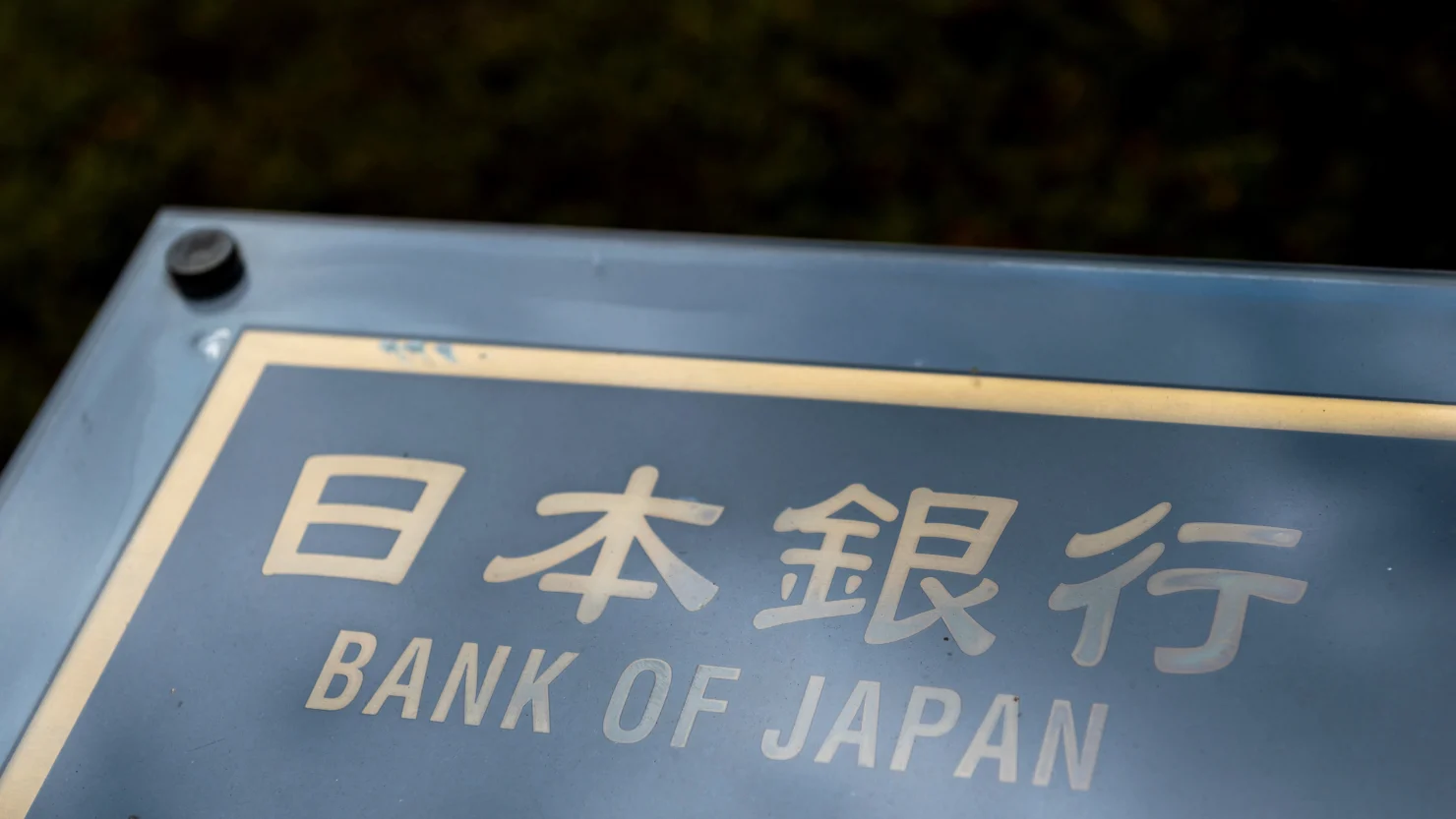

Japan’s central bank has struck a careful balance between optimism and caution as the country heads toward a snap national election. The Bank of Japan announced an upward revision to its economic growth forecasts while keeping its key policy interest rate unchanged at 0.75%.
The decision comes at a politically sensitive moment, just weeks before Japan goes to the polls on February 8. While the BOJ signaled confidence in the country’s economic recovery, it chose to avoid further tightening of monetary policy for now.
GDP Growth Outlook Revised Upward
Stronger Economic Momentum Expected
The Bank of Japan upgraded its growth forecasts for the next two fiscal years, reflecting improved confidence in both domestic and global economic conditions.
For the fiscal year ending in March 2026, the central bank now expects Japan’s economy to grow by 0.9%, up from its earlier estimate of 0.7%. It also raised its growth projection for the 2026 fiscal year to 1%, compared to a previous forecast of 0.7%.
These revisions suggest that policymakers believe Japan’s economy is gradually gaining momentum after years of sluggish growth and deflationary pressures.
What Is Driving the Improved Outlook?
Wages, Prices, and Global Recovery
According to the central bank, Japan’s economic expansion is expected to remain moderate but steady.
The BOJ cited several supporting factors:
- A gradual recovery in global economic activity
- Rising wages alongside moderate price increases
- Continued support from government economic measures
- Accommodative financial conditions
The central bank believes Japan is moving closer to a virtuous cycle, where higher wages support consumption, which in turn helps sustain price growth and corporate investment.
This cycle has long been a key objective of Japan’s monetary policy.
Interest Rates Held Steady at 0.75%
A Split Decision Among Policymakers
Despite the improved economic outlook, the Bank of Japan opted to keep its benchmark interest rate unchanged at 0.75%.
The decision was made by an 8–1 vote, highlighting some internal debate within the policy board. The rate was last raised in December, when it reached its highest level in 30 years.
Holding rates steady suggests the BOJ wants more evidence that economic gains and inflation trends are sustainable before tightening further.
Proposal to Raise Rates to 1% Rejected
Internal Debate Within the BOJ
The central bank revealed that board member Hajime Takata had proposed raising the policy rate to 1%.
However, his motion was defeated, with the majority of board members favoring a more cautious approach. This disclosure highlights the ongoing debate within the BOJ about how quickly Japan should normalize its ultra-loose monetary policy.
While some policymakers see room for further tightening, others remain concerned about the risks of moving too fast in an economy that has only recently shown signs of sustained recovery.
Political Context: Snap Election on February 8
Monetary Policy Under the Spotlight
The BOJ’s decision comes as Japan prepares for a snap election that could influence future economic policy direction.
Prime Minister Sanae Takaichi is expected to emphasize her support for continued monetary easing and fiscal stimulus during the campaign. Her stance reflects concerns that premature tightening could undermine growth and consumer confidence.
By holding rates steady, the central bank may be seeking to avoid adding uncertainty during an already sensitive political period.
Balancing Independence and Stability
Central Bank Caution Ahead of the Vote
While the BOJ operates independently, its decisions are closely watched during election periods.
Keeping rates unchanged allows the central bank to maintain policy stability while signaling that it remains data-driven and cautious. The move avoids fueling political debate over monetary tightening while still acknowledging improving economic fundamentals.
This approach reinforces the BOJ’s message that any future rate increases will depend on sustained progress in wages, inflation, and demand.
Inflation and Wage Trends Remain Key
Watching the Virtuous Cycle Closely
The BOJ continues to monitor whether rising wages and prices reinforce each other over time.
Japan has struggled for decades with weak wage growth and low inflation, making the current environment particularly important. While recent data has been encouraging, policymakers remain wary of declaring victory too early.
If wage growth stalls or inflation weakens, the BOJ may delay further rate hikes.
Global Factors Also Play a Role
External Conditions Matter
Japan’s economic outlook is closely tied to global growth trends.
The BOJ expects stronger overseas demand as other major economies stabilize and return to growth. This could support Japanese exports, corporate profits, and investment.
However, risks remain, including geopolitical tensions, volatile energy prices, and potential slowdowns in key trading partners.
What This Means for Markets
Stability Over Surprise
For financial markets, the BOJ’s decision offers predictability.
By holding rates steady while raising growth forecasts, the central bank signaled confidence without surprising investors. This balanced message may help support equity markets while limiting volatility in currency and bond markets.
Investors will now look ahead to future BOJ meetings for clearer signals on when the next rate move might come.
The Road Ahead for Monetary Policy
Gradual Normalisation Still Likely
Despite holding rates at 0.75%, the BOJ has not ruled out further tightening.
The rejection of a rate hike to 1% suggests policymakers want more time and data. However, rising growth forecasts indicate that the direction of policy normalization remains intact, even if the pace is slow.
Future decisions will depend on inflation sustainability, wage negotiations, and post-election economic signals.
Final Thoughts
The Bank of Japan’s latest decision reflects a careful balancing act between optimism and restraint.
By raising economic growth forecasts while keeping interest rates unchanged, the central bank acknowledged improving conditions without rushing into further tightening ahead of a crucial election.
As Japan approaches February 8, monetary policy will remain under close scrutiny. The coming months will reveal whether stronger growth and wage trends give the BOJ enough confidence to take the next step toward higher interest rates.
For now, stability appears to be the central bank’s top priority.

