
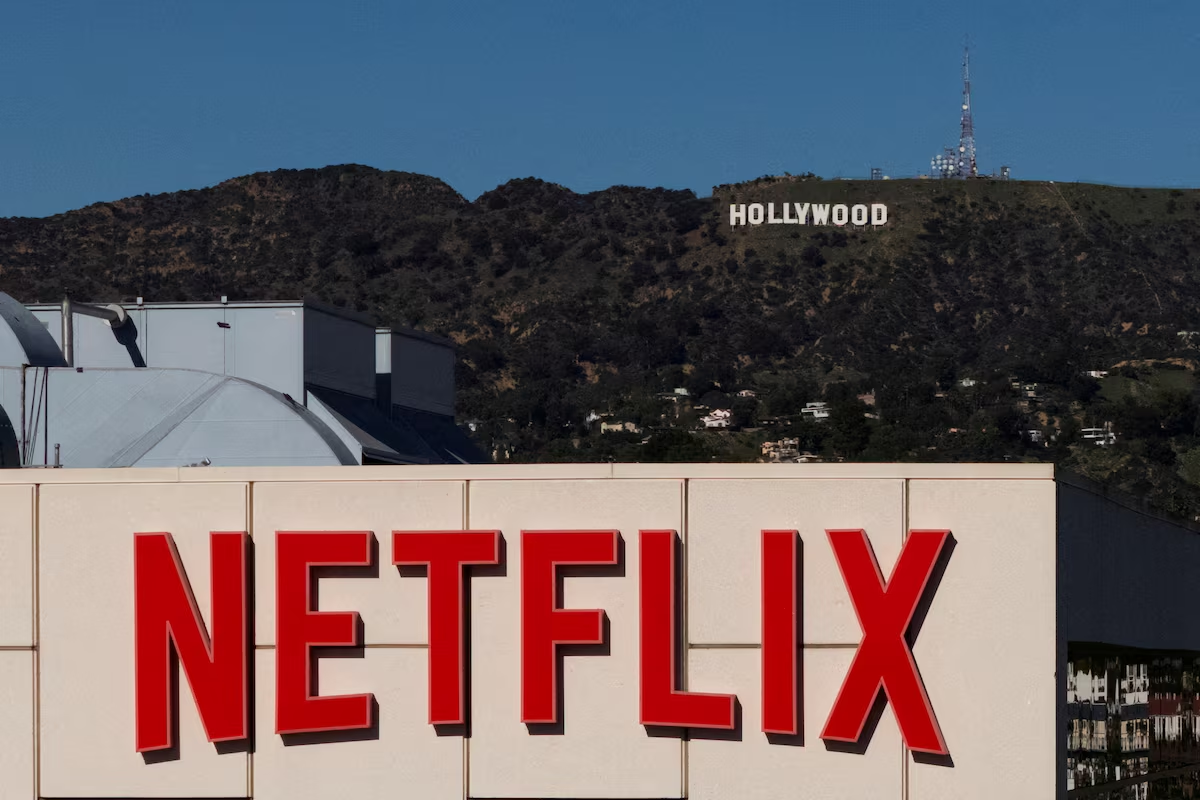

Netflix’s leadership found itself on unfamiliar ground after the company’s latest earnings report. Instead of celebrating growth or subscriber gains, co-CEOs Ted Sarandos and Greg Peters were forced into defense mode following news of a massive $83 billion deal involving Warner Bros assets.
The announcement rattled investors and sent Netflix shares down nearly 4% in a single trading session. For a company that built its success on organic growth and original content, the move marked a dramatic shift in strategy and raised serious questions about Netflix’s future direction.
A Major Shift From Netflix’s “Build, Don’t Buy” Philosophy
Breaking a Long-Held Rule
For years, Netflix positioned itself as a company that prefers to build rather than buy. Instead of acquiring legacy studios, it focused on developing original content, proprietary technology, and global distribution from the ground up.
The decision to spend nearly $83 billion on Warner Bros assets represents a sharp departure from that philosophy. It signals that Netflix now sees acquisitions, not just internal development, as essential to staying competitive in a rapidly changing entertainment landscape.
Why This Deal Is Different
Netflix executives argue that the media industry has reached a turning point. With competition intensifying and content costs soaring, scale and access to established franchises are becoming more valuable than ever.
Warner Bros brings a deep library of intellectual property, decades of filmmaking experience, and strong theatrical distribution, areas where Netflix has traditionally been weaker.
Investors React as Netflix Shares Slide
Stock Drops 4% After Earnings
The market response was swift. Netflix shares fell about 4% following the earnings report, reflecting investor concerns about the size, cost, and risks associated with the deal.
Large acquisitions often create uncertainty, and this one is especially bold given its scale. Investors are questioning whether the payoff will justify the financial strain.
Buybacks Paused to Fund the Deal
Adding to concerns, Netflix revealed it is pausing share buybacks to help fund the acquisition. Buybacks have long been a way for Netflix to return value to shareholders, and halting them signals tighter cash management ahead.
The company also disclosed tens of millions of dollars in buyout-related costs, which will weigh on near-term earnings.
Netflix Sees Warner Bros as a Gateway to Theaters
Expanding Beyond Streaming
One of the clearest motivations behind the deal is Netflix’s ambition to expand its theatrical business. While the company dominates streaming, it has struggled to gain a strong foothold in traditional movie theaters.
Warner Bros’ theatrical distribution network and industry relationships offer Netflix a fast-track into cinemas worldwide. Executives believe this will strengthen Netflix’s ability to release big-budget films globally while also supporting awards campaigns.
Blending Streaming and Cinema
Netflix has increasingly experimented with limited theatrical releases, but Warner Bros’ experience could help scale those efforts. The goal is not to abandon streaming, but to complement it with a stronger theatrical presence.
This hybrid model could open new revenue streams and extend the life of major film franchises.
Co-CEOs Defend the Deal as Pro-Consumer and Pro-Worker
Addressing Public and Industry Concerns
Facing skepticism from investors and analysts, Netflix’s co-CEOs were quick to frame the deal as a win for consumers and workers.
They argued that combining Netflix’s technology and global reach with Warner Bros’ creative legacy would result in better content, more choice, and wider distribution for audiences.
Promises to Creative Talent
The executives also emphasized that the deal would benefit writers, directors, and production crews by creating more opportunities and providing greater financial stability in a volatile industry.
This messaging appears aimed at easing concerns from Hollywood labor groups still wary after recent industry strikes and consolidation trends.
Financial Risks Loom Large
A Heavy Price Tag
At nearly $83 billion, the deal is one of the largest in media history. Even for a company of Netflix’s size, it represents a major financial commitment.
Critics worry that the acquisition could strain Netflix’s balance sheet, limit flexibility, and reduce its ability to invest aggressively in original programming.
Integration Challenges Ahead
Merging two massive organizations is never easy. Cultural differences, overlapping operations, and strategic misalignment could all pose challenges.
Netflix is known for its data-driven, tech-first culture, while Warner Bros has deep roots in traditional Hollywood practices. Aligning these approaches will be critical to the deal’s success.
Why Netflix Feels Pressure to Act Now
Competition Is Intensifying
The streaming market is no longer Netflix’s alone. Rivals like Disney, Amazon, and Apple are spending heavily on content and bundling services to attract and retain users.
As subscriber growth slows in mature markets, Netflix needs new ways to stand out. Acquiring Warner Bros gives it instant access to well-known franchises and a broader entertainment footprint.
Content Costs Keep Rising
Producing premium content has become increasingly expensive. By owning established IP and production capabilities, Netflix hopes to reduce long-term costs and gain more control over its content pipeline.
Industry Reactions Are Mixed
Supporters See Strategic Vision
Some analysts view the deal as a bold but necessary move. They argue that Netflix is evolving from a streaming service into a full-scale entertainment powerhouse, capable of competing across film, television, and theaters.
From this perspective, buying Warner Bros is less about abandoning Netflix’s roots and more about adapting to a new era.
Critics Warn of Overreach
Others see the acquisition as risky overreach. They point to past media mergers that promised synergies but failed to deliver shareholder value.
The concern is that Netflix may lose focus, take on too much complexity, and dilute the strengths that made it successful in the first place.
What This Means for the Future of Netflix
Netflix’s Warner Bros deal marks a defining moment in the company’s history. It signals a willingness to rewrite its own rules and embrace a more traditional media strategy to secure long-term growth.
Whether this gamble pays off will depend on execution, financial discipline, and the company’s ability to blend innovation with legacy entertainment.
For now, investors remain cautious, employees are watching closely, and the entire media industry is taking notes.
Final Thoughts
Netflix’s co-CEOs may be on the defensive today, but the deal underscores a deeper reality: the streaming wars have entered a new phase. Scale, ownership, and diversification are becoming just as important as technology and original content.
The $83 billion bet on Warner Bros could redefine Netflix’s future or become a costly lesson in overexpansion. Either way, it marks the end of an era and the beginning of a much bolder chapter for the streaming giant.

