
Trump’s Shocking $100 Billion Venezuela Oil Push: How U.S. Protection Could Rewrite Global Energy Power

In a dramatic shift in U.S. foreign and economic policy, President Donald Trump has called on major American oil companies to invest at least $100 billion to revive Venezuela’s struggling oil industry — under U.S. protection. The announcement came after Venezuelan President Nicolás Maduro was ousted and detained, a move that has sent shockwaves through geopolitics and energy markets alike.
Trump says this push could transform Venezuela’s oil production, benefit U.S. energy consumers, and potentially reshape the global oil landscape. But the proposal also raises big questions about risk, international law, corporate strategy, and the future of Venezuela itself.
What Trump Announced at the White House
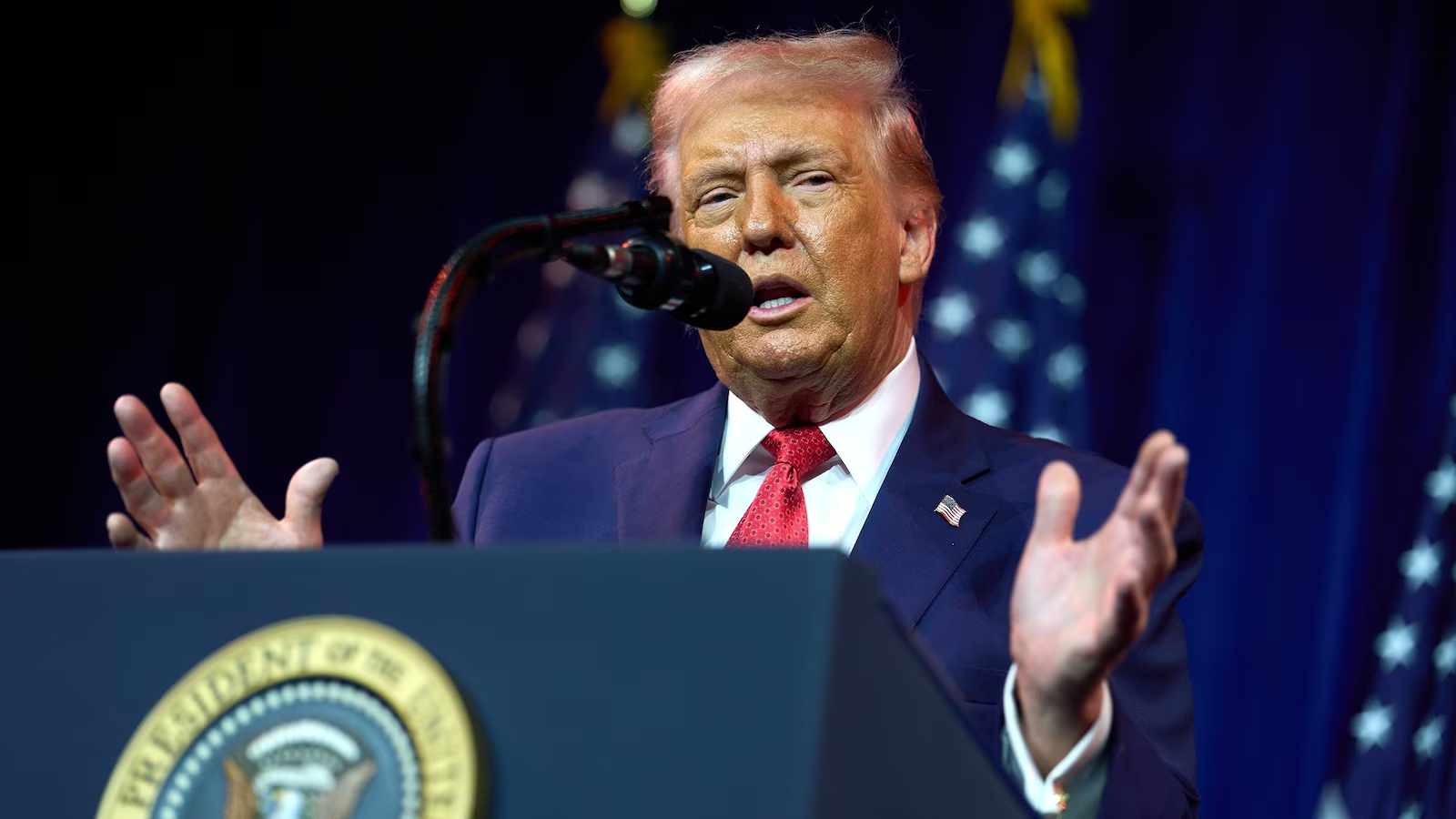
On Friday at the White House, President Trump met with executives from America’s biggest oil companies, including ExxonMobil, Chevron, and ConocoPhillips, along with industry service firms such as Halliburton, Valero, and Marathon. Trump said the U.S. government would ensure “total safety” for their investments.
The president was clear:
- U.S. oil firms should deploy at least $100 billion of their own money — not government funds — to rebuild and expand Venezuela’s oil sector.
- The United States would act as a guarantor of security, rather than Venezuela itself, meaning companies would deal directly with the U.S. government.
- Trump framed the plan as a way to lower energy prices at home and strengthen American influence.
He suggested that Washington would choose which companies are allowed to take part, and warned that others were ready to step in if the invited firms declined.
Why Venezuela Matters to the World’s Oil Markets
Venezuela sits on some of the largest proven oil reserves in the world. But decades of mismanagement, corruption, sanctions, and lack of investment have crippled its production. Prior to its fall, Venezuelan oil output had dwindled to a fraction of its historical peak.
For energy companies, the idea of rebuilding the country’s infrastructure — from drill sites to pipelines to refineries — offers both massive potential and formidable risk. Trump argues that with U.S. backing, foreign companies could tap rich resources while helping drive down energy costs globally.
Industry Reaction: Interest Mixed With Skepticism
While Trump’s vision is bold, executives at the meeting were cautious:
- ExxonMobil’s CEO, Darren Woods, called Venezuela “uninvestable” in its current state without major legal and regulatory reforms.
- Top industry leaders acknowledged interest in the potential, but few made firm commitments to spend the vast sums Trump talked about.
- Chevron, which still has existing operations in Venezuela, said it could potentially boost output by up to 50% over the next two years — a far cry from the massive jump Trump envisions.
This hesitation reflects the reality that Venezuela’s oil infrastructure is deteriorated, its legal frameworks are uncertain, and its political situation remains volatile. Analysts say rebuilding production could take years and far more than $100 billion to reach historical output levels.
What “U.S. Protection” Really Means
Trump’s promise of protection does not mean U.S. troops will be deployed to guard oil fields. Instead, the administration says the guarantee would come through political and diplomatic backing, cooperation with Venezuela’s current interim authorities, and private security measures supported by the investing companies themselves.
In effect, the U.S. would act as the stabilizing force and intermediary — a dramatic role for a foreign government in managing another nation’s strategic resource. Venezuelan oil sales would also be controlled by Washington, which the administration claims will help manage revenue and keep prices down.
Global Reactions and Strategic Stakes
The plan has drawn intense scrutiny internationally:
- Some world powers, including China and Russia — traditional allies of Venezuela — have condemned the U.S. actions as violations of sovereignty and international law.
- Critics argue the strategy amounts to economic imperialism by prioritizing American corporate interests over Venezuelan sovereignty and democratic governance.
- Energy analysts also warn that pursuing Venezuelan oil could hurt U.S. shale producers and expose investors to massive risk if conditions deteriorate again.
The Stakes for Venezuelans
For ordinary Venezuelans, the potential influx of investment could mean jobs and economic activity after years of economic collapse. But there are real concerns about whether the wealth generated would benefit the country’s people or primarily serve foreign corporations and U.S. interests. Critics argue that without strong governance and transparency, the pattern of exploitation that plagued Venezuela before could repeat itself.
What Happens Next?
This initiative is still in its early stages. Key questions remain:
- Will oil companies step forward and actually commit serious capital?
- Can governance reforms and legal protections be put in place to make Venezuela an attractive investment destination?
- How will other global powers react as the U.S. deepens its role in Venezuelan energy?
Answers to these questions will shape the future of a nation that once supplied millions of barrels of oil per day and could again be central to global energy — if politics, economics, and risk converge in the right way.

