
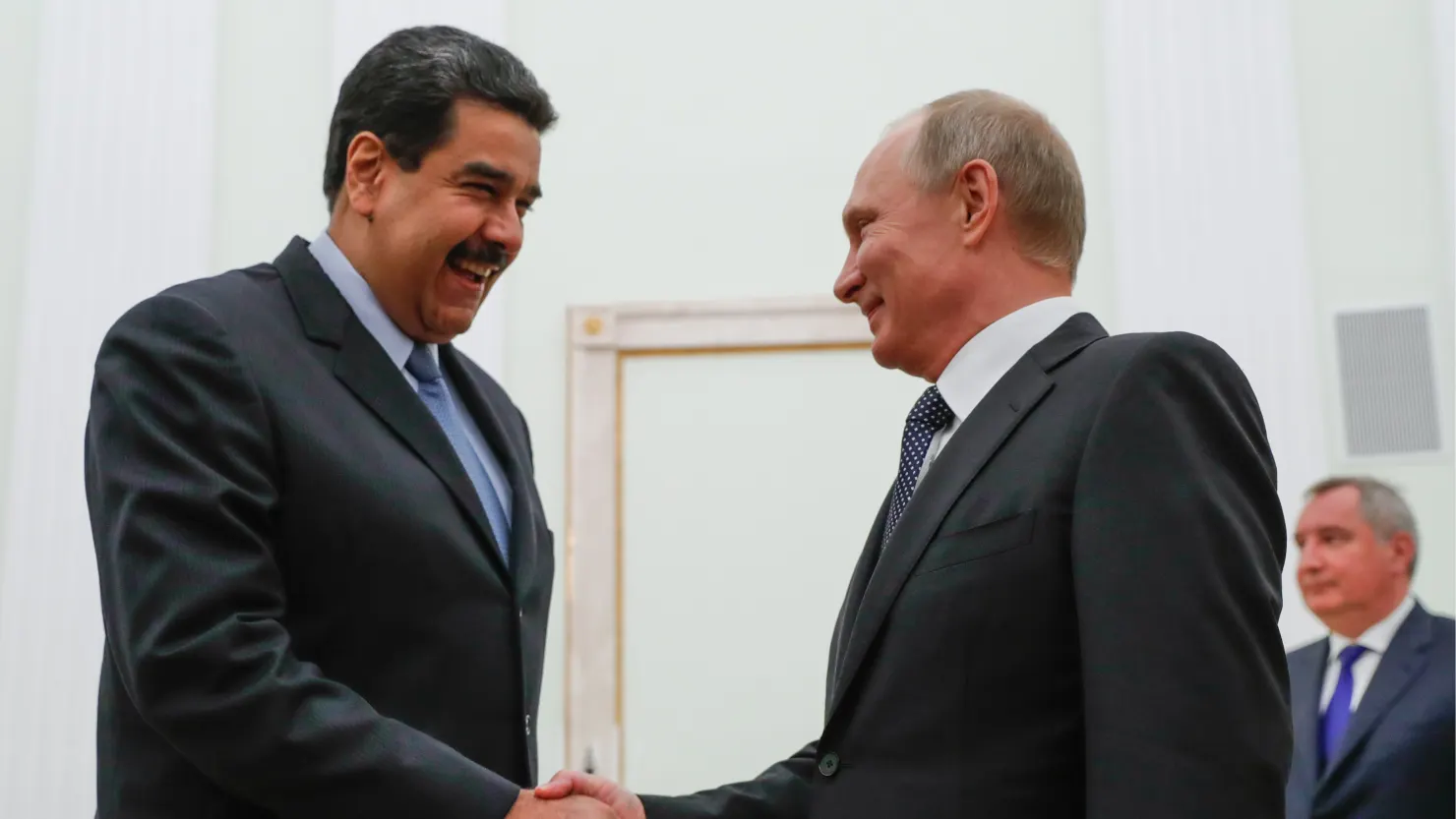

When Venezuelan President Nicolás Maduro was ousted over the weekend, many expected a swift and forceful response from Russia. After all, Maduro had long been one of Moscow’s closest allies in Latin America. Russia backed his government diplomatically, economically, and militarily during years of international pressure.
Yet instead of loud condemnation or bold statements, the Kremlin has chosen caution.
While Moscow initially criticized U.S. military strikes on Venezuela, it has remained notably silent on Maduro’s removal itself. Russian President Vladimir Putin has not issued any official statement, and the Kremlin has avoided directly addressing the political shift in Caracas.
Analysts say this silence is deliberate — and revealing.
An Ally Falls, But Moscow Holds Back
For years, Venezuela under Maduro served as a valuable partner for Russia. The relationship allowed Moscow to project influence in the Western Hemisphere, challenge U.S. dominance near its borders, and secure economic and energy interests.
Given that history, Russia’s restrained reaction may seem surprising.
But experts argue that Maduro’s ousting presents Moscow with both risks and opportunities. Rather than rushing to defend a fallen ally, the Kremlin appears to be reassessing the situation and waiting to see how events unfold.
“Russia doesn’t want to lock itself into a position that could limit its options later,” said one analyst. “Silence gives Moscow flexibility.”
Condemning the Strike, Not the Outcome
Shortly after U.S. forces struck targets in Venezuela, Russian officials condemned the military action, calling it a violation of international law and national sovereignty. This response was consistent with Russia’s broader opposition to U.S.-led interventions around the world.
However, that criticism stopped short of defending Maduro personally or demanding his reinstatement.
This distinction matters.
By focusing on the method — U.S. military action — rather than the political outcome, Russia avoids appearing overly invested in Maduro himself. It allows Moscow to criticize Washington without tying its credibility to a leader who may be gone for good.
Why Maduro’s Exit Isn’t Entirely Bad for Russia
Despite being a longtime ally, Maduro’s rule also posed challenges for Moscow.
Venezuela’s economy has been in crisis for years, making it difficult for the country to repay loans, sustain oil production, or deliver on economic agreements with Russia. Sanctions and political instability further complicated Moscow’s investments.
Maduro’s removal could open the door to a more stable government — one potentially eager to normalize international relations and rebuild the economy. From Russia’s perspective, that could actually improve the chances of recovering outstanding debts or maintaining energy cooperation.
“Loyalty matters, but results matter more,” said one geopolitical expert. “If a new government can deliver stability, Russia will find a way to work with it.”
A Pattern of Pragmatism
Russia’s careful response fits a broader pattern in its foreign policy. While Moscow often presents itself as fiercely loyal to allies, it has repeatedly shown a willingness to adapt when political realities change.
In past conflicts, Russia has quietly shifted positions when leaders fell or circumstances evolved, choosing pragmatism over ideology.
The Kremlin’s main priorities remain consistent:
- Preserving influence
- Protecting economic interests
- Avoiding unnecessary confrontation with the United States
Reacting too aggressively to Maduro’s ousting could undermine all three.
Avoiding Another Global Flashpoint
Russia is already deeply involved in several major geopolitical confrontations, including its ongoing war in Ukraine and strained relations with NATO. Opening another front — even diplomatically — in Latin America may not be in Moscow’s interest right now.
By staying quiet, the Kremlin avoids escalating tensions with Washington at a moment when global risks are already high.
Analysts note that Russia is likely waiting to see:
- Who takes power in Venezuela
- How firmly the new leadership aligns with the U.S.
- Whether Russian interests will be protected or challenged
Only once those questions are answered will Moscow decide how to respond publicly.
What This Means for Russia’s Global Strategy
Maduro’s ousting highlights the limits of Russia’s power far from its immediate neighborhood. While Moscow can support allies diplomatically and economically, it has limited ability to shape outcomes in regions dominated by U.S. influence.
That reality may be pushing the Kremlin toward a more cautious, less confrontational approach.
Rather than framing the situation as a defeat, Russia may choose to quietly adapt — seeking dialogue with new leaders while maintaining its criticism of U.S. interventionism.
This approach allows Moscow to preserve its broader narrative: that it stands for sovereignty and stability, even if individual allies fall.
Silence as a Strategic Tool
The lack of an official Kremlin response is not a sign of confusion or weakness. On the contrary, it reflects a calculated strategy.
By saying less, Russia keeps its options open.
If the situation in Venezuela shifts again, Moscow can adjust its stance without appearing inconsistent. If a new government emerges willing to cooperate, Russia can engage without the baggage of having fiercely defended Maduro to the end.
In global politics, silence can be just as powerful as words.
What Comes Next?
In the coming weeks, Russia is likely to monitor developments quietly while maintaining behind-the-scenes diplomatic contacts. Public statements may follow once the political direction of Venezuela becomes clearer.
For now, Moscow appears content to let events unfold.
Maduro may have been a valuable ally, but for the Kremlin, long-term strategy outweighs personal loyalty. In a rapidly changing world, adaptability — not emotional attachment — remains Russia’s guiding principle.

