
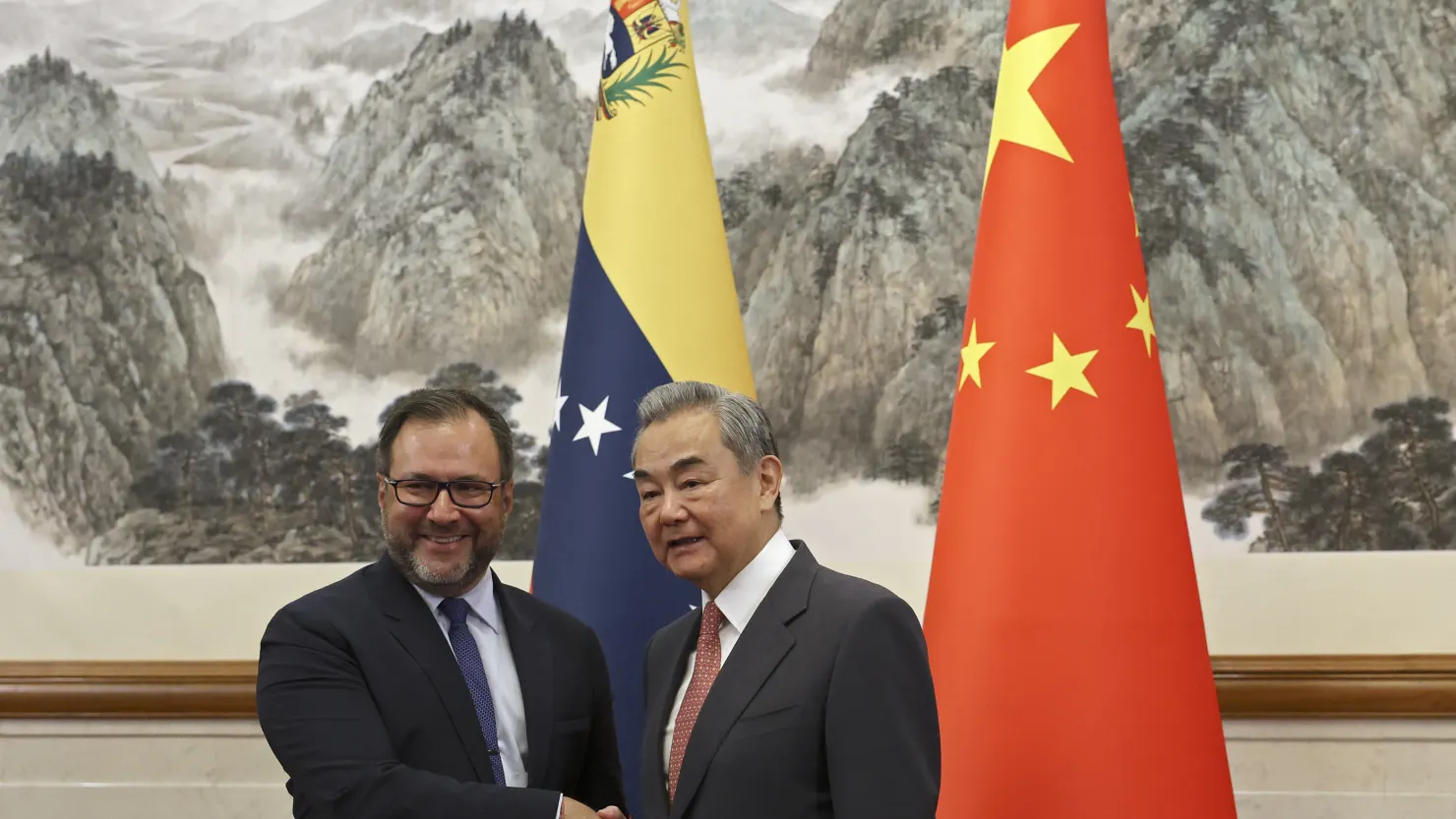

China has sharply criticized the United States following its recent military action in Venezuela, calling the move shocking and irresponsible. But while Beijing’s public response has focused on diplomacy and international law, analysts say China’s biggest concern is far more practical: protecting its massive economic interests in the crisis-hit South American nation.
Venezuela is one of China’s most important energy partners, and any instability there directly threatens billions of dollars in trade, loans, and oil supplies. As tensions rise, Beijing is walking a careful line — condemning Washington’s actions while quietly working to safeguard its investments.
China’s Immediate Reaction: Strong Words, Familiar Message
China reacted quickly after the U.S. strike, issuing a public condemnation and urging Washington to pursue dialogue instead of force. Chinese officials said they were “shocked” by the attack and warned that military intervention would only worsen Venezuela’s crisis.
In a press briefing on Monday, Foreign Ministry spokesperson Lin Jian emphasized that China maintains “positive communication and cooperation” with the Venezuelan government. He added that China’s willingness to deepen cooperation — including in oil exports — would remain unchanged, regardless of how the situation develops.
China also called on the U.S. to release Venezuela’s ousted president Nicolás Maduro and his wife, framing the issue as a violation of sovereignty and international norms.
This response fits China’s long-standing foreign policy position: opposing U.S. military interventions while presenting itself as a supporter of dialogue, stability, and non-interference.
Oil Is at the Heart of China’s Concern
Behind the diplomatic language lies a powerful economic reality. China is the top destination for Venezuela’s crude oil exports, making the country a key supplier for Beijing’s energy needs.
Over the years, China has invested heavily in Venezuela’s oil sector and extended billions of dollars in loans, many of which are repaid in oil shipments. Any disruption to production, exports, or government control could threaten these arrangements.
Analysts say Beijing’s primary goal right now is ensuring that oil continues to flow.
“China’s reaction is less about ideology and more about protecting assets,” said one regional expert. “Venezuela represents energy security, financial exposure, and long-term strategic positioning for Beijing.”
Simply put, instability in Venezuela is bad for business.
A Test of China’s Global Influence
The crisis also puts China’s growing global influence under the spotlight. In recent years, Beijing has positioned itself as an alternative power broker to the United States, especially in regions like Latin America, Africa, and the Middle East.
Venezuela has been a key part of that strategy. By investing heavily when Western nations pulled back, China gained political goodwill and economic leverage.
Now, the U.S. strike challenges China’s ability to protect its partners — and its interests — without resorting to military power.
So far, Beijing appears unlikely to escalate beyond diplomatic pressure. Analysts say China prefers stability over confrontation and will avoid actions that could deepen tensions with Washington.
No Immediate Impact on Taiwan Policy
Some observers initially questioned whether the U.S. action in Venezuela might influence China’s thinking on Taiwan. However, most analysts doubt there will be any immediate connection.
While Beijing closely watches how the U.S. uses military force abroad, experts say China’s Taiwan strategy is driven by regional dynamics, not events in Latin America.
“China separates these issues,” one analyst noted. “Venezuela is about economic exposure and diplomacy. Taiwan is about core national interests and regional security.”
That said, the situation does reinforce Beijing’s broader narrative that the U.S. uses force selectively and destabilizes regions under the banner of democracy and security.
A Delicate Balancing Act
China now faces a delicate balancing act.
On one hand, it wants to publicly oppose U.S. intervention, defend Venezuela’s sovereignty, and signal solidarity with governments that resist American pressure. On the other hand, it wants to avoid direct confrontation that could jeopardize trade ties or escalate into a larger geopolitical conflict.
So far, Beijing’s approach has been cautious:
- Strong diplomatic language
- Calls for dialogue and restraint
- Reassurance that economic cooperation with Venezuela will continue
What China has not done is threaten retaliation or hint at military involvement — a sign that stability, not escalation, remains its top priority.
What Happens If the Crisis Deepens?
If Venezuela’s instability worsens, China may face difficult choices.
A prolonged conflict could disrupt oil exports, damage infrastructure, or lead to leadership changes that complicate existing agreements. In that scenario, Beijing may need to renegotiate deals or seek alternative suppliers to protect its energy security.
China could also increase diplomatic engagement, positioning itself as a mediator — a role it has increasingly sought in global conflicts.
However, analysts caution that China’s influence in Venezuela, while significant, is not unlimited. Local political dynamics and U.S. pressure could still undermine Beijing’s long-term plans.
The Bigger Picture
The U.S. action in Venezuela highlights a broader global shift. As American power is increasingly challenged, countries like China are being forced to respond to crises far from their borders — not just as observers, but as stakeholders.
For Beijing, Venezuela is not just a political ally. It is an economic lifeline, an energy partner, and a symbol of China’s expanding role in the developing world.
China’s strong reaction may sound ideological, but its motivations are deeply practical. At stake are oil supplies, financial investments, and Beijing’s credibility as a global power that can protect its interests without resorting to force.
As the situation unfolds, one thing is clear: China is watching Venezuela closely — not just for political reasons, but because billions of dollars and years of strategic planning hang in the balance.

