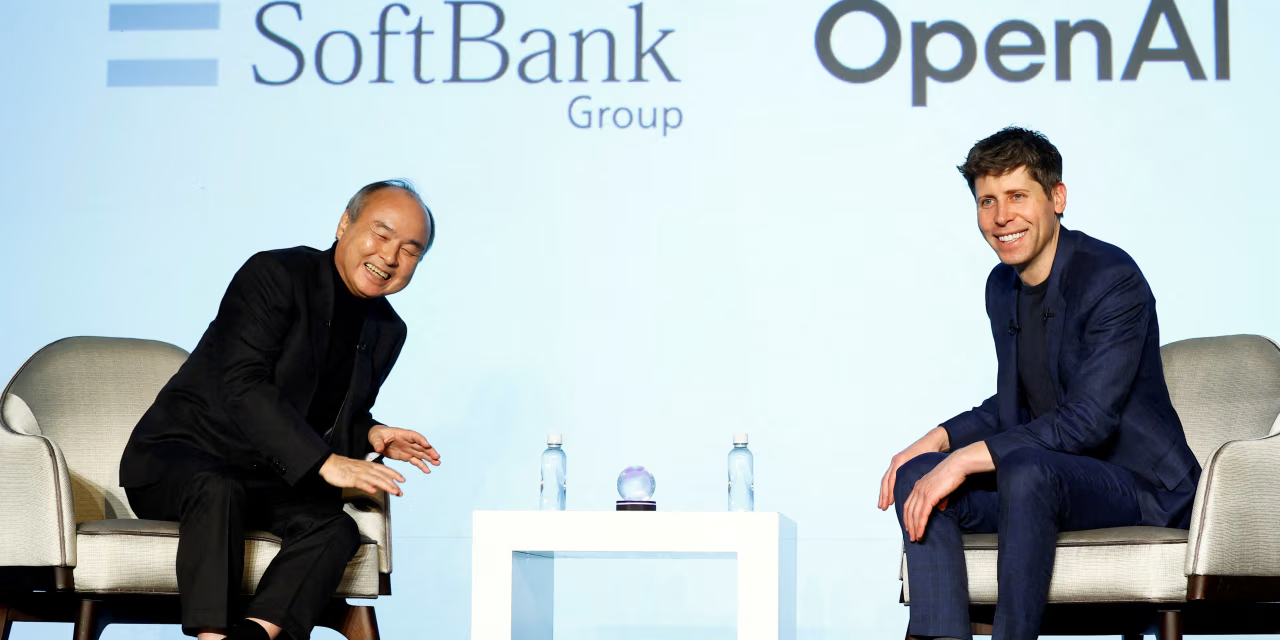

SoftBank has officially completed one of the largest private investments in technology history, fully funding a massive $40 billion commitment to OpenAI, the company behind ChatGPT. The move places SoftBank at the center of the global artificial intelligence race and signals just how high the stakes have become as AI reshapes industries, economies, and everyday life.
The final transfer of funds, reportedly between $22 billion and $22.5 billion, was sent last week, completing a deal that has been closely watched across Silicon Valley and global financial markets. With this investment, SoftBank now owns roughly 11% of OpenAI, valuing the company at an eye-popping $260 billion before the new money was added.
This is not just another big tech investment. It is a clear statement about where SoftBank believes the future is heading and how powerful AI is expected to become.
A Deal Years in the Making
SoftBank’s relationship with OpenAI did not start overnight. The Japanese investment giant had already put significant money into the company before this final payment.
How the $40 Billion Came Together
SoftBank’s total commitment reached approximately $41 billion and was built in stages:
- $7.5 billion invested directly by SoftBank
- $11 billion raised through syndication with outside co-investors
- A final payment of around $22 billion to $22.5 billion sent last week
Once the final funds cleared, the full investment commitment was complete. This step officially locked in SoftBank’s position as one of OpenAI’s most influential investors.
The deal values OpenAI at a $260 billion pre-money valuation, a number that reflects both massive optimism and intense competition in the AI sector.
Why SoftBank Is Making Such a Huge Bet
SoftBank is known for bold, sometimes risky investments. Its founder Masayoshi Son has long believed that artificial intelligence would become the most important technology of the modern era. This deal appears to be a continuation of that long-term vision.
AI Is Driving the Next Infrastructure Boom
The rapid rise of AI applications like ChatGPT has triggered a global surge in demand for computing power. Training and running advanced AI models requires enormous data centers, specialized chips, and fast connectivity.
SoftBank sees OpenAI not just as a software company, but as a central player in a much larger AI ecosystem that includes:
- Cloud computing infrastructure
- Advanced semiconductors
- Data centers and energy solutions
- Enterprise AI tools used across industries
By investing heavily in OpenAI, SoftBank is positioning itself to benefit from growth across all of these areas.
OpenAI’s Explosive Growth and Influence
OpenAI has quickly become one of the most influential companies in the world. Products like ChatGPT are now used by hundreds of millions of people for work, education, creativity, and research.
From Startup to AI Powerhouse
Founded as a research-focused organization, OpenAI has evolved into a major commercial force. Its tools are used by businesses to write code, analyze data, automate tasks, and interact with customers.
This rapid adoption has fueled soaring valuations and investor interest. A $260 billion valuation places OpenAI among the most valuable private companies in history, alongside some of the biggest names in technology.
SoftBank’s investment reinforces the idea that OpenAI is not a short-term trend but a long-term platform for innovation.
What SoftBank Gains From This Investment
Owning roughly 11% of OpenAI gives SoftBank both financial upside and strategic influence.
Financial Upside
If OpenAI continues to grow at its current pace, the value of SoftBank’s stake could rise dramatically. As AI tools become more deeply integrated into business and consumer products, revenue opportunities are expected to expand rapidly.
Strategic Influence
SoftBank’s portfolio includes companies across telecom, robotics, chips, and technology services. A close relationship with OpenAI could create partnerships, integrations, and new business models across this network.
This investment is not just about owning shares. It is about shaping how AI is built, deployed, and scaled globally.
What This Means for the AI Industry
SoftBank’s $40 billion move sends a powerful signal to the market. It confirms that the AI race is entering a new phase, one defined by massive capital commitments and long-term infrastructure building.
Intensifying Competition
Major tech companies and investors are now under pressure to keep up. Large investments like this raise the bar for competitors and may trigger even bigger funding rounds across the AI sector.
Faster AI Development
With more capital, OpenAI can expand research, hire top talent, and build the infrastructure needed to train more advanced models. This could accelerate breakthroughs in areas like reasoning, automation, and scientific discovery.
Rising Costs and Higher Stakes
At the same time, investments of this scale increase expectations. OpenAI will face pressure to turn innovation into sustainable revenue while managing the immense costs of running advanced AI systems.
Risks Behind the Big Numbers
While the investment is bold, it is not without risk.
Valuation Pressure
A $260 billion valuation leaves little room for error. Any slowdown in growth, regulatory challenges, or technical setbacks could impact investor confidence.
Regulation and Public Scrutiny
As AI becomes more powerful, governments around the world are increasing oversight. New rules on data, safety, and competition could affect how AI companies operate and grow.
Capital-Intensive Future
AI development is expensive. Even with $40 billion, maintaining leadership will require continuous investment in hardware, energy, and research.
SoftBank is clearly aware of these risks, but the firm appears willing to accept them in exchange for a chance to shape the future of technology.
A Defining Moment for SoftBank and OpenAI
This deal marks a defining moment for both companies. For SoftBank, it is a reaffirmation of its identity as a visionary investor willing to make massive bets on transformative technology. For OpenAI, it provides the resources needed to push AI development to new heights.
As artificial intelligence continues to move from novelty to necessity, investments like this will shape who leads the next generation of innovation.
One thing is clear: the AI race is no longer just about ideas and talent. It is also about who has the capital, infrastructure, and long-term vision to win.