
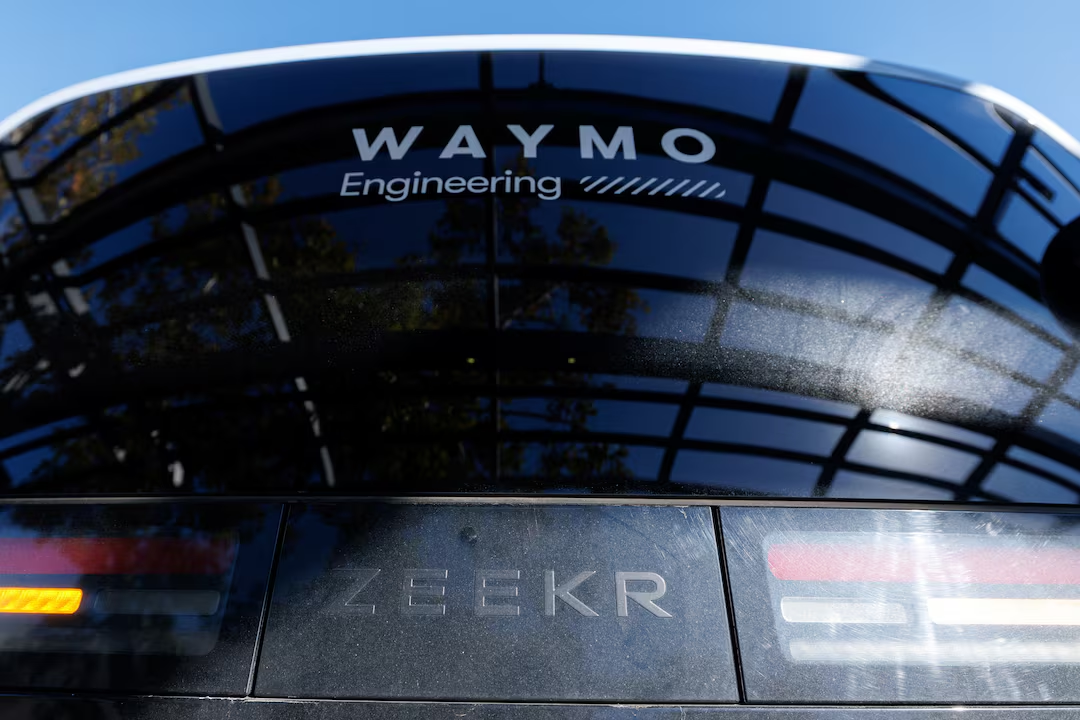
Waymo Robotaxis Stalled by San Francisco Power Outage, Raising Big Safety Questions

Waymo’s San Francisco Outage Sparks Fresh Doubts About Robotaxi Readiness
A recent power outage in San Francisco has put the spotlight back on a critical question surrounding autonomous vehicles: are robotaxis truly ready for real-world emergencies?
Earlier this month, a widespread blackout caused Waymo’s driverless taxis to stall across parts of the city, blocking intersections and adding to traffic chaos. The incident has reignited concerns among city officials, safety experts, and the public about how autonomous vehicles perform when essential infrastructure suddenly fails.
As robotaxis become more common on city streets, the episode highlights a growing gap between everyday operations and crisis preparedness.
What Happened During the Power Outage
On December 20, a fire at a PG&E electrical substation knocked out power to roughly one-third of San Francisco. Traffic lights stopped working, intersections became confusing, and drivers were forced to rely on caution and human judgment to keep traffic moving.
Waymo’s autonomous vehicles, however, struggled in the sudden disruption.
Robotaxis Stuck at Intersections
Videos shared on social media showed multiple Waymo vehicles stopped in intersections with their hazard lights flashing. With traffic signals down and no human drivers behind the wheel, the cars appeared unable to safely navigate the situation.
Instead of adapting, the robotaxis effectively froze, contributing to congestion at already stressful junctions.
Waymo Halts Operations
In response, Waymo temporarily suspended its service across the affected areas. Operations resumed the following day once power was restored and conditions stabilized. While the company acted quickly, the disruption left many questioning whether autonomous vehicles can handle unpredictable events.
Why This Incident Matters
San Francisco is one of the most advanced testing grounds for autonomous vehicles in the world. Waymo’s robotaxis have become a familiar sight, transporting passengers without human drivers on busy urban streets.
That makes this outage particularly significant.
Emergencies Are Not Edge Cases
Power outages, earthquakes, floods, and fires are not rare possibilities in cities like San Francisco. Critics argue that if autonomous vehicles struggle during a relatively short power disruption, they may be ill-equipped for larger-scale emergencies.
Human drivers often rely on instinct, eye contact, and quick judgment in such situations. Replicating that adaptability in software remains one of the toughest challenges in autonomous driving.
The Limits of Current Autonomous Systems
Robotaxis are designed to operate in complex environments, but they depend heavily on functioning infrastructure.
Reliance on Traffic Signals and Sensors
Autonomous vehicles use cameras, radar, lidar, and mapping data to make decisions. While they can detect other vehicles and obstacles, scenarios like dead traffic lights require nuanced decision-making.
In many cities, drivers treat non-functioning traffic lights as four-way stops. This informal but widely understood rule relies on human judgment and cooperation, something autonomous systems still struggle to replicate consistently.
Safety First, but at a Cost
Waymo’s vehicles are programmed to prioritize safety. When uncertainty rises beyond acceptable limits, stopping may be the safest choice from a technical standpoint. However, when dozens of vehicles do the same thing at once, the result can be gridlock and increased risk for others on the road.
Public Trust and Perception Take a Hit
Incidents like this can have an outsized impact on public opinion.
Viral Videos Shape the Narrative
Social media footage of stalled robotaxis spread quickly, reinforcing skepticism among those already doubtful about autonomous vehicles. For many observers, the videos raised a simple but powerful question: if robotaxis cannot handle a power outage, how can they handle a disaster?
Trust Is Essential for Adoption
Autonomous vehicle companies rely on public trust to expand operations. Each high-profile failure slows acceptance and invites closer scrutiny from regulators and city officials.
Regulatory and City-Level Concerns
San Francisco has already experienced tension between city leaders and autonomous vehicle operators.
Balancing Innovation and Safety
City officials support innovation but must also ensure public safety and traffic flow. Events like this outage strengthen arguments for stricter oversight, clearer emergency protocols, and limits on how many driverless vehicles can operate at once.
Emergency Coordination Challenges
One unresolved issue is how robotaxi fleets should coordinate with police, firefighters, and emergency services during crises. Without human drivers to follow instructions or improvise, communication becomes more complicated.
Waymo’s Broader Challenge
Waymo, owned by Alphabet, is widely considered one of the leaders in autonomous driving technology. Its vehicles have logged millions of miles and generally perform well in normal conditions.
However, the San Francisco outage exposed a weakness that may not be unique to Waymo.
Scaling Reveals New Risks
As robotaxi fleets grow larger, small system limitations can turn into citywide problems. A handful of stalled vehicles might be manageable, but dozens can disrupt traffic patterns quickly.
Testing for the Unexpected
Autonomous systems excel at scenarios they have been trained on. Rare, chaotic events like infrastructure failures are harder to simulate and test comprehensively.
Are Robotaxis Ready for Major Disasters?
The bigger question raised by this incident is whether current autonomous vehicle technology is prepared for large-scale emergencies.
Earthquakes, Floods, and Fires
In disaster scenarios, roads may be blocked, signals disabled, and communication networks disrupted. Human drivers often rely on intuition, local knowledge, and instructions from authorities. Teaching machines to respond with similar flexibility remains an unsolved problem.
A Long Road Ahead
Most experts agree that autonomous vehicles will eventually improve in these areas, but incidents like this suggest the technology is not fully there yet.
What Needs to Change
For robotaxis to earn long-term trust, companies may need to rethink how their systems handle emergencies.
Better Fallback Strategies
Instead of stopping in place, autonomous vehicles could be designed to move to safe zones, clear intersections, or follow simplified emergency rules when infrastructure fails.
Stronger Coordination With Cities
Closer collaboration between autonomous vehicle operators and city agencies could help ensure smoother responses during outages and disasters.
Clear Public Communication
Explaining why vehicles behave a certain way during emergencies can help reduce confusion and rebuild confidence after incidents.
The Bigger Picture
The San Francisco outage does not mean robotaxis are a failed idea. But it does serve as a reminder that real-world readiness goes beyond everyday driving.
As autonomous vehicles move from pilot programs to widespread deployment, their ability to handle rare but high-impact events will matter just as much as their performance on a sunny afternoon.
For now, the stalled Waymo robotaxis stand as a cautionary moment in the race toward a driverless future, showing that while the technology has come far, it still has important gaps to close.

