
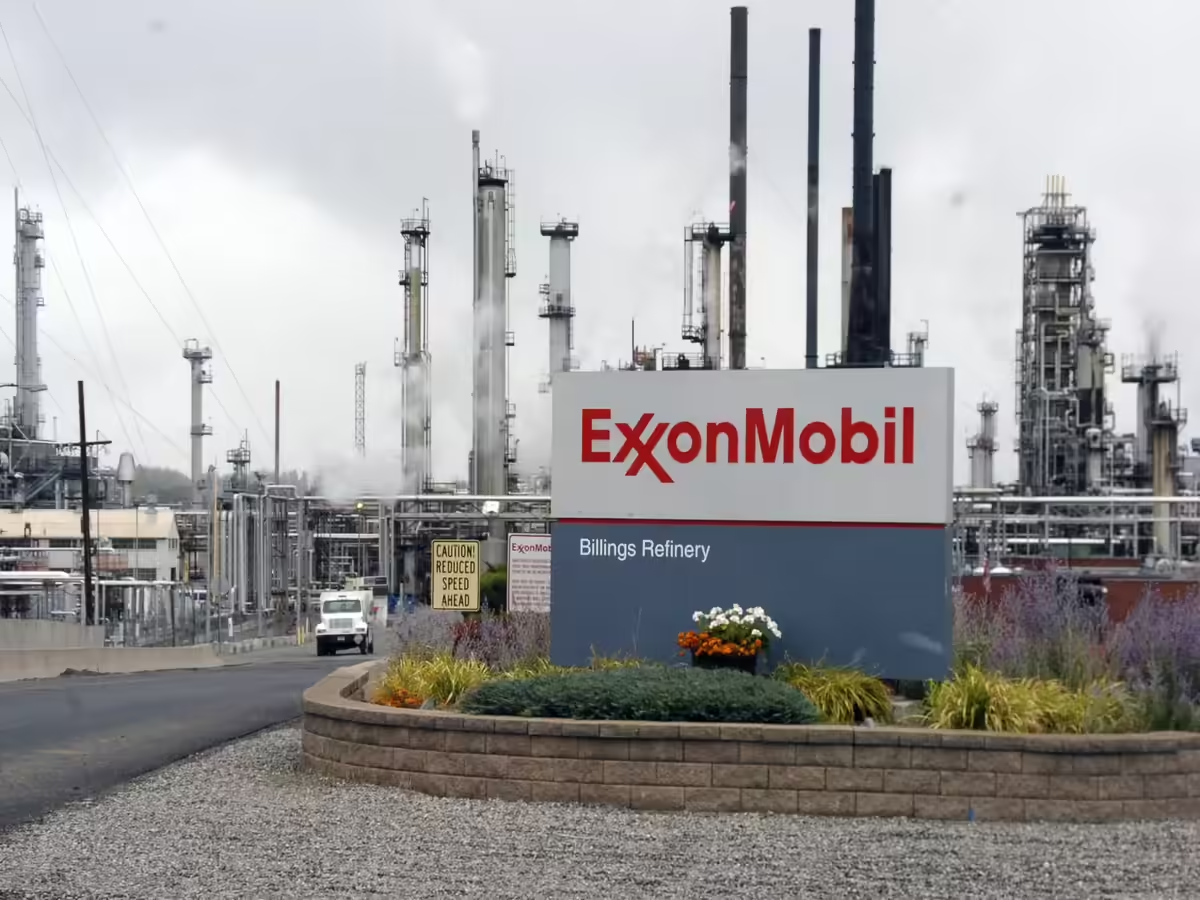

Exxon Mobil has thrown cold water on one of its boldest clean energy projects yet. The oil giant has paused plans to build what would have been one of the world’s largest hydrogen production facilities, citing weak customer demand.
CEO Darren Woods told Reuters in a Friday interview that the project, already delayed, is now on hold — marking a significant setback in Exxon’s push into cleaner energy.
This move highlights a broader struggle: even major oil and gas companies are finding it tough to make green energy projects profitable.
The Hydrogen Project That Could Have Been
Exxon’s hydrogen plant was designed to be a game-changer. Hydrogen is seen as a critical fuel for a lower-carbon future, especially in industries like steelmaking, shipping, and heavy transport.
The project promised:
- Large-scale hydrogen production
- Significant contributions to cleaner energy transition goals
- Potential leadership in the emerging global hydrogen market
But despite its potential, customer demand has not kept pace with expectations, prompting Exxon to freeze the project indefinitely.
Why Customer Demand Is Lagging
Hydrogen remains an expensive and niche fuel source. Industrial buyers and utilities have been slow to commit, due to:
- High costs compared with traditional fuels
- Lack of infrastructure for widespread adoption
- Uncertainty over government subsidies or incentives
Even as governments push for decarbonization, the market for hydrogen isn’t yet mature enough to sustain mega-projects like Exxon’s.
Setback for Oil Giants in the Clean Energy Transition
Exxon’s pause is part of a broader pattern. Traditional oil and gas companies have been investing heavily in “clean energy” initiatives — from hydrogen to biofuels — but many projects struggle to turn a profit.
Other major energy firms are facing similar challenges:
- High upfront costs
- Limited demand
- Difficulty scaling technologies to compete with fossil fuels
This reality underscores that transitioning to cleaner energy is far from simple, even for companies with billions in revenue.
What This Means for Exxon and Investors
For Exxon, freezing the hydrogen plant could be a double-edged sword:
- Pros: Saves money on a project that might not pay off, avoids overcommitting to an immature market.
- Cons: Slows Exxon’s clean energy ambitions and risks falling behind competitors in the hydrogen sector.
Investors will likely watch closely to see how Exxon recalibrates its approach to cleaner energy while continuing its traditional oil and gas operations.
Hydrogen’s Bigger Picture
Hydrogen remains a key part of global decarbonization strategies. Governments around the world are betting on it to reduce industrial emissions, especially in hard-to-electrify sectors.
Exxon’s pause does not mean the end of hydrogen, but it does highlight:
- The industry needs stronger demand and policy support
- Large-scale projects are risky without guaranteed buyers
- The clean energy transition will be slower and more uneven than many expected
Exxon’s decision to freeze its massive hydrogen plant sends a clear message: even energy giants struggle to make ambitious green projects work in today’s market.
The move reflects both the challenges of scaling hydrogen and the broader reality that the clean energy transition is not a simple path for traditional oil and gas companies.
Hydrogen may still be the fuel of the future, but for now, Exxon is hitting the brakes.

